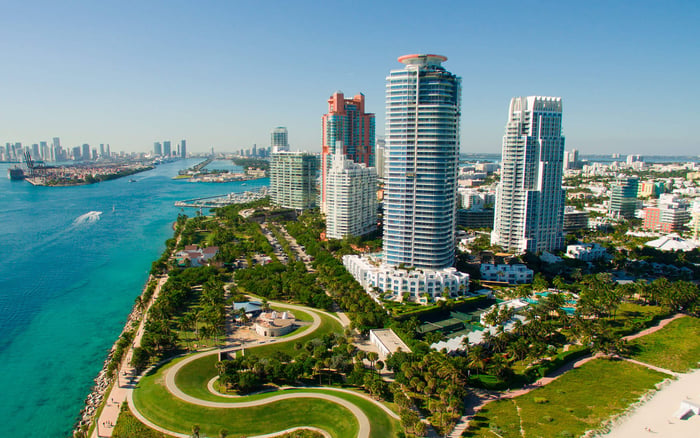
A hurricane-season closing calls for precise contract review, not assumptions. Understand deadline relief, casualty provisions, title premiums, municipal searches, association estoppels, and the final reconciliation before funds are released.
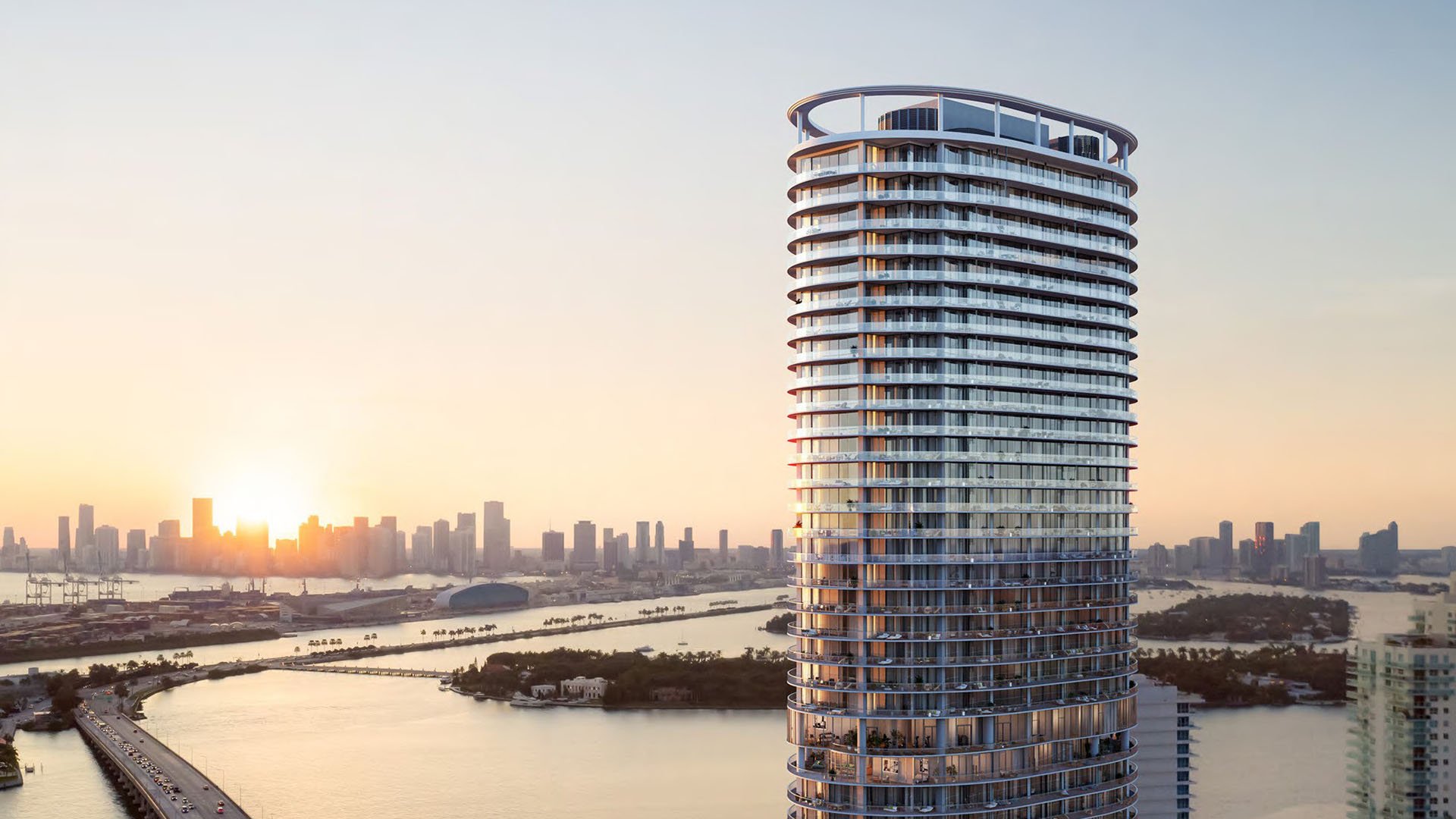
For a South Florida luxury acquisition, a hurricane-season closing demands the same precision as the property selection. The central question is not simply whether a storm is approaching, but whether the executed agreement clearly addresses interrupted performance, physical damage, title objections, and the allocation of closing expenses.
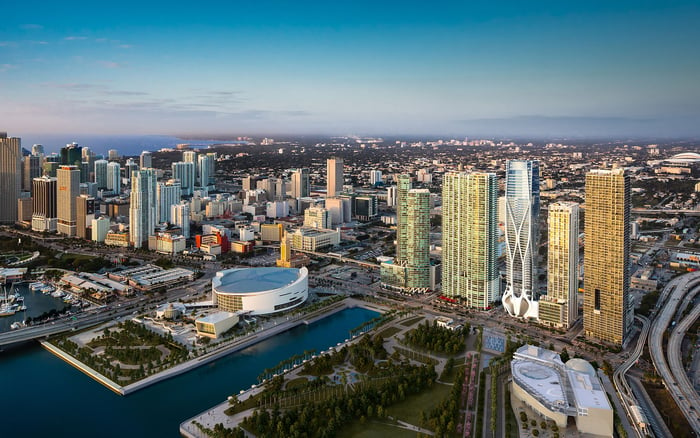
For a buyer considering Una Residences Brickell, that discipline begins before the final statement arrives. A Brickell address does not determine which contract provisions govern the transaction. Counsel should identify the signed form, addenda, amendments, and relevant deadlines rather than assume standard language applies unchanged.
Treat the closing as four connected reviews: contractual timing, title coverage, property and association obligations, and the final movement of funds. A change in one may require revisiting another.
A force-majeure clause and a risk-of-loss clause answer different questions. The first concerns the ability to perform; the second concerns damage to the property.
Standard residential force-majeure language addresses hurricanes and other qualifying events that prevent performance or disrupt essential closing services, insurance, or approvals. The extension described here allows a reasonable period, up to seven days after the qualifying event no longer prevents performance. It is not a blanket seven-day extension whenever a storm appears in the forecast. Verify the executed wording and any applicable notice requirements.
Ask counsel to identify the affected obligation, document the interruption, and confirm the resulting deadline. A preferred postponement is not the same as a contractual entitlement.
Under the standard casualty provision described here, the seller generally must restore damage when restoration costs do not exceed 1.5% of the purchase price. If qualifying restoration remains incomplete at closing, the provision calls for an escrow equal to 125% of the estimated completion cost.
When costs exceed the contractual threshold, the buyer generally may accept the property under the casualty provision or terminate with a deposit refund and release. These protections depend on the contract; they are not universal rights. Before proceeding, have counsel confirm the applicable threshold, restoration estimate, escrow terms, and buyer election.
Florida title-insurance rates are set by regulation, not calculated as an unrestricted flat percentage of the purchase price.
For original owner’s coverage, the stated tiers are $5.75 per $1,000 for the first $100,000 and $5.00 per $1,000 above $100,000 through $1 million. The minimum premium for original owner’s and leaseholder coverage is $100. For an ultra-premium acquisition, do not extend the $5.00 tier across the entire purchase price. Request an itemized calculation that applies the appropriate higher-value tiers.
Qualifying reissue coverage uses reduced rates of $3.30 per $1,000 for the first $100,000 and $3.00 per $1,000 above $100,000 through $1 million. Prior insurance alone does not establish eligibility. Ask the title agent to explain the basis for any reissue treatment.
When the same insurer simultaneously issues owner’s and lender’s policies, a $25 minimum lender-policy premium applies under the stated conditions when the loan does not exceed the owner’s coverage. That figure does not mean every lender-policy package costs $25. Endorsements can add charges and warrant separate review.
Pricing is only half the exercise. Review the title commitment, permitted exceptions, objection deadlines, and cure provisions as distinct elements. Delivery of a commitment does not establish unrestricted coverage or resolve every title issue.
For a Miami Beach buyer considering Setai Residences Miami Beach, municipal review should remain transaction-specific. Confirm which searches are being ordered, what they cover, and which party pays under the agreement.
Do not assume one participant bears every title-related or municipal search charge. Match each proposed expense to the executed cost allocation. Ask the closing agent to clarify any charge whose description or payment responsibility is unclear.
Permit review deserves a separate conversation. Examine disclosures, inspection rights, and negotiated cure obligations. An “AS IS” agreement should not be read as automatically requiring the seller to close every open permit.
If an unresolved matter is important to the acquisition, ask counsel whether it requires a written cure commitment, an agreed allocation, or another negotiated solution. Neither an unanswered inquiry nor an outstanding search guarantees a right to postpone closing. Confirm search scope, fees, and timing for the relevant municipality rather than assuming they are uniform across South Florida.
An association estoppel provides a closing-related snapshot of fees and assessments the seller may owe. Its value lies in the detail, not simply the zero or positive balance at the bottom.
For a contemplated purchase at Jade Signature Sunny Isles Beach, focus on the certificate for the actual transaction. A Sunny Isles Beach buyer should examine assessment information, outstanding balances, scheduled amounts, transfer-related charges, and identified violations rather than infer obligations from the building’s identity.
Florida condominium associations generally must issue an estoppel within 10 business days after a written or electronic request from an owner, mortgagee, or authorized designee. Build that interval into the closing plan. Homeowners’ association estoppels follow a separate framework under Section 720.30851; do not automatically apply condominium requirements to an HOA transaction.
If the closing date moves, ask whether the certificate and amounts remain suitable for the revised date. Then reconcile the association entries with the agreement’s allocation of responsibility, not merely the name appearing on a bill.
The final statement should reflect the executed agreement and amendments. Use the purchase price, deposits, financing terms, cost allocations, and prorations as the baseline.
A disciplined review can proceed in this order:
Confirm the price and every deposit credit against the transaction records.
Match title premiums, endorsements, and search charges to the agreed allocation.
Compare association charges and credits with the estoppel and contractual obligations.
Check property-tax prorations against the contractual estimation method and any later adjustment provision.
Recalculate assessment and rent prorations using the applicable closing date.
Confirm that any agreed casualty escrow appears consistently in the closing documents.
If hurricane-related disruption changes the date, request a revised reconciliation rather than relying on the earlier statement. The recipient of a tax, rent, or assessment bill is not necessarily the party that ultimately bears the expense.
The objective is a closing in which timing, coverage, obligations, and funds align. These review steps are recommendations, not independent statutory duties or rights to delay performance. Transaction-specific legal advice remains essential.
For a considered perspective on South Florida luxury ownership, explore MILLION.
If branded residences are on your mind — as a home or as an allocation — we would be glad to share what we are seeing, privately.
Begin a quiet conversationNo. Deadline relief depends on the executed force-majeure language and a qualifying event that prevents performance or disrupts relevant services, insurance, or approvals.
The standard provision described allows a reasonable extension, up to seven days after the qualifying event no longer prevents performance. Verify the signed agreement’s wording.
Under the described standard provision, the seller generally must restore casualty damage when restoration costs do not exceed 1.5% of the purchase price. The executed contract controls.
The described casualty provision calls for an escrow of 125% of the estimated completion cost. Counsel should confirm its applicability and the escrow terms.
Under the described casualty provision, the buyer generally may accept the property or terminate with a deposit refund and release. Confirm the available election under the executed agreement.
No. That stated tier covers amounts above $100,000 through $1 million; higher coverage requires the applicable additional tiers.
No. Prior insurance does not automatically establish eligibility, so the title agent should confirm whether reduced reissue rates apply.
Not automatically. Review permit disclosures, inspection rights, and any negotiated cure obligations in the executed agreement.
Florida condominium associations generally must issue it within 10 business days after a written or electronic request from an owner, mortgagee, or authorized designee.
Recheck date-sensitive tax, assessment, and rent prorations and confirm association amounts remain appropriate. Also verify deposits, allocated charges, and any agreed casualty escrow against the final documents.