From the village core to the park-lined waterfront and residential streets, Coconut Grove offers distinct versions of walkable living. The best fit depends on which daily destinations matter most and how much activity feels welcome.
In Coconut Grove, luxury may be best defined by the ability to leave the car behind without feeling immersed in a busy commercial district. Yet walkability and tranquility are not interchangeable. Proximity to restaurants can bring welcome spontaneity, while a residential setting may require a more deliberate walk for everyday errands.
The strongest search begins with a routine rather than a neighborhood label. Is the priority morning coffee and dinner within easy reach, an outdoor circuit beside the bay, nearby parks, or a practical connection to rail? Central Grove, the waterfront, Northeast Coconut Grove and the Grand Avenue corridor answer those questions differently.
For buyers seeking convenience without urban intensity, the goal is not to eliminate activity. It is to choose which activity belongs outside the front door and which should remain a walk away.
Central Grove’s pedestrian core centers on CocoWalk and the surrounding streets of Grand Avenue, Main Highway, Commodore Plaza and McFarlane Road. CocoWalk, at 3015 Grand Avenue, anchors a concentration of restaurants, cafés and shops, making this the clearest starting point for buyers who want to reduce everyday driving.
The advantage is the variety of nearby destinations. A single walk can serve several purposes rather than becoming a dedicated outing. For an owner who values impromptu dining or a coffee stop between appointments, that concentration can matter more than proximity to any one amenity.
The trade-off is greater weekend foot traffic and street activity than in quieter residential sections. Buyers seeking calm should assess how a prospective entrance relates to the commercial streets, rather than assuming every village-center address offers the same experience.
Walk outward from the busiest destinations toward each candidate residence. Notice where the atmosphere changes, how crossings feel and whether the return home provides the desired sense of retreat. The best fit is not necessarily the closest door to CocoWalk, but the one that makes village access feel effortless without making village activity unavoidable.
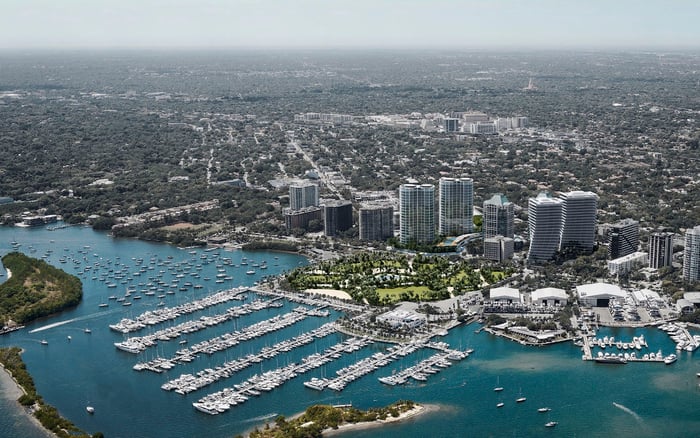
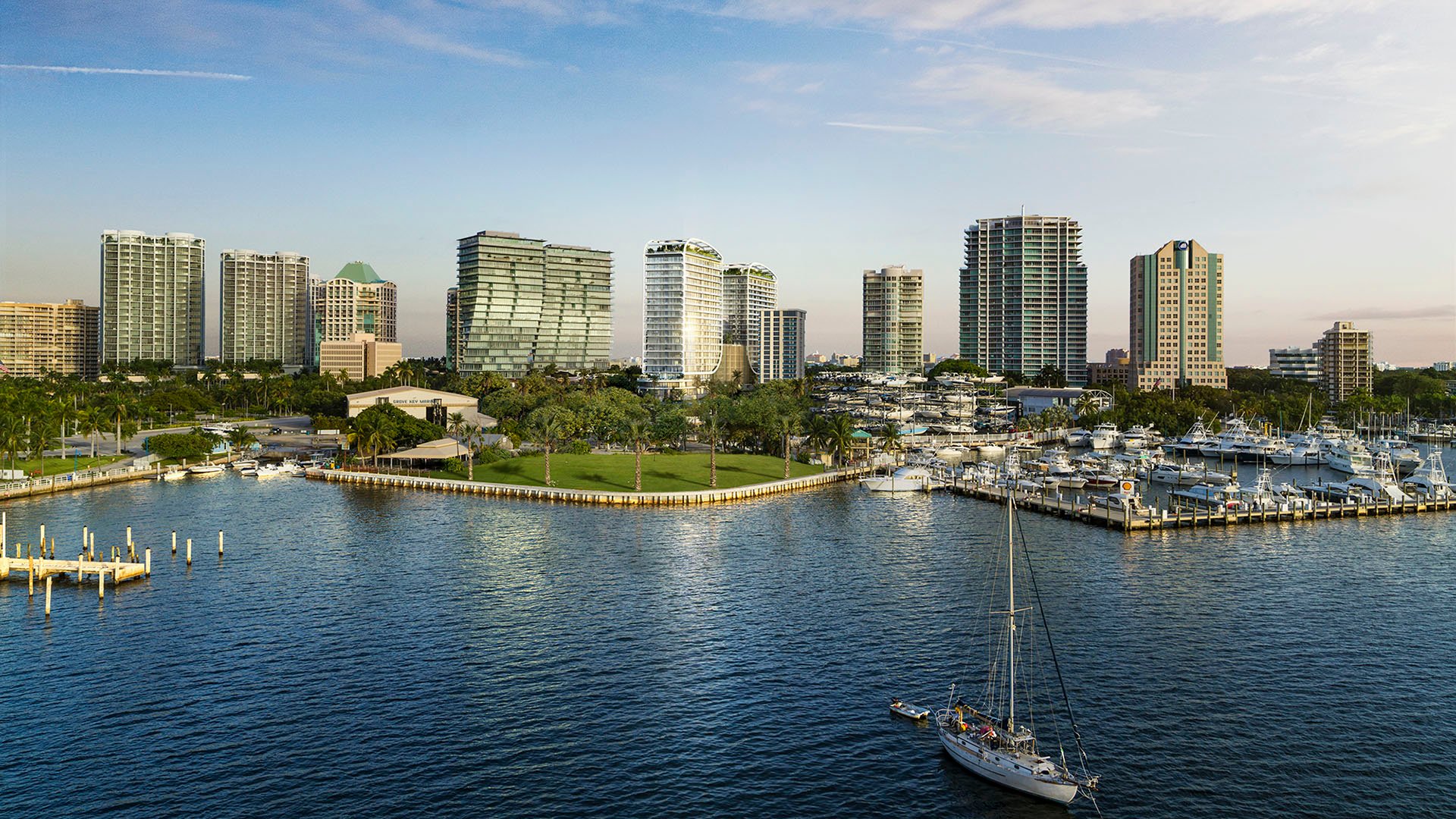
The Peacock Park, Dinner Key and South Bayshore Drive area offers a different balance: village amenities alongside parks, marina activity and waterfront recreation. Peacock Park provides bayfront lawns, a playground and sports courts near the village center, while Dinner Key Marina and Regatta Park extend the outdoor destinations beyond the shopping and dining streets.
For someone whose ideal walk includes open space rather than only storefronts, this is a compelling area to examine. Depending on the building’s location, residences along South Bayshore Drive can offer walking access to restaurants, coffee shops, groceries, Peacock Park and the marina. That qualification matters: the corridor does not offer a uniform pedestrian experience.
When considering Park Grove Coconut Grove, use the actual entrance as the starting point for a grocery walk and a separate park outing. Testing both prevents an attractive recreational route from standing in for everyday convenience.
Coconut Grove’s waterfront identity is shaped by parks and sailing facilities, not a continuous beach. That distinction is central to the purchase decision. The attraction is a bay-oriented routine; waterfront recreation is not a guarantee of silence.
Northeast Coconut Grove deserves attention from buyers weighing park access alongside the pull of the village. It should not, however, be assigned a single walkability profile. The experience depends on the individual residential address and the destinations that matter to its owner.
The area around 2962 Coconut Avenue offers a specific reference point, with Lincoln Park, Blanche Park and Oak Avenue Park nearby. That does not establish identical access for neighboring properties, but it gives buyers a starting point for examining how parks might fit into an ordinary week.
For households considering Arbor Coconut Grove, the same address-first approach applies: map the desired park, café and shopping routes from the property itself rather than borrowing the convenience of another location.
Here, the distinction between recreational and practical walkability becomes especially useful. A pleasant park outing and an easy grocery trip serve different needs. Buyers should decide which matters more before allowing a broad neighborhood description to settle the question.
In West Grove, Grand Avenue provides a commercial corridor connecting residential streets with shops, restaurants and the wider village network. For buyers considering this area, the key question is how comfortably a particular home connects to the corridor and onward to regular destinations.
The free Coconut Grove trolley adds another layer, linking Grand Avenue, the village, waterfront parks and the Coconut Grove and Douglas Road Metrorail stations. Both stations serve the Orange and Green lines, with the Orange Line providing airport access. These connections can extend a routine beyond the distance someone wishes to walk.
They do not make all transit-oriented addresses equally tranquil. The Coconut Grove station area near US-1 and Southwest 27th Avenue favors commuting convenience but offers a less tranquil pedestrian setting than the waterfront and interior residential streets. For buyers prioritizing a calmer daily atmosphere, rail access may work better as a connection than as the defining feature of the immediate surroundings.
A map radius cannot show whether a route feels comfortable at the times an owner will use it. Before committing, walk to groceries, dining and parks on a weekday, a weekend and in the evening. Assess crossings, sidewalk continuity, shade and the approach to the building firsthand rather than assuming they will meet your needs.
For a buyer considering Four Seasons Residences Coconut Grove, this exercise is as important as the residence tour. The test is whether the address supports the intended routine, not whether the neighborhood has a walkable reputation.
The approximately five-mile Commodore Trail adds a broader walking and cycling route linking the Vizcaya area with South Miami Avenue, Bayshore Drive, Main Highway and Douglas Road. Treat access to it as a distinct benefit to evaluate, not a substitute for everyday errands.
Ultimately, Central Grove suits village-first priorities; the waterfront emphasizes open space and recreation; residential addresses warrant a closer look at park-centered routines; and station access serves commuting needs. The most persuasive choice is the one whose conveniences remain useful after the viewing ends.
Explore Coconut Grove residences through the lens of your daily routine with MILLION.
If branded residences are on your mind — as a home or as an allocation — we would be glad to share what we are seeing, privately.
Begin a quiet conversationCentral Grove concentrates restaurants, cafés and shops around CocoWalk, Grand Avenue, Main Highway, Commodore Plaza and McFarlane Road.
Not necessarily. Its convenience comes with more weekend foot traffic and street activity than quieter residential sections.
The Peacock Park, Dinner Key and South Bayshore Drive area combines access to village amenities with parks, marina activity and waterfront recreation.
Some locations can offer walking access to groceries, restaurants and parks. The actual route depends on the building’s location.
No. Its waterfront character is shaped by parks and sailing facilities rather than a continuous beach.
Lincoln Park, Blanche Park and Oak Avenue Park are nearby. Buyers should evaluate access separately from each prospective property.
Grand Avenue provides a commercial corridor connecting residential streets with shops, restaurants and the broader village network.
The free trolley links Grand Avenue, the village, waterfront parks and the Coconut Grove and Douglas Road Metrorail stations.
The station area near US-1 and Southwest 27th Avenue favors commuting convenience but offers a less tranquil pedestrian setting than the waterfront and interior residential streets.
Walk the exact routes to groceries, parks and dining during weekday, weekend and evening hours. Evaluate recreational access separately from practical errands.