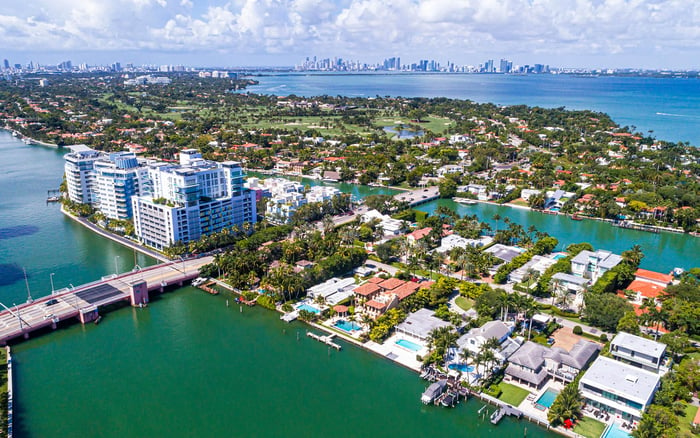
A Fisher Island closing requires two layers of diligence: island-wide rules and the governing documents of the specific association. Buyers should resolve pet limits, accommodation procedures, guest classifications, leasing controls, and resale approvals in writing before committing.

A primary home on Fisher Island is not evaluated by its finishes, views, and floor plan alone. Daily life is also shaped by overlapping layers of governance: island-wide Rules and Regulations, the governing documents of the individual condominium association, and policies governing club facilities. Members, residents, and guests are subject to the island-wide framework, while each association may impose an additional layer of detail.
That distinction matters before closing. A broad statement that pets are permitted does not establish whether a particular building imposes weight, breed, or pet-count restrictions. Nor does general guest access clarify how an unaccompanied relative, household employee, event vendor, or contractor will be classified.
Whether considering Palazzo del Sol, Palazzo della Luna, or another Fisher Island address, request the current declaration, bylaws, rules, amendments, application package, and relevant forms. Ask management to confirm interpretations in writing and identify any pending amendments.
The most consequential closing questions concern how the home will actually be used.
The island-wide animal provisions recognize dogs, cats, birds, and other household pets accepted by the community association. Animals cannot be kept or bred commercially, nor can they become a nuisance or annoyance. Pets are prohibited from association beaches. Outside the designated dog park, they generally must be leashed and attended by an adult or a child older than eight.
A buyer should nevertheless obtain the exact building policy rather than extrapolate from island-wide rules. Ask these questions:
Is the weight ceiling measured per animal or across all animals in the residence?
How many pets may be kept, and do visiting animals count?
Are particular breeds restricted?
At what point is weight verified, and by whom?
Can an existing pet be grandfathered if a rule changes?
Are registration, photographs, vaccination records, or annual renewals required?
Behavior merits equal attention. Aggression, repeated barking, balcony noise, and other nuisance conduct can create an issue even when an animal satisfies size restrictions. Buyers should ask how complaints are documented, what notice is provided, and what corrective process follows.
This scrutiny is particularly important when comparing condominium living with a property format such as The Links Estates at Fisher Island. The governing documents-not assumptions based on property type or marketing language-should control the decision.
Do not conflate ordinary pet rules with disability-accommodation procedures. Emotional-support animals are expressly addressed within certain access restrictions, yet the complete review process is not fully defined. Pets, including emotional-support animals, are excluded from indoor and outdoor dining areas at Porto Cervo, Garwood, Theapolis, and Greenside. Pets are also prohibited from facilities including the spa, salon, Island Market, beach and pool area, golf course, and racquet club.
Before closing, request the current service-animal and emotional-support-animal policies from both the club and the condominium association. Ask which office receives a request; whether management, the board, or counsel reviews it; what forms and documentation apply; how long the review typically takes; whether renewal is required; and whether an appeal procedure exists. Confirm venue-specific access as well.
The purpose is not to draw a legal conclusion from a summary policy. It is to understand the actual administrative path, the controlling documents, and the practical timing before the residence becomes a primary home.
On Fisher Island, the word “guest” should never be treated as self-explanatory. Island-wide rules prohibit owners from clearing contractors or subcontractors as guests. The formal distinction among guests, employees, vendors, and contractors is therefore especially important for staffed households, renovations, deliveries, private chefs, and events.
Ask whether unaccompanied guests may occupy the residence, whether the owner must be present, how long a guest may stay, and whether immediate family receives different treatment. Clarify advance-registration procedures, access credentials, vehicle or transportation protocols, and any limits affecting recurring visitors.
Household staff require a separate review. Determine whether a nanny, caregiver, housekeeper, estate manager, or security professional must be registered as an employee rather than a guest. For planned work, establish who submits contractor credentials and how far in advance approvals must be completed. Precise classification reduces friction while respecting the privacy expected of a primary residence.
Resale value is not solely a future pricing question; it is also a matter of marketability. Board approval, rights of first refusal, buyer screening, transfer fees, leasing limits, and approval timing can influence both the size of the future buyer pool and the predictability of a closing.
Request the resale application and ask who approves a purchaser, what materials are required, which fees apply, and how long approval can take. Confirm whether a right of first refusal exists and how it operates. Examine leasing provisions with equal care, including minimum terms, annual leasing caps, waiting periods, renewal requirements, and whether an owner may lease immediately after acquisition.
Comparable condominium policies elsewhere can impose a 30-day minimum and restrict the number of leases per year, but that example should not be assumed to govern any Fisher Island building. The correct figures must come from the residence's current documents. Buyers considering The Residences at Six Fisher Island should apply the same document-level discipline required for an established association.
The waterfront setting and proximity to Miami Beach may define the visual appeal, but practical certainty protects the ownership experience. Before signing, have the closing team reconcile the latest effective island rules with the association's declaration, bylaws, amendments, pet forms, accommodation procedures, guest-access policy, lease restrictions, and resale provisions.
Create a written closing matrix listing each question, the controlling document, the responsible decision-maker, and the answer received. Convert oral assurances into written confirmation from management whenever interpretation is involved. Also ask about pending amendments affecting pets, guests, access, leasing, or transfer procedures, as amended rules can alter both daily use and future marketability.
The central principle is simple: the elegance of a primary residence is strongest when its operational rules fit the household without compromise.
For discreet guidance on Fisher Island acquisitions, consult MILLION.
If branded residences are on your mind — as a home or as an allocation — we would be glad to share what we are seeing, privately.
Begin a quiet conversationNo. Buyers should review both island-wide rules and the governing documents of the specific condominium association.
No. The island-wide rules prohibit pets from association beaches.
Outside the designated dog park, pets generally must be leashed and attended by an adult or a child older than eight.
Confirm whether it applies per animal or in aggregate, how weight is verified, whether visiting animals count, and whether grandfathering is possible.
Yes. Aggression, repeated barking, balcony noise, and other nuisance conduct can still be addressed.
Yes. Request the current accommodation policy, forms, decision-maker, review timing, renewal terms, appeal process, and venue-specific access rules.
Island-wide rules prohibit owners from clearing contractors or subcontractors as guests, so the proper classification and approval process should be confirmed.
Ask about unaccompanied stays, owner-presence requirements, duration limits, immediate-family treatment, and advance registration.
Board approval, rights of first refusal, screening, transfer fees, leasing limits, and approval timing can affect marketability and closing certainty.
Amendments may change pet, guest, access, leasing, or transfer procedures after the current documents are reviewed.