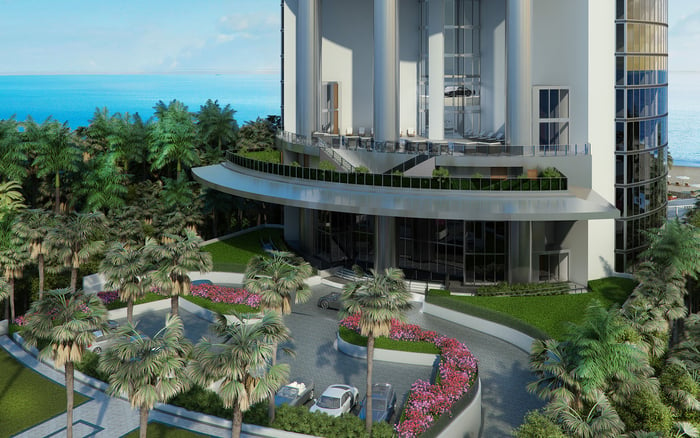
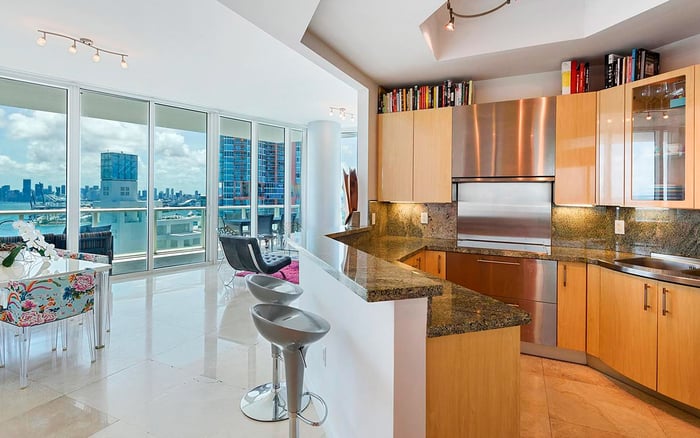
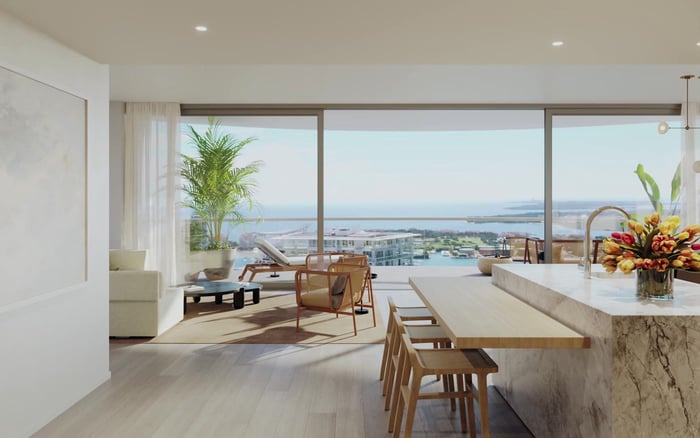
A penthouse closing deserves scrutiny beyond the view. Verify the legal status of outdoor space, map mechanical access, allocate terrace obligations, and ask how those details are reflected in the appraisal.

The appeal of a South Florida penthouse is immediate: elevation, privacy, and the possibility of outdoor living above the surrounding city. The closing questions are less visible. What, precisely, does the buyer control? Who can enter that space? Who must repair what lies beneath its finished surface?
A compelling presentation of a private rooftop cannot substitute for recorded rights. Before closing, the buyer should bring four distinct inquiries into focus: legal classification, mechanical adjacency, terrace responsibility, and valuation. Each addresses a different aspect of ownership. None is settled simply because the residence occupies the top floor.
The objective is not to diminish the pleasure of the purchase. It is to ensure that the privacy, usability, and obligations understood at contract signing are those delivered at closing.
Florida condominium law distinguishes the unit from common elements, which include condominium property outside unit boundaries. Limited common elements remain common elements, even when the declaration reserves their use for particular units. Exclusive use is not the same as ownership within the unit boundaries.
Ask counsel to identify every roof and terrace area on the recorded plans and match it to the declaration and amendments. Is it part of the unit, a limited common element, or another common area? Does the legal description support the outdoor space shown during the presentation?
For a buyer considering The Perigon Miami Beach, this document-first approach is the appropriate starting point. No particular roof arrangement should be assumed.
Next, establish continuity and control. Do the rights pass with the unit? What access conditions attach to them? What restrictions govern furniture, installations, or alterations? Request the actual provisions, not an assurance that the rooftop has always been treated as private.
The right to enjoy a terrace does not, by itself, establish who maintains it. Florida law generally assigns common-element maintenance to the association, while allowing the declaration to allocate limited-common-element maintenance to the benefiting owners.
Request a written, component-by-component explanation covering the roof structure, waterproofing, drains, terrace finishes, railings, and dedicated equipment. For each item, distinguish maintenance from repair and replacement. Ask counsel to identify the controlling language rather than rely on a broad description such as “the association handles the roof.”
This distinction deserves equal attention when comparing a residence at The Delmore Surfside with other properties. No obligation should be inferred from a project's presentation or architectural character.
If terrace finishes must be removed to reach waterproofing, who pays for removal and reinstatement? Who addresses a blocked drain? Who authorizes work where owner-responsible components meet association-responsible components? These are questions to resolve, not universal allocations.
Insurance requires a separate review. Ask the insurance adviser to explain applicable coverage alongside the maintenance allocation. Responsibility for a component does not, by itself, establish how a loss involving it will be insured.
Equipment location alone does not establish ownership or responsibility. Equipment outside a unit that serves it exclusively can be designated a limited common element. Shared systems require their own review. Florida law also recognizes utility easements through units for facilities such as ducts, plumbing, and wiring.
Request roof and mechanical plans, then identify which equipment serves the penthouse and which serves other residences or the building. During a technical inspection, ask the specialist to assess observable sound, vibration, airflow, and the relationship between equipment and outdoor seating areas. Document any concern rather than translate it into an assumed valuation discount.
For a Sunny Isles Beach search that includes Jade Signature Sunny Isles Beach, apply the same questions without presuming that any particular mechanical condition exists.
Replacement logistics matter as much as current operation. Rooftop HVAC work can involve association approval, permits, roof access, and possible crane coordination. Ask whether technicians or replacement equipment must cross the terrace, whether access runs through the residence, and how those operations would be coordinated.
Privacy does not eliminate the association's statutory access rights. Florida law provides association access to units during reasonable hours when necessary for specified maintenance, repair, replacement, or damage prevention. The declaration may contain additional provisions relevant to rooftop access.
Ask management and counsel to explain the access route, notice arrangements, and applicable emergency procedures. Can routine service occur without entering living spaces? Must the owner provide access from within the unit? Distinguish the legal entitlement from the building's customary practice.
Alterations deserve similar care. Exclusive use does not confer unrestricted permission to enclose a terrace or add installations. Where the declaration supplies no approval procedure, Florida law generally requires approval from 75% of total voting interests for material alterations or substantial additions to common elements, subject to statutory exceptions.
Ask, too, about contemplated rooftop work. Florida law authorizes boards to install specified solar collectors and renewable-resource devices on common elements or association property without unit-owner approval. Counsel should confirm the applicable law and recorded amendments before advising on any proposed change.
A penthouse label should prompt valuation questions, not a predetermined premium. Ask the appraiser to explain how documented outdoor rights, access restrictions, maintenance obligations, and observable mechanical impacts were treated. Do not assume every terrace arrangement warrants the same valuation treatment.
In Brickell, a buyer evaluating The Residences at 1428 Brickell should distinguish the residence's appeal from the evidence supporting its valuation, just as at any other property.
Keep the questions specific. Did the valuation reflect the outdoor space's actual legal status? Were access conditions and owner obligations understood? What evidence supports any adjustment for the terrace or observed mechanical conditions? Neither a universal penthouse premium nor a mechanical-adjacency discount should be assumed.
If financing is involved, ask the lender and counsel what a valuation below the contract price would mean for the proposed financing and contractual obligations. Resolve that question before relying on an expected appraisal outcome.
Request a concise closing file that consolidates the findings: counsel's classification of roof rights, a component responsibility schedule, mechanical and access findings, and the appraiser's explanation of relevant valuation treatment.
Where answers remain unclear, ask the appropriate adviser to resolve them in writing. The most useful final question is simple: does the documented purchase match the way you intend to live in the residence?
For a discreet perspective on your South Florida penthouse search, explore MILLION.
If branded residences are on your mind — as a home or as an allocation — we would be glad to share what we are seeing, privately.
Begin a quiet conversationNo. Counsel should verify the area's classification in the recorded declaration, plans, and amendments rather than rely on marketing language.
It is a common element reserved through the declaration for specified units' exclusive use. That exclusive use does not make it part of the unit itself.
Transferability should be verified in the recorded documents. Ask counsel to identify the provisions establishing whether the rights pass with the unit.
Florida law generally assigns common-element maintenance to the association but allows declarations to assign limited-common-element maintenance to benefiting owners. The allocation should be reviewed separately for each terrace component.
Yes. Ask an insurance adviser to explain applicable coverage rather than assume that maintenance responsibility determines coverage for a loss.
Florida law provides association access during reasonable hours for specified maintenance, repair, replacement, or damage prevention. Counsel should also review declaration provisions affecting rooftop access.
Not necessarily. Equipment serving a unit exclusively may be designated a limited common element, but location alone does not establish its legal status or responsibility.
Ask about association approval, permits, roof access, and possible crane coordination. Establish whether service or replacement operations would cross the terrace or pass through the residence.
No. Approval requirements depend on the declaration and applicable law, and exclusive use alone does not authorize enclosing or altering the space.
No universal discount should be assumed. Ask the appraiser to explain how observable mechanical impacts, outdoor rights, access conditions, and maintenance obligations were treated.