Before closing on an Edgewater residence, look beyond the finishes to the documents governing corrosion protection, balcony waterproofing, leak repairs, and window warranties. The strongest purchase file connects installed systems with maintenance records and clear responsibilities.
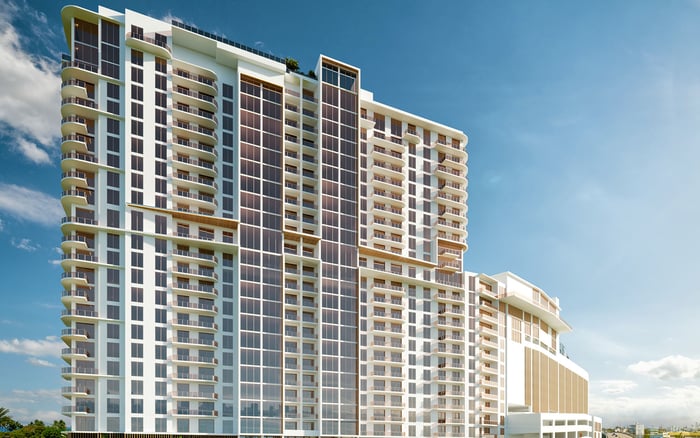
In Edgewater, the appeal of a full-service residence deserves an equally considered review of its exterior systems. Before closing, look beyond the arrival experience and interior finishes to the assemblies that separate the residence from salt air and wind-driven rain: balcony membranes, concrete edges, window frames, hardware, and facade joints.
The question is not simply whether the apartment looks well maintained. It is whether the seller and association can connect the installed systems to documented inspections, completed repairs, maintenance obligations, and applicable warranties. A polished finish is no substitute for a documented maintenance history.
For buyers considering Aria Reserve Miami alongside other Edgewater options, these questions provide a consistent framework for comparison. They are due-diligence prompts, not findings about any named property. Ask the building engineer to explain technical conditions, and have the applicable documents reviewed before making assumptions about coverage or responsibility.
Airborne salt absorbs moisture, creating a conductive film on metal that accelerates oxidation and galvanic corrosion where dissimilar metals meet. The question should be specific: what corrosion protection was specified for this tower’s actual marine exposure?
Ask the building engineer to identify frame materials, protective finishes, railing components, hardware, fasteners, and anchors. Request confirmation that installed components match the project’s coastal specifications. Do not accept a broad description such as “coastal quality” as an answer, or assume that distance from the water establishes a universal exposure category.
Concrete deserves separate attention. Chlorides reaching embedded reinforcing steel can cause corrosion and expansion, leading to cracking or spalling on exposed balconies. Request engineering assessments, reserve studies, and pending restoration notices addressing balcony edges, exposed reinforcement, and deteriorated railing embeds.
If repairs have been completed, ask for the scope of work: concrete removal, reinforcement treatment, patching, and waterproofing. Have the engineer distinguish surface repairs from work that addresses the documented underlying condition. The objective is a clear maintenance history, not a visual judgment made during a showing.
A balcony’s visible surface is only part of the inquiry. Establish whether the system is a traffic-bearing membrane, a tile-over-membrane assembly, or a deck coating. These descriptions are not interchangeable. The maintenance file should identify the installed system rather than merely state “waterproofed.”
Ask when the waterproofing was installed, replaced, or recoated. Request its specifications, applicable warranty, and unit-specific repair invoices, including membrane replacement, patching, and railing-embed work. Confirm that the specifications address the building’s exposure conditions.
Drainage belongs in the same review. Standing water, cracks, and failed coatings can allow chlorides to reach balcony reinforcement. Ask whether ponding or surface failures have been documented, what corrective work was undertaken, and whether subsequent inspections addressed the repaired areas.
Where post-tensioned construction is present, ask the engineer how tendon anchor points and cold joints are waterproofed. Moisture intrusion can cause concealed steel corrosion and concrete delamination. Buyers considering EDITION Edgewater should apply the same assembly-level questions, without presuming a particular construction detail or condition.
Before changing balcony finishes, confirm that the proposed tile, adhesive, and waterproofing form an approved, compatible assembly. Review warranty restrictions before proceeding with a design decision based on assumptions about permitted alterations.
A history of water damage requires more than confirmation that the interior was repainted. Potential sources in a high-rise include blocked HVAC condensate lines, failed roof membranes, ruptured plumbing supply lines, and improperly waterproofed balconies. Incidents can originate in neighboring residences or common building systems.
Request the unit’s written leak history, relevant insurance claims, and repair work orders. For each incident, ask for the identified origin, corrective work, and any follow-up documentation. If the file records cosmetic restoration but leaves the origin unresolved, seek clarification before treating the matter as closed.
The exterior enclosure also warrants review. Ask for facade-coating and joint-sealant specifications, inspection schedules, and renewal records. These components help protect against humidity, salt air, and wind-driven rain; they warrant attention even when the interior appears dry.
Clarify the association’s procedure for investigating leaks, arranging access, completing remediation, and determining costs. Ask who coordinates each step and which documents govern responsibility. Full-service operations are not a promise that every repair is an association expense.
Start with an inventory of the installed windows and exterior doors: manufacturer, product series, frame material, finish specification, and installation year. Establish whether they are original installations or owner replacements, then obtain the applicable installation contracts, product approvals, and warranty documents.
Ask the engineer whether the installed finishes and hardware meet the project’s specified coastal requirements. For exposed aluminum assemblies, ask specifically whether AAMA 2605 finishes and stainless hardware were specified and installed. Do not treat those features as a universal requirement or a guarantee against corrosion.
Read coverage by component and failure type. Does the warranty cover salt-air corrosion of frames or hardware? Does it address insulating-glass seal failure or fogging? Does it cover labor as well as replacement parts? Ask separately whether coverage transfers at closing and whether any action is required to preserve it.
Maintenance conditions matter as much as coverage language. Check requirements for cleaning, lubrication, and sealant inspections, along with restrictions on unauthorized modifications, then request corresponding maintenance records. Use the installed manufacturer’s instructions rather than a generic coastal maintenance calendar. A product description cannot establish what a particular warranty will pay.
For an Edgewater search that includes Villa Miami, apply the same document discipline across the shortlist. Compare the evidence available for each purchase rather than assuming that similar positioning means identical assemblies, maintenance duties, or warranty terms.
Organize the closing file around four subjects: corrosion protection, balcony waterproofing, water-intrusion history, and windows and doors. For each, retain the installed specifications, inspection findings, completed repair scopes, maintenance requirements, and applicable coverage. Identify unanswered questions and direct them to the engineer, association, seller, or document reviewer best placed to respond.
Finally, separate technical condition from financial responsibility. Review reserve studies and restoration notices alongside documented repair needs, but do not use generic waterproofing costs to conclude that reserves are adequate. Payment obligations and warranty transfer depend on the applicable documents. The goal is a purchase whose maintenance obligations are as clearly understood as its floor plan.
For a considered approach to your Edgewater search, connect with MILLION.
If branded residences are on your mind — as a home or as an allocation — we would be glad to share what we are seeing, privately.
Begin a quiet conversationAirborne salt attracts moisture and creates a conductive film that accelerates metal corrosion. Ask the building engineer how the installed frames, railings, hardware, and anchors are protected.
Request engineering assessments, restoration notices, and completed repair scopes addressing cracking, spalling, exposed reinforcement, or deteriorated railing embeds. Repair documentation should identify concrete removal, reinforcement treatment, patching, and waterproofing where applicable.
No. Identify whether the balcony uses a traffic-bearing membrane, tile-over-membrane assembly, or deck coating, and obtain the installed system’s specifications and maintenance history.
Standing water, cracks, and failed coatings can allow chlorides to reach reinforcement. Ask whether drainage problems were documented and what corrective work followed.
Do not assume so. Confirm that the tile, adhesive, and waterproofing are an approved compatible assembly, and review the actual warranty’s alteration restrictions before proceeding.
Request written incident records, relevant insurance claims, and repair work orders, including leaks originating in neighboring units or common systems. Ask for the identified origin and corrective work, not just interior restoration details.
That cannot be assumed. The applicable documents and circumstances must establish responsibility, so clarify the association’s investigation, access, remediation, and cost-allocation process.
Record the manufacturer, product series, frame material, finish specification, and installation year. Obtain installation contracts, product approvals, and warranties, and establish whether the assemblies are original or owner replacements.
No coverage should be assumed without reading the actual warranty. Check corrosion, insulating-glass seal failure, fogging, labor, parts, and maintenance conditions separately.
Transfer depends on the applicable warranty documents. Confirm whether it is permitted and whether any action is required to preserve coverage before relying on it.