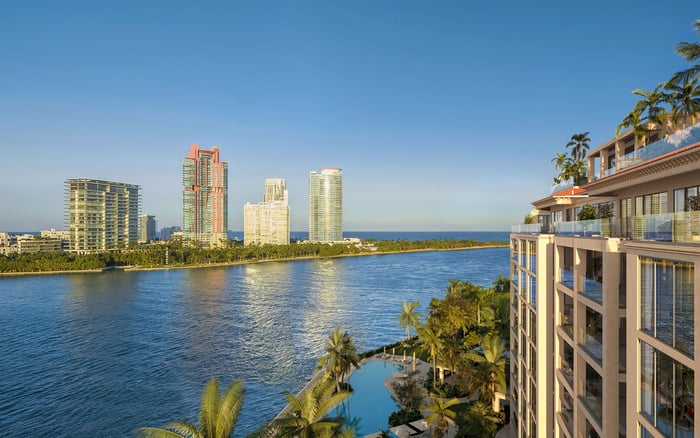
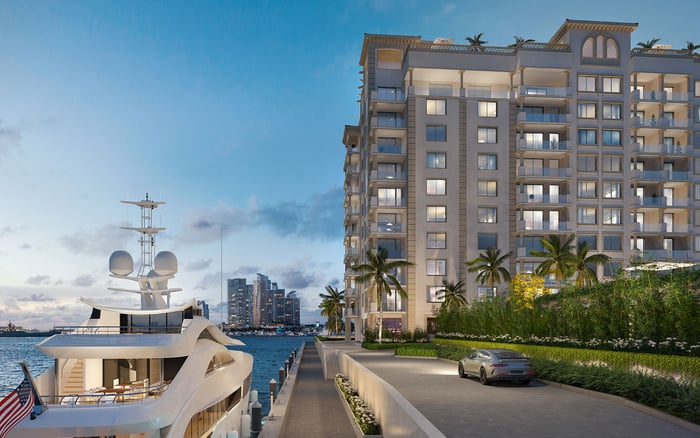
A disciplined pre-closing review for buyers at Six Fisher Island, covering contract controls, payment reconciliation, residence specifications, club activation, private-island access and punch-list strategy.
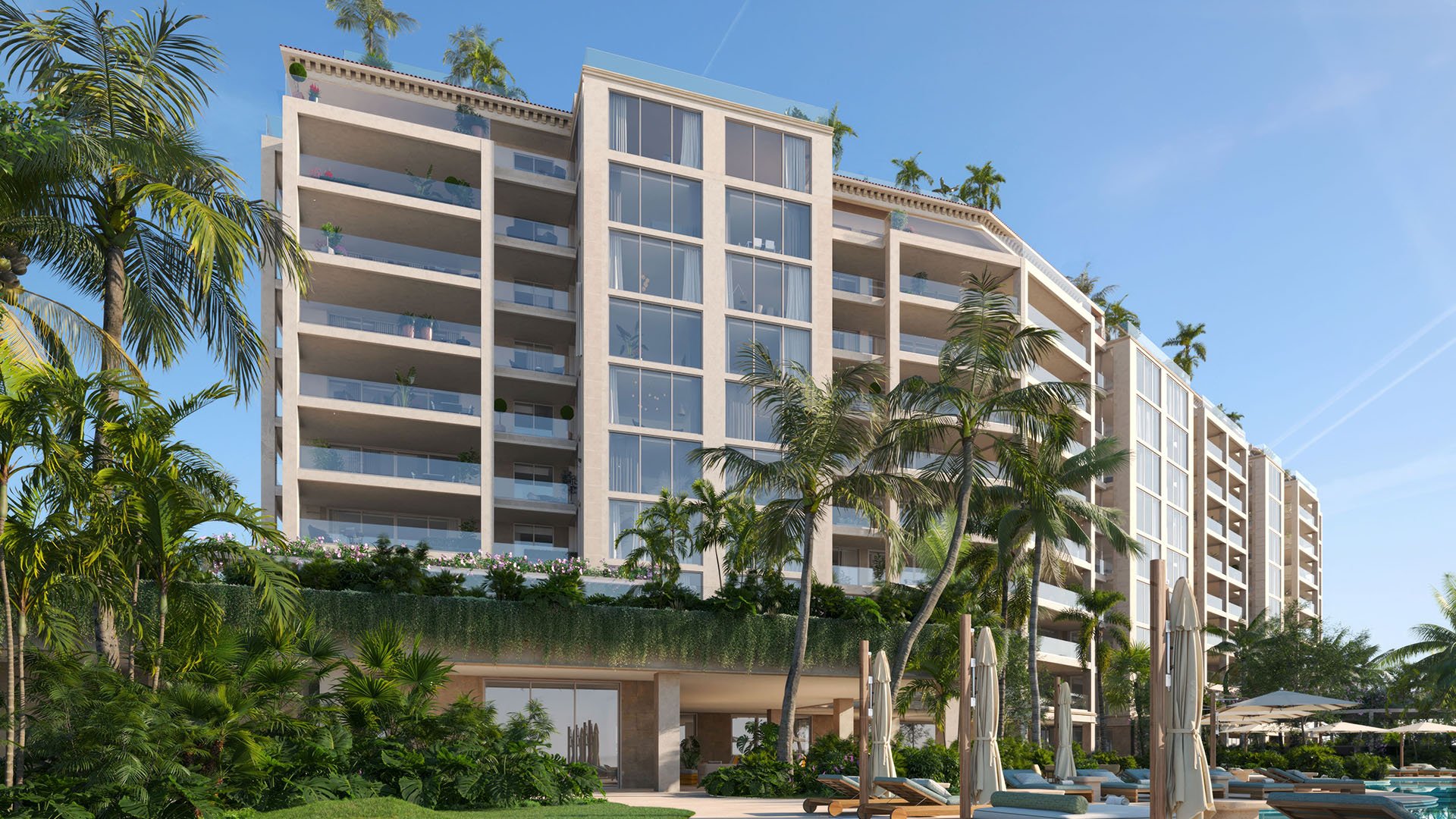
For buyers at The Residences at Six Fisher Island, the interval between contract and closing demands more than calendar management. This is the point at which the purchase agreement, payment history, design selections, club process and physical residence must be reconciled into a single, controlled delivery plan.
Planned for 6 Fisher Island Drive in Miami Beach, the boutique waterfront condominium is expected to comprise approximately 50 residences across roughly 6.5 acres. Homes are planned with three to eight bedrooms and approximately 3,800 to 15,570 square feet of interior space. At that scale, seemingly minor discrepancies in millwork, stone, controls or service areas can become consequential.
Waterfront privacy is central to the proposition, but precision should govern the closing. For pre-construction purchasers, the executed agreement and its exhibits carry more weight than presentation materials, general timelines or verbal expectations.
Completion estimates have varied between 2026 and the first quarter of 2027. Descriptions have also differed on whether the building has 10 or 11 stories. Neither inconsistency should direct a buyer's closing preparations. Counsel should identify the contractual delivery trigger, the permitted form and timing of closing notice, any extension rights, and the exact deadlines for funding and execution.
The same document review should establish which plans govern the residence's location and configuration. Compare the executed floor plan with the condominium documents, amendments and selection schedules. Confirm bedroom count, terrace geometry, storage, service areas and any private amenity rooms. Buyers familiar with completed Fisher Island residences such as Palazzo del Sol and Palazzo della Luna will recognize that operational details can matter as much as overall square footage.
Request an updated purchaser ledger and compare every deposit and construction milestone payment with the contract. Resolve missing credits, transfer references or allocation questions before the closing statement becomes urgent.
Obtain draft closing figures early enough for counsel to review condominium assessments, master-association charges, tax and assessment prorations, recording expenses and any developer-imposed fees. Current club dues and recurring association charges should be provided in writing, not inferred from marketing information. The objective is a clear schedule that separates one-time closing costs from continuing ownership obligations.
A room-by-room audit should begin with the contractual finish schedule. Review the specified stone, flooring, millwork, plumbing fixtures, appliances, lighting and home-automation systems. Any substitution should be documented, identified by location and assessed against the governing contract before the walkthrough.
The asking range of approximately $15.5 million to $60 million reinforces the case for an inspector or owner's representative experienced in ultra-luxury new construction. The professional should test function as well as appearance, recording deficiencies with photographs and a written room-by-room list. The same standard applies when evaluating estate-style alternatives such as The Links Estates at Fisher Island, where bespoke scope requires disciplined verification.
Approved condominium owners are expected to receive a lifetime Fisher Island Club membership upon closing at the developer's cost. Eligibility, however, is determined independently by the club. Buyers should therefore treat application, approval, activation, credential issuance, condominium closing and key handover as related but distinct milestones.
Assign a responsible party to each step and obtain written confirmation of status. Clarify whether access begins at closing or only after final approval and credential issuance. This is not merely a lifestyle detail; it can affect arrival planning, household orientation and the practical first days of ownership on Fisher Island.
Inspectors, designers, owner's representatives and household staff may require advance authorization to enter the island. Build the access process into the walkthrough schedule, including attendee identities and the lead time required for credentials or transportation. A technically accomplished team is useful only if every specialist can reach the residence at the appointed time.
Counsel should also review leasing, guest, pet, marina, dockage and access restrictions contained in the condominium declaration and related island documents. These rules can shape use of the home well after closing and deserve consideration before the walkthrough window compresses.
The development is expected to include more than 55,000 square feet of resident amenities and over 1,000 linear feet of shoreline. Buyers should request a written amenity-completion schedule distinguishing facilities available at closing from work scheduled afterward.
The same discipline applies inside the residence. Confirm the contractual defect procedure and whether unresolved punch-list work may lead to a written repair commitment, credit or another remedy. Do not assume that identifying an item automatically changes the closing date. Counsel should interpret the agreement, while the inspector documents condition and the owner's representative tracks completion.
Before the walkthrough, the buyer's team should conduct a single coordination review covering the closing notice, ledger, draft figures, governing plans, finish schedule, substitutions, club status, island access and inspection protocol. Responsibility for every open item should be assigned by name, with a written deadline.
During the walkthrough, move systematically through the residence rather than relying on visual impressions. Afterward, circulate one consolidated deficiency record, confirm receipt and preserve every contractual notice requirement. The luxury of the process lies in eliminating ambiguity before keys change hands.
Which date controls the buyer's obligation to close? The executed purchase agreement and formal developer notice control, not general completion estimates.
Should a buyer rely on the described story count? No. The executed plans and condominium documents should govern unit location and building configuration.
What should be reconciled on the purchaser ledger? Match every deposit and milestone payment to the contract, including credits and payment allocations.
Which residence details deserve comparison before walkthrough? Compare the as-built home with the executed plan, selection schedules, terraces, storage, service areas and private rooms.
How should finish substitutions be handled? Request written documentation identifying each substitution, its location and its relationship to the contractual specification.
Is Fisher Island Club membership automatic at closing? No. Membership is contemplated for approved owners, while the club independently determines eligibility.
What recurring costs should be confirmed? Obtain current written condominium assessments, master-association charges and ongoing club dues.
Who should attend the walkthrough? Include an inspector or owner's representative experienced with bespoke, ultra-luxury new construction.
Can unresolved punch-list items delay closing? The answer depends on the contract's defect and closing provisions, which buyer's counsel should interpret.
Why request an amenity-completion schedule? It clarifies which facilities are expected to be available at closing and which may follow later.
For a discreet conversation and a curated building-by-building shortlist, connect with MILLION.
If branded residences are on your mind — as a home or as an allocation — we would be glad to share what we are seeing, privately.
Begin a quiet conversation