At this planned 30-residence oceanfront address, future resale appeal may depend on more than the name. A buyer-focused examination of unit selection, closing terms, service rights and the ongoing cost of ownership.

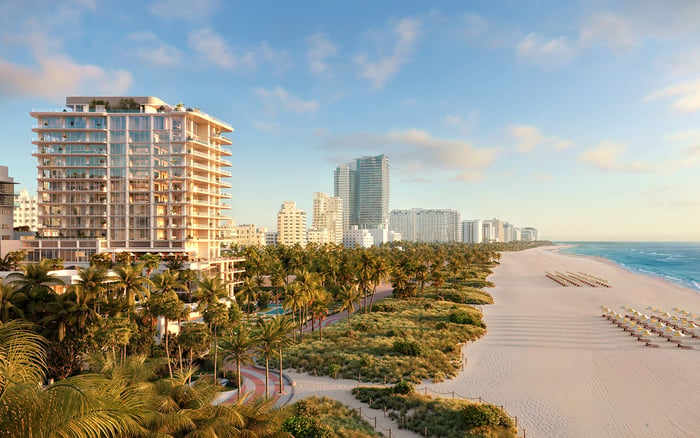
For a buyer considering The Ritz-Carlton Residences® South Beach, the question is not simply what the name commands today. It is what a subsequent purchaser could inspect, experience and confidently underwrite after delivery. The planned 30-residence oceanfront condominium at 1671 Collins Avenue, Miami Beach, offers a specific starting point: a small residential collection just off Lincoln Road.
The title’s premise requires qualification. An initial brand premium has not been measured here, and its eventual erosion is not established. The more disciplined exercise is conditional: if the launch’s novelty becomes less influential, which attributes might continue to justify the cost of ownership? Location, unit quality, privacy and dependable service are plausible answers, not proven resale drivers at this project.
Thirty planned homes create numerical scarcity, but scarcity alone does not establish demand or liquidity. The collection spans one- to five-bedroom layouts, with marketed sizes of approximately 1,197 to 4,520 square feet. That range does not confirm every configuration, and a compact residence should not be treated as a smaller version of the largest home.
For each unit, examine the proposed outlook, room proportions, bedroom separation, storage and circulation. Consider how the plan accommodates guests, extended stays and daily life-not just entertaining. Check any privacy or view advantage against unit-specific plans and, when possible, the completed residence.
The Lincoln Road setting also warrants personal evaluation. Beachfront proximity alongside an established commercial and pedestrian corridor may appeal to a buyer seeking an active South Beach base. Another purchaser may prefer a different relationship between home and neighborhood. Neither preference can be assumed for the future resale pool.
If The Perigon Miami Beach is also on the shortlist, apply the same residence-level questions. The comparison is a diligence exercise, not evidence of equivalent pricing or resale performance.
The available pricing signals describe different things. Starting asking prices stood at $4.25 million in October 2025. One-bedroom unit 8D was advertised at $4.25 million for 1,197 square feet, approximately $3,551 per square foot. These are marketing figures, not evidence of a completed sale.
In May 2025, unit 14A secured a buyer while asking $26.5 million, approximately $5,900 per square foot. Its final closing price is not established. A $10.5 million preconstruction purchase in September 2026 likewise represents contract activity rather than a completed resale.
These figures should not be assembled into an appreciation story. Different units, asking prices and contract milestones cannot establish a clear price trajectory. Nor does the spread between the advertised per-square-foot figures isolate what purchasers are paying for the brand.
Before committing, build a unit-specific acquisition worksheet separating the purchase price, contractual charges, financing expenses if applicable, and intended post-closing expenditure. Leave unconfirmed amounts unresolved rather than filling the gaps with assumptions borrowed from another building.
The original opening target was 2027; by September 2026, completion was expected in 2028. Neither date should be treated as a guaranteed closing deadline. Plan around the executed agreement and subsequent contractual notices, not a headline year.
Have counsel review deposit obligations, extension provisions, closing triggers, notice periods, assignment rights and remedies for delay. These are questions for the transaction documents, not confirmed project terms. A purchaser coordinating another property sale or financing should understand how those obligations interact before committing to a tightly sequenced move.
Request an itemized estimate of closing charges and clarify responsibility for each category. Binding deposit terms and closing costs are not established here. The objective is to understand both the anticipated cash requirement and the circumstances in which it could change.
Distinguish construction completion, permission to occupy, residential closing and any promised service commencement. Ask which milestones govern this purchase rather than assuming they occur together.
At the February 2025 sales launch, Sobe Sky Development was the identified owner of The Ritz-Carlton, South Beach Hotel & Residences. A separate distinction is essential: the project is owned, developed, offered and sold by the developer, not The Ritz-Carlton Hotel Company, L.L.C., or its affiliates.
That distinction does not establish the scope or duration of brand licensing, hotel access or residential services. Request the applicable agreements and clarify which rights attach to the residence, which services require additional payment and whether relevant benefits transfer to a subsequent owner.
For someone also considering Setai Residences Miami Beach, the useful comparison lies in the documents: what is included, who is obligated to provide it, and how can the arrangement change? A shared place on a buyer’s shortlist does not make two ownership structures interchangeable.
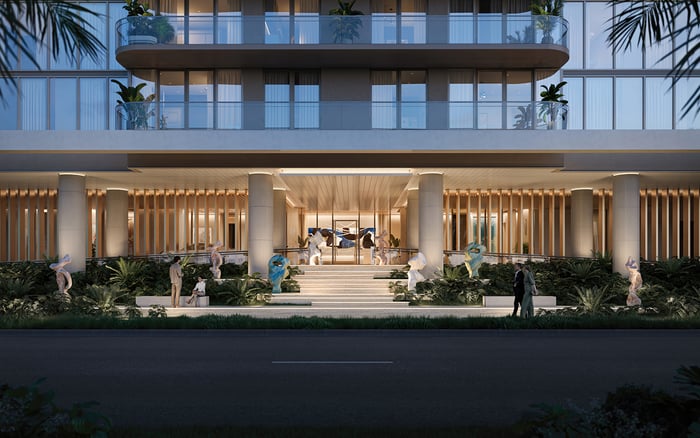
The planned design team includes architect Kobi Karp, interior designer Alessandro Munge and landscape designer Naturalficial. Those appointments frame the design proposition. A future purchaser, however, may place greater weight on the finished execution and upkeep than on the original presentation.
A prospective second owner could value service differently once its recurring expense is visible. Association dues, reserves, insurance expenses, rental restrictions and service-agreement terms are not established here. None should be inferred from the brand or the residence count.
Ask for the applicable budget, expense allocations, reserve provisions and insurance information as they become available. Clarify which costs belong to the residential association and whether shared arrangements create additional obligations. Test affordability against possible changes rather than relying on a single initial estimate.
If rental use matters, establish the governing restrictions before treating income as part of the purchase rationale. If personal use is paramount, assess whether the anticipated service model supports that use at an acceptable cost. A future buyer may value transparent obligations as much as an impressive arrival experience.
The strongest purchase rationale would remain coherent without assuming brand-driven appreciation. It would explain why this particular residence suits its setting, why its layout remains useful, what ownership actually includes and whether its recurring costs are acceptable.
Before closing, retain the plans, specifications, agreements and financial disclosures that support that rationale. They cannot guarantee resale value, but they can help distinguish enforceable rights from expectations. The objective is not to predict when brand appeal might fade. It is to own a residence whose appeal does not depend entirely on that prediction being wrong.
For a discreet conversation about residence selection and ownership priorities, connect with MILLION.
If branded residences are on your mind — as a home or as an allocation — we would be glad to share what we are seeing, privately.
Begin a quiet conversationThe planned oceanfront condominium is at 1671 Collins Avenue, Miami Beach, just off Lincoln Road.
The collection comprises 30 planned residences with one- to five-bedroom layouts. Marketed sizes range from approximately 1,197 to 4,520 square feet, without confirming every configuration.
No quantified brand premium is established here, nor is there evidence that it will fade. The resale discussion is a conditional evaluation of attributes beyond the name.
It was a starting asking price in October 2025, not a completed-sale benchmark. Unit 8D was also advertised at that price for 1,197 square feet.
Unit 14A secured a buyer in May 2025 while asking $26.5 million. Its final closing price is not established.
No; the activity discussed concerns preconstruction contracts rather than completed resales. It does not establish appreciation or future liquidity.
Neither is a guaranteed closing date. The original opening target was 2027, while the completion expectation identified in September 2026 was 2028.
The developer owns, develops, offers and sells the project, not The Ritz-Carlton Hotel Company, L.L.C., or its affiliates. This does not establish the scope of licensing or service rights.
Buyers should verify deposit obligations, closing charges, association dues, reserves, insurance expenses and service-related costs. Binding amounts and terms are not established here.
A future purchaser may consider layout, outlook, privacy, service execution and transparent ownership costs. These are plausible considerations, not demonstrated price drivers for this project.