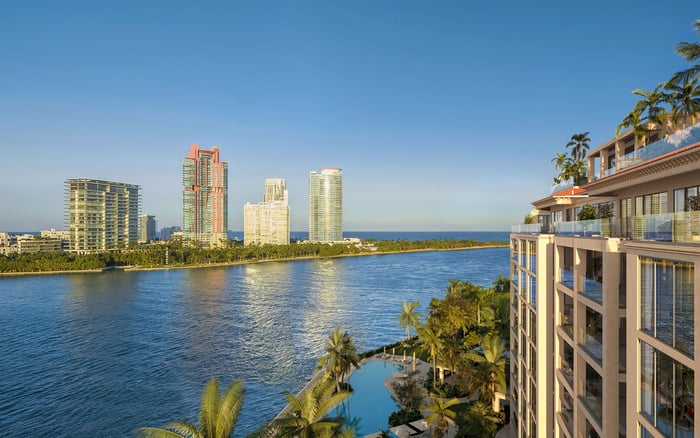
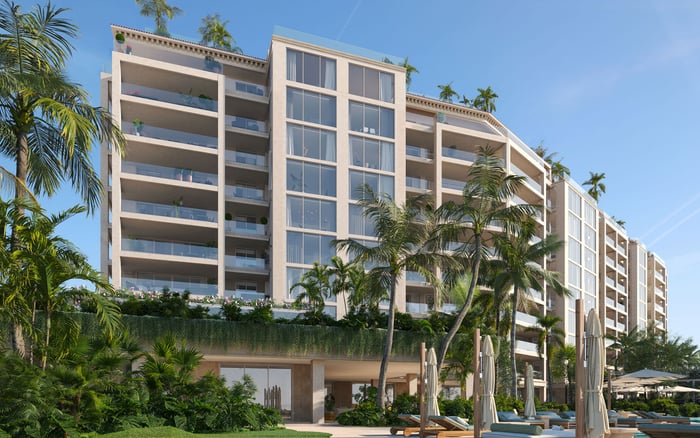
A second-home purchase at Six Fisher Island calls for more than a standard closing budget. Buyers should reconcile contract allocations, layered coastal insurance, non-homestead taxation, association obligations, club costs, and private household staffing before taking title.

At The Residences at Six Fisher Island, the closing statement is only the opening frame of ownership. Located at 6 Fisher Island Drive, this ultra-luxury development is marketed as the island’s last new condominium project. For a seasonal buyer, that distinction calls for equally exacting planning.
A primary residence and a second home do not carry the same tax assumptions, insurance profile, or operating rhythm. A sound forecast separates acquisition expenses from recurring obligations and private services. This distinction is particularly important in a waterfront setting, where wind, flood, vacancy, interior valuation, and storm preparation can materially reshape annual costs.
Generic Miami percentages are useful only as a preliminary reference. Closing costs for financed buyers are commonly estimated at 2% to 5% of the purchase price, excluding the down payment, but an ultra-prime condominium contract may allocate significant charges differently. The executed agreement and draft closing statement should govern the analysis.
Miami-Dade documentary stamp tax on a condominium deed totals $1.05 per $100 of consideration. On a $10 million transfer, that equates to approximately $105,000, subject to the contract’s allocation. Financing may also trigger mortgage documentary stamp tax of approximately $0.35 per $100 of debt, Florida’s nonrecurring intangible tax, lender charges, appraisal, recording, inspection, escrow, and other transaction expenses.
Origination and underwriting can run roughly 0.5% to 1.5% of the loan, while title insurance and title-search costs may approximate 0.4% to 0.9% of the purchase price. Prepaids can include first-year homeowners insurance, prorated property taxes, and interest through month-end. Confirm every line rather than relying on local custom.
The association’s master policy and the owner’s personal coverage serve different purposes. A condominium owner generally needs HO-6 protection for interior improvements, contents, loss assessment, and liability, in addition to the master policy covering eligible building elements.
Before binding coverage, compare the master policy’s limits, wind and flood provisions, deductibles, exclusions, and treatment of interior finishes with the proposed HO-6 policy. Coastal capacity, extended vacancy, bespoke materials, art, furnishings, and storm protections should be addressed before the due-diligence period ends-not after closing.
Combined HO-6, flood, and windstorm premiums can range from approximately $15,000 to more than $75,000 annually for luxury Fisher Island residences valued from $5 million to $40 million. That breadth underscores the need for residence-specific quotations rather than a percentage shortcut.
Condominium fees commonly support building staff, security, management, common-area utilities, elevators, landscaping, pools and spas, common-element insurance, and reserve contributions. They do not necessarily cover the private care required by an intermittently occupied home.
An absentee-owner plan may require cleaners, a dedicated property manager, scheduled residence checks, climate and leak monitoring, vendor access, arrival preparation, storm readiness, and post-storm inspection. Before the first extended absence, determine who has authority to approve urgent work and document clear escalation procedures.
The service standard at Palazzo del Sol or Palazzo della Luna may help frame expectations, but every residence still requires its own scope of private care. Lifestyle convenience should not obscure the boundary between association operations and household management.
A true seasonal residence generally does not qualify for Florida’s homestead exemption or the homestead-specific 3% Save Our Homes assessment cap. Buyers should therefore model future property taxes without assuming primary-residence benefits.
For planning purposes, taxes may be modeled near 1.9% of value, or roughly $95,000 annually on $5 million and $190,000 on $10 million. Actual bills depend on assessed value and applicable rules, so these figures are scenarios rather than promises.
Ownership structure, residency, estate planning, and cross-border considerations belong with qualified tax and legal advisers. The essential investment discipline is to distinguish taxes due at transfer from annual property taxes and any separate entity-level or personal obligations.
Regular assessments should be reviewed alongside the association budget, reserve schedule, pending assessments, and meeting minutes. Capital projects can create special assessments beyond ordinary fees, even when the regular budget appears comprehensive.
Club economics require a separate line item. Fisher Island Club initiation may be near $250,000, with annual dues between $19,260 and $25,520, apart from condominium fees and property taxes. Buyers should verify current terms, eligibility, timing, and the contract’s treatment of club-related payments.
This separation also matters when comparing The Links Estates at Fisher Island with condominium ownership. The addresses may share the same island ecosystem, yet their operating obligations and household models should be evaluated independently.
For new construction, the working file should include the executed contract, draft closing statement, title materials, loan estimate if financed, insurance binders, master-policy summary, association budget, reserve information, assessment history, club documents, and a first-year operating budget.
The budget should separate condominium assessments, club obligations, property taxes, insurance, utilities, maintenance, and private household services. Add named contacts for legal, tax, insurance, property management, and emergency response. This working document transforms buyer’s guides into a residence-specific operating plan for Fisher Island.
Does the association master policy replace HO-6 insurance? No. Owners generally need HO-6 coverage for interiors, contents, loss assessment, and liability.
Should a seasonal owner assume Florida homestead benefits? No. A true second or seasonal home generally does not qualify for the homestead exemption or Save Our Homes cap.
Who pays documentary stamp tax on the deed? The contract and closing statement determine the allocation. Do not rely solely on customary practice.
How is Miami-Dade deed tax calculated for a condominium? The combined rate is $1.05 per $100 of consideration for a condominium transfer.
Does financing create additional Florida taxes? Yes. Mortgage documentary stamp tax and nonrecurring intangible tax may apply, alongside lender and recording charges.
What should be compared before binding insurance? Compare the master policy’s limits, wind and flood terms, deductibles, exclusions, and interior coverage with the HO-6 proposal.
Do condominium fees include private residence management? Not necessarily. Cleaning, residence checks, monitoring, vendor access, and storm preparation may require separate staffing.
Can regular fees eliminate special-assessment risk? No. Review budgets, reserves, pending assessments, and association minutes for potential capital obligations.
Are club dues part of condominium assessments? They should be treated separately, along with initiation charges, property taxes, and private household costs.
What is the most useful pre-closing ownership tool? A line-item first-year budget paired with an authority plan for insurance, staffing, maintenance, and emergencies.
If you'd like a private walkthrough and a curated shortlist, connect with MILLION.
If branded residences are on your mind — as a home or as an allocation — we would be glad to share what we are seeing, privately.
Begin a quiet conversation