At One Park Tower by Turnberry, operational diligence deserves the same attention as the residence itself. Buyers can examine staffing schedules, shared-service responsibilities, response protocols and closing documents without mistaking advertised amenities for guaranteed service.
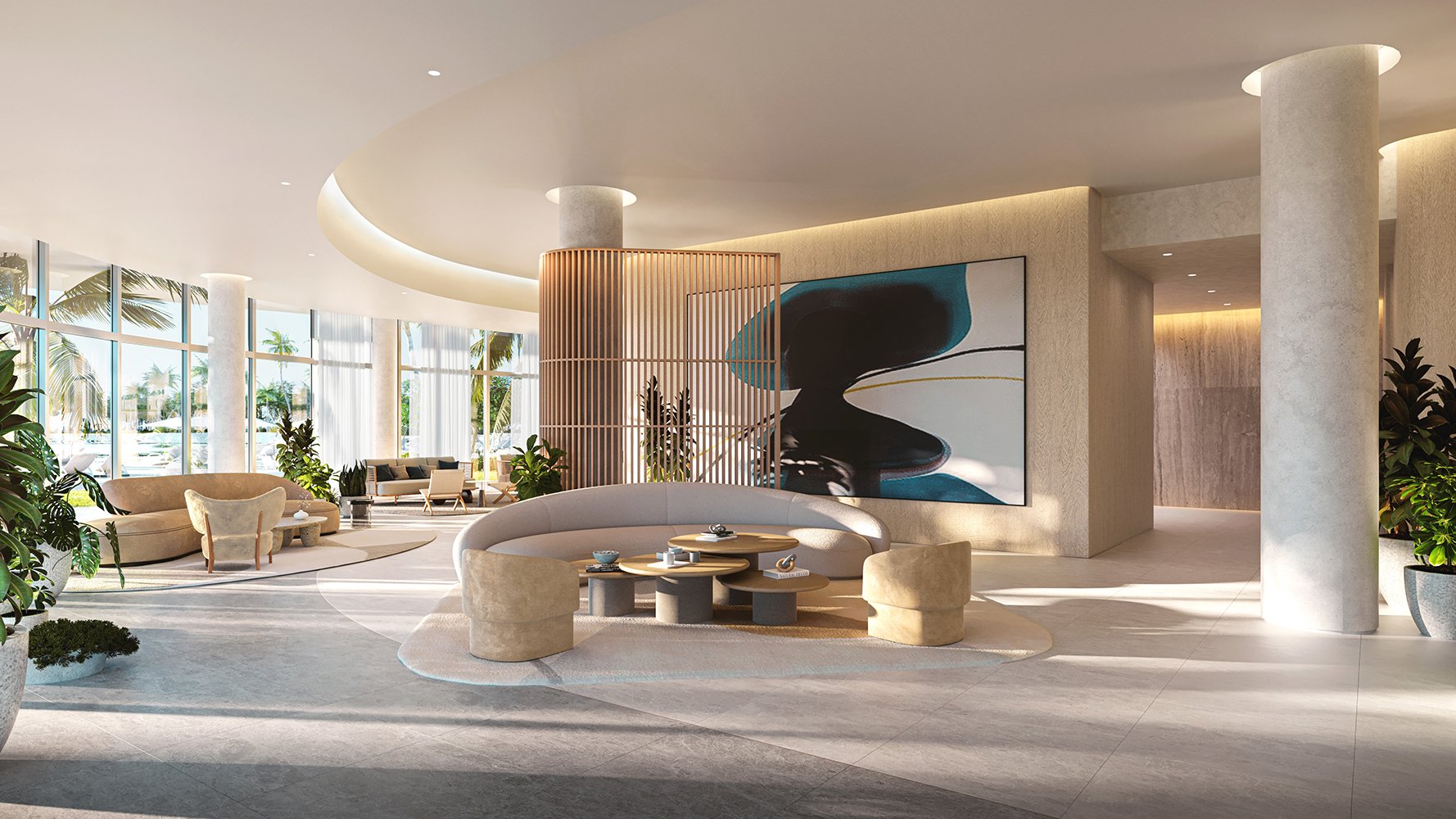
For a luxury condominium buyer, service is ultimately measured in ordinary moments: an arrival after midnight, a maintenance request before guests arrive, or access assistance while the owner is away. At One Park Tower by Turnberry North Miami, those moments deserve the same scrutiny as the residence’s finishes and outlook.
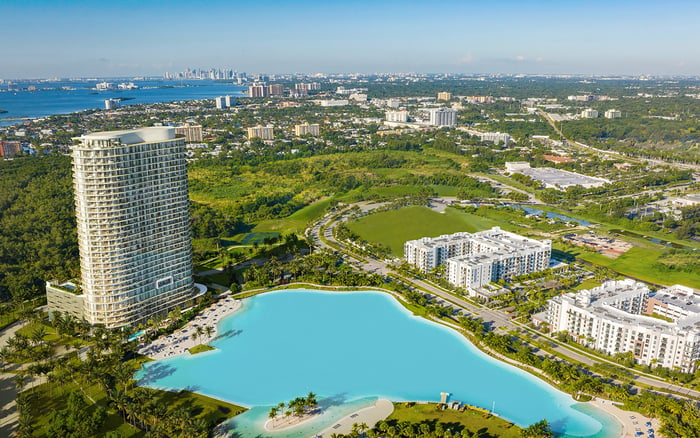
The condominium sits within the 184-acre SoLé Mia community and overlooks Laguna SoLé, a seven-acre Crystal Lagoon. Advertised amenities include a private swimming pool, pickleball courts, and a wellness center with fitness, spa and massage facilities. The setting establishes the lifestyle proposition-not the operating standard behind it.
No quantified staff-to-residence ratio or guaranteed response-time standard has been established. That is not evidence of inadequate service. It means buyers should test the proposed operating model before treating service expectations as purchase commitments.
The advertised building scale is 33 stories and 292 residences. Conflicting details indicate 32 floors and 303 units, making confirmation of the final residence count an essential starting point.
Equally important is the boundary between condominium operations and the surrounding community. SoLé Mia’s 37 acres of green space and eight miles of biking and running trails belong to the broader community offering, not solely to the condominium property.
Request a responsibility schedule identifying who operates, supervises and funds each service. Separate tower reception, security, engineering and housekeeping from lagoon operations and community maintenance. Shared personnel should not automatically count as dedicated tower staff.
For every shared service, ask who receives an owner’s request, who can authorize action and which budget bears the expense. Residents may have access to an amenity without its entire workforce being available to serve their homes.
A total employee count can conceal a thin overnight shift or a role spread across several properties. Ask for full-time and part-time positions by function, scheduled hours and location, along with weekend, holiday and absence coverage.
Two calculations are useful, provided their definitions remain consistent:
Budgeted staffing ratio: tower-dedicated full-time-equivalent positions divided by the confirmed residence count.
On-duty coverage ratio: tower-dedicated personnel physically working a particular shift divided by the confirmed residence count.
Neither calculation should combine community employees with dedicated tower personnel without explaining the allocation. Request the planned occupancy assumptions as well. A staffing schedule designed for early move-ins may not reflect the service level intended as more residences become occupied.
Buyers also considering Turnberry Ocean Club Sunny Isles can use the same definitions for a Sunny Isles Beach comparison. The purpose is consistency-not an assumption that the properties share staffing arrangements or service standards.
Ask management which functions remain covered when an employee escorts a vendor, takes a break or responds elsewhere in the building. A ratio becomes meaningful only when it reflects usable coverage.
“Prompt attention” is reassuring language, but a weak measure. Request written procedures that distinguish acknowledgment, assessment, attendance, temporary mitigation and final resolution. Confirmation of receipt is not the same as an engineer arriving or a repair being completed.
Ask for separate targets for routine maintenance, access problems, urgent building issues and emergencies. Each category should specify the contact channel, operating hours, escalation contact and circumstances requiring an outside contractor. Clarify whether overnight support means someone physically on site or available on call.
With management’s agreement, conduct a scheduled, non-emergency walkthrough of the proposed process. Present a hypothetical maintenance request and ask who records it, assigns responsibility, updates the owner and closes the ticket. Do not stage a false emergency or mistake a sales-team reply for an operational response test.
For a building not yet operating, this exercise tests preparedness, not actual performance. Ask whether anonymized service records can be reviewed once operations begin and whether owners will receive ongoing performance summaries. Any proposed target should specify exclusions and identify who may change it.
Request the proposed operating budget, management agreement and staffing plan together. Payroll, contracted security, engineering, housekeeping and amenity operations should be clearly distinguishable so buyers can understand how the service model is funded.
An advertised maintenance figure of $1.20 per square foot does not establish an adopted association budget, and its billing period is unspecified. Do not convert it into a monthly ownership estimate without clarification.
Ask how the budget accounts for shared-community charges, overtime, contractor callouts and staffing as occupancy increases. Request the latest reserve schedule separately so a service-focused review does not overlook longer-term ownership obligations.
For a shortlist that includes Rivage Bal Harbour, compare defined coverage and cost responsibilities rather than fee figures alone. A Bal Harbour alternative warrants the same document-based scrutiny, without presuming equivalent amenities, staffing or expenses.
Advertised rental terms describe a 30-day minimum stay, up to 12 times annually. Buyers should confirm those terms in the governing documents before relying on them for personal planning or rental use.
If permitted, recurring tenant arrivals could place demands on registration, access credentials, orientation and move coordination. Ask how those tasks would be assigned without reducing attention to owner requests. Clarify who handles after-hours arrivals and how owner-authorized vendors gain entry when a residence is unoccupied.
Touring operating SoLé Mia amenities can provide useful context. Observe how staff explain access rules, direct visitors and handle ordinary requests. Community operations, however, are not proof of the tower’s future performance. Keep observed service, proposed procedures and written commitments in separate categories.
Delivery projections have varied, with expectations ranging from spring and summer 2026 to 2028. These dates do not establish an actual closing or occupancy date. Request current written delivery information and have counsel review the contract’s delivery provisions, delay remedies and conditions relevant to occupancy.
Before closing, revisit the latest budget, reserve schedule, management arrangements and staffing plan. Ask what changes between initial occupancy and stabilized operations, including any temporary service limitations or phased amenity access.
Have counsel distinguish marketing language, operating targets and enforceable obligations. Clarify which service provisions may change and whether any remedy applies if a stated commitment is not met. The strongest purchase decision rests on a clear understanding of who will serve the residence, when they will be available and how that service will be funded.
For a discreet conversation about service-led condominium selection in South Florida, connect with MILLION.
If branded residences are on your mind — as a home or as an allocation — we would be glad to share what we are seeing, privately.
Begin a quiet conversationNo quantified ratio is established in the available project information. Request the staffing plan by role and shift before calculating coverage.
The advertised baseline is 292 residences across 33 stories, but conflicting details identify 303 units and 32 floors. Confirm the final residence count before calculating ratios.
Not automatically. Ask which personnel are dedicated to the tower and how shared staff time, responsibilities and costs are allocated.
Headcount describes the workforce, while on-duty coverage identifies personnel physically working a particular shift. Review both alongside role assignments and absence coverage.
No guaranteed response-time standard is established in the available project information. Request written targets separating acknowledgment, attendance, mitigation and resolution.
Arrange an agreed, non-emergency walkthrough of a hypothetical service request with management. This evaluates preparedness, not demonstrated operating performance.
The billing period is unspecified, and the figure is not established as an adopted association budget. Obtain the latest budget and billing basis before estimating ownership costs.
Advertised terms describe a 30-day minimum stay, up to 12 times annually. Confirm the governing documents and ask how tenant arrivals would affect access management and staffing.
The available information does not establish an actual closing or occupancy date. Conflicting projections should be resolved through current written delivery information and contract review.
Request the latest operating budget, reserve schedule, management agreement, staffing plan and service procedures. Have counsel review governing documents, delivery terms and the enforceability of any service language.