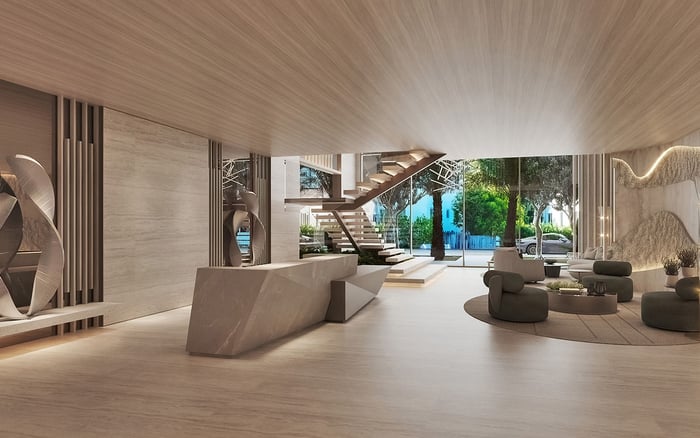
A South Florida residence can support family routines and everyday belonging, but ownership and amenities do not establish a legal closer-connection claim. Buyers should separate lifestyle fit, permitted occupancy, and individualized tax advice before committing.

A South Florida home can be beautifully suited to your life without answering the legal question of where that life is centered. For a buyer considering a closer-connection claim, that distinction belongs at the start of the search, not after closing. Ownership, a prestigious address, and an appealing collection of amenities are no substitute for individualized legal and tax analysis.
The practical property question is narrower: does the residence accommodate the way you actually intend to live? Family visits, ordinary working days, shared meals, and recurring activities deserve as much attention as the view. Those considerations can guide a purchase. They do not, by themselves, establish eligibility for a particular claim.
Before treating a property decision as relevant to a filing, ask qualified advisers which rules apply to your circumstances, what must be established, and what information they need. The lifestyle review below is a purchasing framework, not a legal test.
Imagine a week without visitors, celebrations, or an unusually generous holiday schedule. Where would you work, exercise, dine, and spend unstructured time? Which activities would require a drive you are unlikely to make? Which rooms would remain unused? These questions produce a more revealing brief than a list of desired finishes.
Write down your intended living pattern before touring. Distinguish recurring habits from occasional pleasures, and separate your preferences from those of family members who may visit only briefly. A home selected for everyone else's imagined stay may be poorly matched to your everyday use.
Keep this exercise descriptive rather than evidentiary. A proposed schedule is a planning tool, not proof that the schedule occurred or satisfies a legal standard. Ask your advisers separately how actual activity should be documented and evaluated.
When reviewing amenities, focus on the activities you would realistically repeat. Ask about access, operating arrangements, and availability rather than assuming that every feature presented during a sales appointment will be ready for your intended use.
For a buyer considering Mr. C Residences Boca Raton, the useful exercise is to compare the current amenity information with a personal weekly schedule. Confirm delivery and operating details before making a purchasing decision dependent on a particular feature.
Apply the same discipline to social lounges and resident clubs. A gathering space offers an opportunity to meet people, not a guarantee of relationships. Evaluate the environment you would enjoy repeatedly rather than assigning significance to an amenity you would rarely use.
A neighborhood comparison should begin with your actual destinations. If 2200 Brickell is on your shortlist, use a viewing day to test the Brickell routine you envision. Consider whether your preferred working hours, errands, and social plans fit comfortably into that day. This is a recommended exercise, not a statement about the project's services or accessibility.
Use the same approach when considering Five Park Miami Beach. Visit Miami Beach at the times you expect to be there, and assess the experience against your priorities rather than the atmosphere of a single appointment.
Consider walkability, natural light, and connections between indoor and outdoor spaces at the specific residence. A neighborhood label cannot tell you how a particular room feels or whether a route is one you would willingly repeat.
For buyers considering a single-family property, a guesthouse can appear to resolve competing needs for proximity and privacy. Yet the marketing description is not enough. Before relying on such space, confirm the applicable jurisdiction, current ordinance, approved use, and occupancy conditions.
Do not assume that a guesthouse and an accessory dwelling unit are interchangeable, or that one property's permissions apply throughout South Florida. Describe your intended arrangement precisely to the professionals reviewing it, including who would stay there and whether any rental use is contemplated.
Keep family preferences separate from permission to occupy. A layout that appears ideal for visiting relatives still needs a property-specific review before it becomes the basis of your household plans.
Request the relevant approvals and any required declarations during due diligence. Ask the reviewing professionals whether a Certificate of Use or other authorization is required for the proposed arrangement, and when it must be obtained.
Have them reconcile the physical layout, approved classification, intended occupants, and any applicable size restrictions. An attractive secondary structure should not be assumed suitable for your plans simply because it already exists.
Resolve uncertainty before making family plans dependent on the space. Property-use compliance and any tax or residency analysis remain separate questions; a satisfactory answer in one review should not be treated as resolving the other.
A comparison involving Arbor Coconut Grove should return to the same practical question: would this home suit the life you intend to lead in Coconut Grove? Avoid giving a project name or neighborhood reputation significance that belongs to your own experience.
Keep two reviews distinct. One concerns the property: layout, permitted occupancy, operating arrangements, and suitability for ordinary routines. The other belongs with your legal and tax advisers: the applicable closer-connection framework and your individual circumstances. Neither review replaces the other.
The strongest purchasing decision is one you can explain without relying on a legal outcome: the home fits your household, its use is permitted, and its surroundings suit your regular life. Any claim should be assessed independently against the applicable rules and facts, not inferred from the purchase.
Explore residences suited to your everyday priorities with MILLION.
If branded residences are on your mind — as a home or as an allocation — we would be glad to share what we are seeing, privately.
Begin a quiet conversationOwnership should not be treated as establishing eligibility. Qualified legal and tax advisers should assess the applicable rules and your individual circumstances.
No. It is a property-selection framework for evaluating routines and household needs, not a test for a legal or tax claim.
Outline an ordinary week, including work, exercise, meals, errands, and family visits. Distinguish recurring needs from occasional preferences.
An amenity offers an opportunity for activity or interaction, not proof of participation or relationships. Its purchasing value depends on your likely use.
Confirm current amenity information, delivery, access, and operating arrangements. Compare the features with activities you would realistically repeat.
Confirm the applicable jurisdiction, approved use, and occupancy conditions. Have qualified professionals review how your intended arrangement fits the property's permissions.
No permission should be assumed from a marketing description. Verify current rules and property-specific approvals before making rental plans.
Request relevant approvals and any required declarations. Ask the reviewing professionals whether a Certificate of Use or another authorization is necessary.
Resolve them during due diligence, before making household plans dependent on the space. Ask when any required authorization must be obtained.
Do not assume they do. Verify the applicable jurisdiction, current ordinance, approved use, and occupancy conditions for the specific property.