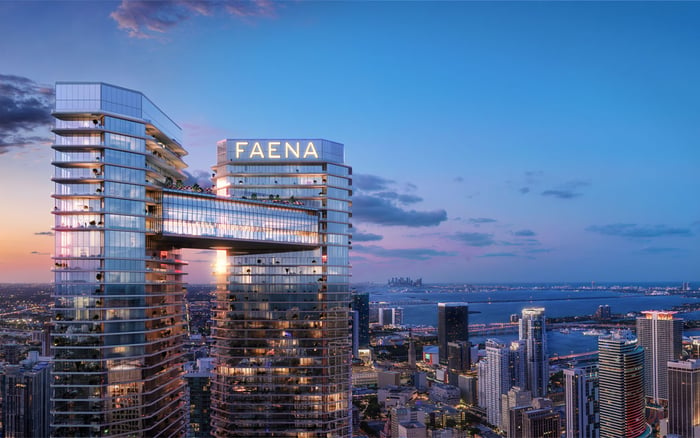
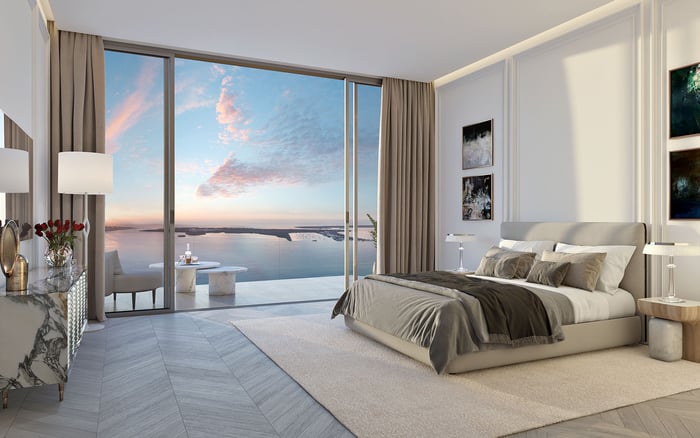
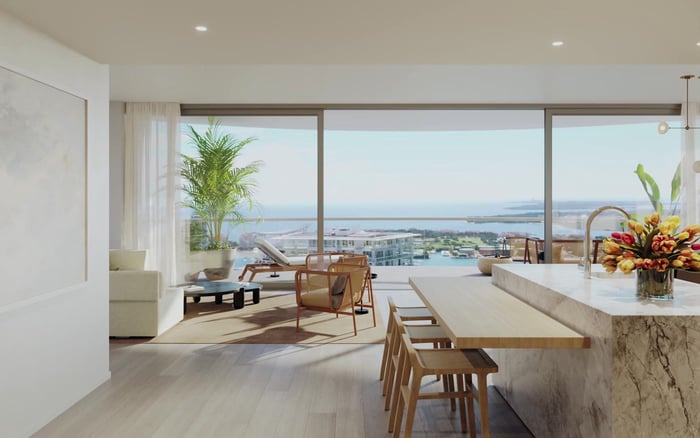
For a household choosing between preconstruction and a recently delivered residence, the decisive questions extend beyond finishes: what can rise next door, how much of the view may endure, and whether the terrace supports everyday life.
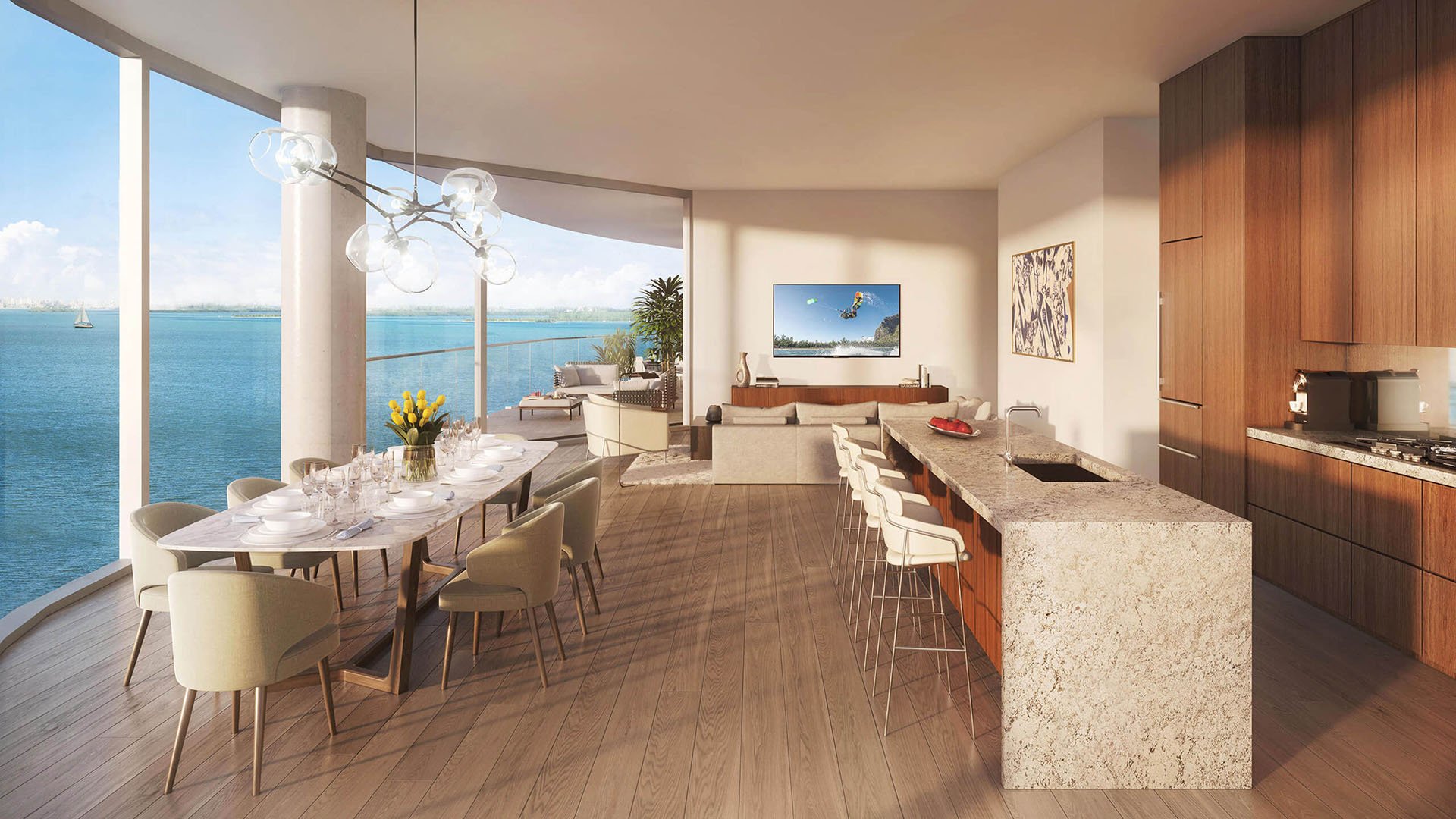
The most compelling residence is not necessarily the one with the widest horizon. For a household in South Florida, luxury also means enjoying breakfast outdoors, reading comfortably beside an open door, and retaining a meaningful outlook as the neighborhood evolves. Those priorities deserve the same attention as architecture and finishes.
Choosing between preconstruction and a recently delivered home is therefore partly a choice between forms of evidence. Before completion, assess drawings, contractual commitments, and technical information. After delivery, add direct observation of the specific residence. Neither approach alone establishes that a view will remain open or a terrace will suit daily life.
Separate the decision into four questions: what is visible today, what could be built nearby, how the residence addresses wind, and how the household intends to use its outdoor space.
For preconstruction, request the exact residence plan, terrace dimensions, orientation, and assumptions behind any illustrated view. Ask which features are contractual and which remain illustrative, with counsel reviewing the relevant documents. Treat an image as a starting point for questions, not evidence of permanent neighboring conditions.
For a recently delivered residence, prioritize access to the actual home rather than a representative apartment. Stand where the dining table, sofa, and terrace seating would sit. Compare the outlook while seated and standing, and revisit at the times the household expects to use the rooms.
A completed home allows you to observe present conditions; it does not guarantee future ones. A calm visit cannot establish year-round outdoor comfort, just as an open parcel next door cannot establish lasting openness. Keep a list of unresolved questions for both purchase paths rather than assuming delivery eliminates uncertainty.
Begin with parcels that intersect the principal sightlines, not merely those sharing a boundary. Ask a qualified land-use adviser to review permitted uses, height, setbacks, lot coverage, floor-area ratio, and other applicable building-envelope requirements. Request an assessment of what those rules could mean for the residence's foreground and distant outlook.
Confirm whether the property falls within a municipality or an unincorporated part of Miami-Dade, Broward, or Palm Beach County before requesting zoning information. Ask which records establish the applicable requirements and whether any relevant approvals affect the neighboring parcels.
Have the adviser distinguish existing buildings, applicable development capacity, and relevant approvals. Each represents a different category of evidence. Request a visual assessment of plausible neighboring building envelopes rather than relying solely on a height number.
For a Brickell shortlist that includes The Residences at 1428 Brickell, focus that assessment on the exact residence under consideration. The project name alone cannot establish which part of a particular outlook might be vulnerable.
Ask counsel whether Live Local provisions or other applicable development rules could affect the neighboring analysis. Do not assume that a framework discussed for the City of Miami applies unchanged to another South Florida municipality.
A shoreline address deserves careful analysis, not an exemption from it. Ask whether any shoreline or visual-corridor requirements apply to the parcel and what, if anything, they establish for the specific residence's outlook.
For a Miami Beach search that includes The Perigon Miami Beach, ask counsel to identify any recorded protection claimed for the specific sightline. Do not assume a general shoreline rule applies to the parcel or protects the apartment.
The key distinction is between an attractive present outlook and enforceable protection. Where protection has not been established, assess the purchase on that basis. Consider how the household would value the residence if part of the outlook changed, rather than leaving permanence as an unstated assumption.
Structural wind mitigation and everyday outdoor comfort are separate questions. Ask what the available wind documentation establishes, rather than treating it as evidence of how a particular terrace feels during lunch or an evening gathering.
For a Sunny Isles Beach shortlist that includes Bentley Residences Sunny Isles, request any available wind analysis relevant to the exact residence and ask what it evaluates. Distinguish structural design information from an assessment of occupied outdoor areas. Do not infer comfort from floor level or orientation alone.
Before completion, ask whether any terrace-comfort evaluation addresses the intended seating areas and what assumptions it uses. After delivery, arrange repeat visits when feasible, noting conditions rather than generalizing from one afternoon. Where wind performance is material to the purchase, seek qualified technical advice.
Define the terrace's role in household life: dining, quiet reading, supervised children's use, or occasional entertaining. Review usable dimensions against furniture layouts and circulation. Ask for the governing rules on furnishings, planting, shading, cooking equipment, and storm preparation. Clarify drainage, maintenance responsibilities, and any contemplated modifications. These are diligence questions, not presumed permissions or defects.
Keep structural-condition review separate from the household's assessment of outdoor comfort. Ask a qualified professional to explain the scope of any available inspection reports and their relevance to the residence, rather than treating an inspection as proof of terrace usability.
For a South Florida condominium purchase, have counsel and the relevant local authority confirm which inspection requirements apply to the building and when. Request available reports and clarification of any outstanding issues without assuming that delivery status resolves every structural or maintenance question.
Before committing, compare the two residences on a short decision sheet: documented view protections, neighboring development capacity, wind evidence, permitted terrace uses, and observations still outstanding. Separate confirmed facts from assumptions and decide which uncertainties the household can accept.
Favor preconstruction when the documentation supports the priorities that matter and the remaining uncertainty is acceptable. Favor a delivered residence when observing the actual rooms and outdoor space is essential to the decision. Neither category wins automatically. The stronger choice is the home whose appeal remains persuasive after its assumptions have been tested.
Explore South Florida residences with MILLION to shape a shortlist around your household's priorities.
If branded residences are on your mind — as a home or as an allocation — we would be glad to share what we are seeing, privately.
Begin a quiet conversationNo. Delivery allows observation of the current outlook, but neighboring development capacity and any enforceable view protections require separate review.
Request the exact residence plan, orientation, and assumptions behind illustrated views. Have counsel distinguish contractual commitments from illustrative material.
Ask a qualified adviser to review permitted uses, height, setbacks, lot coverage, floor-area ratio, and other applicable building-envelope requirements. Assess their implications for the specific residence's sightlines.
First confirm whether the property is within a municipality or an unincorporated part of Miami-Dade, Broward, or Palm Beach County. Ask the relevant authority which records establish the applicable requirements.
Ask counsel whether those provisions affect the parcels under review. Do not assume that a framework discussed for the City of Miami applies unchanged elsewhere in South Florida.
No. Ask counsel whether any shoreline or visual-corridor requirements apply and whether there is enforceable protection for the specific sightline.
No. Ask separately whether available technical analysis evaluates everyday use of the residence's outdoor areas.
Visit the actual residence, consider repeat visits, and test the intended furniture layout and circulation. Review governing rules and clarify drainage and maintenance responsibilities.
Ask a qualified professional to explain each report's scope and relevance to the residence. Keep that review separate from an assessment of everyday terrace comfort.
Have counsel and the relevant local authority confirm the requirements and timing for the specific building. Request available reports and clarification of any outstanding issues.