Choosing between Brickell and Bal Harbour requires more than a preference for skyline or shoreline. A seasonal buyer should compare unit-specific ownership rights, event-driven household needs, service boundaries, and the practical arrangements that keep a residence ready between visits.

The choice between Brickell and Bal Harbour is often framed as skyline versus shoreline. For a seasonal owner, the more useful distinction is how a residence functions when the household arrives, entertains, departs, and returns. A compelling address should support that sequence without leaving essential duties undefined.
Brickell is a major financial and residential district with a substantial luxury condominium inventory. Bal Harbour’s branded-living profile emphasizes oceanfront privacy and resort-style amenities. Neither setting, however, determines what happens inside an individual residence while its owner is away.
Begin with a written ownership brief: anticipated stays, guest patterns, rental intentions, and the tasks you expect someone else to perform. Compare two operating plans, not simply two neighborhoods.
Brickell’s luxury-building amenities generally favor urban life: rooftop pools, fitness facilities, coworking spaces, and nearby restaurants rather than direct ocean-beach access. For a buyer whose season combines work and social engagements, that is a useful starting point-not evidence that housekeeping, provisioning, or residence inspections are included.
If your shortlist includes Una Residences Brickell, request a written distinction between building services and separately arranged household work. Ask who can admit a housekeeper, receive groceries, supervise repairs, and prepare the home before arrival. Obtain current answers for the specific residence rather than inferring coverage from the amenity presentation.
Mixed-use buildings warrant particular attention. Four Seasons Residences at 1435 Brickell Avenue combines upper-floor private residences with hotel and condo-hotel units below. That configuration illustrates why a building name alone cannot establish a buyer’s ownership category or service entitlement.
When evaluating Cipriani Residences Brickell, apply the same discipline: distinguish services promised to the residence from those available only by arrangement or additional payment, and obtain the relevant terms.
Bal Harbour oceanfront buildings commonly offer some combination of direct beach access, beach attendants, cabanas, oceanfront pools, wellness facilities, and private dining. Availability varies by property. These amenities can enhance a seasonal stay, but they are not a substitute for a complete household-management arrangement.
A buyer considering Rivage Bal Harbour should translate the desired beach season into specific questions: which services are available to the residence, how are guests accommodated, and what remains the owner’s responsibility? Treat each answer as property-specific, not as a neighborhood standard.
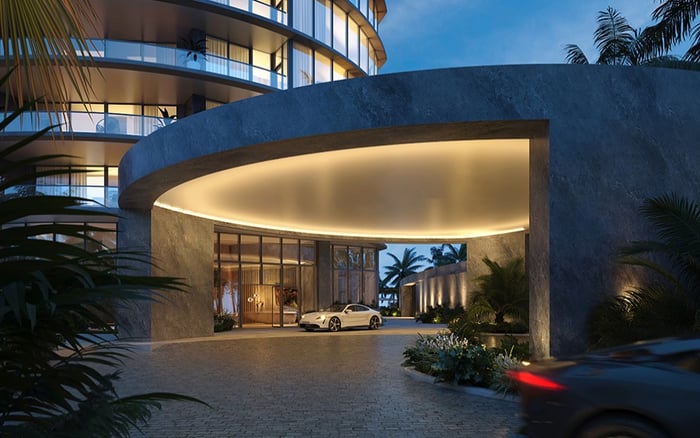
Apply the same framework to Oceana Bal Harbour. Ask separately about common-area service and access for private personnel. A polished lobby arrival does not establish who checks the residence during an absence, oversees a repair, or prepares the home for visiting family.
Seasonal ownership becomes more complex when rental income is part of the plan. Parkside Residences at Brickell, at 1750 SW 1st Avenue, is marketed as a pre-construction development with furnished residences and “no rental restrictions.” Its listed program distinguishes 164 condo-hotel units from 21 private residences.
Those categories matter more than the broad marketing phrase. Rental-flexibility language is not a verified legal entitlement. Before committing, obtain current condominium documents and unit-specific rental terms, and have counsel review how the proposed ownership and rental use fit together.
Ask about minimum stays, approval procedures, management arrangements, and any conditions affecting owner occupancy. These are diligence questions, not assumptions about what Parkside or another building permits. If rental use is essential, settle those questions before relying on projected income to support the purchase decision.
Even without rentals, document access arrangements for family, guests, and household personnel. Seasonal convenience depends on permissions that work for the actual household.
Bal Harbour’s calendar includes Miami Spice Restaurant Months during August and September, with curated three-course menus at participating local restaurants. Cultural programming includes Unscripted Art Tours. These offerings can help shape shorter visits, but confirm dates, participation, and eligibility before arranging travel.
Dated celebrations illustrate registration requirements; they do not promise future annual schedules. The Holiday Lighting Celebration scheduled for November 20, 2025, from 7-9 p.m. offered registration to residents and guests of participating Bal Harbour hotels. For a household hosting visitors, the practical lesson is to confirm who qualifies before extending an invitation.
Regional periods associated with increased guest activity and concierge demand in the Bal Harbour-North Miami-Dade corridor include the Miami International Boat Show and Art Basel. Spring Break and Memorial Day also bring operational considerations around visitors, packages, and pool or lobby service.
Map intended stays against anticipated guests, deliveries, housekeeping, and transport arrangements. Confirm coverage in advance rather than assuming the usual service arrangement can accommodate an unusually full residence.
A concierge team and a private household team have distinct responsibilities. Building-service coverage does not establish private-household availability, duties, or pricing. Start with a task schedule, not a presumed headcount, and request proposals against that scope.
Divide the schedule into three phases: preparing the residence before arrival, supporting the household during occupancy, and overseeing it between visits. Assign a responsible person to each task, with written access permissions, spending authority, and an escalation contact. Ask explicitly which services are included in fees and which require separate engagement.
Vendor rules can shape the schedule. In Bal Harbour Estates, a gated residential community, outside-work and landscaping hours are 8:30 a.m.-5:30 p.m. Monday through Saturday, with no work on Sundays or holidays. These restrictions are community-specific, not rules for every Bal Harbour property or every domestic employee.
Recycling collections there are Tuesdays and Thursdays, with bulk waste collected Thursdays. Even these modest details belong on the ownership team’s turnover checklist. Confirm current rules and distinguish exterior contractors from in-residence personnel before scheduling either.
Before making the final choice, rehearse one ordinary arrival, one guest-heavy stay, and one extended absence. For each, identify the responsible person, permitted access, confirmed service scope, and unresolved expense. This exercise should expose gaps an amenity tour cannot resolve.
Include storm preparation, evacuation-period arrangements, and post-storm recovery, subject to safety requirements and access restrictions. Oceanfront amenities do not eliminate the need for private-residence oversight, and Brickell should not be treated as storm-risk-free.
Choose the residence whose documented arrangements best support the season you intend to live, whether that means urban engagement or time organized around the beach.
Explore your next seasonal residence with MILLION.
If branded residences are on your mind — as a home or as an allocation — we would be glad to share what we are seeing, privately.
Begin a quiet conversationBrickell emphasizes urban condominium living near business activity and restaurants. Bal Harbour’s profile centers on oceanfront privacy and resort-style amenities, with services varying by property.
No; building concierge coverage does not establish who handles private housekeeping, provisioning, maintenance supervision, or residence inspections.
Obtain current condominium documents and unit-specific rental terms, then have counsel review the intended use. Marketing language alone should not determine the purchase decision.
Its listed program distinguishes 164 condo-hotel units from 21 private residences. A buyer should verify the category and terms of the particular unit rather than assume one rental policy applies throughout.
No; Four Seasons Residences in Brickell combines private residences with hotel and condo-hotel components, illustrating why buyers should confirm residence-specific entitlements.
Miami Spice Restaurant Months run during August and September, and cultural programming includes Unscripted Art Tours. Confirm current dates, participation, and registration eligibility before planning a visit.
Art Basel, the Miami International Boat Show, Spring Break, and Memorial Day are associated with increased visitor or service activity in the Bal Harbour–North Miami-Dade corridor. Align guest plans and service arrangements in advance.
Outside work and landscaping hours are 8:30 a.m.–5:30 p.m. Monday through Saturday, with no work on Sundays or holidays. Confirm current rules, and do not automatically apply these community-specific restrictions to domestic staff or other properties.
Define the tasks required before arrival, during occupancy, and between visits, then request proposals for that scope. Do not assume a standard headcount, price, or inclusion in condominium fees.
No; both ownership plans should address preparation, evacuation-period arrangements, and recovery, subject to safety requirements and access restrictions.