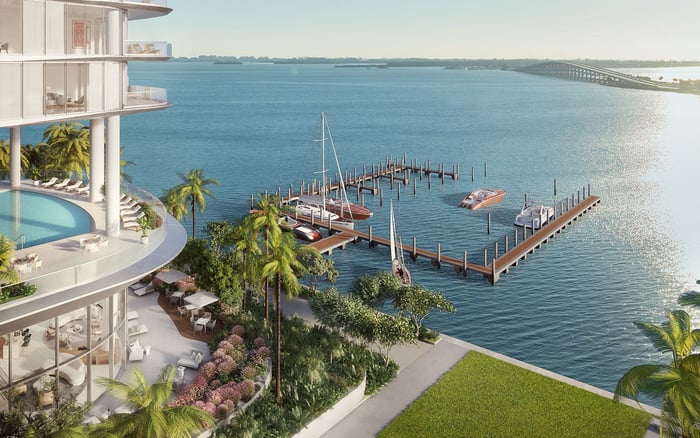
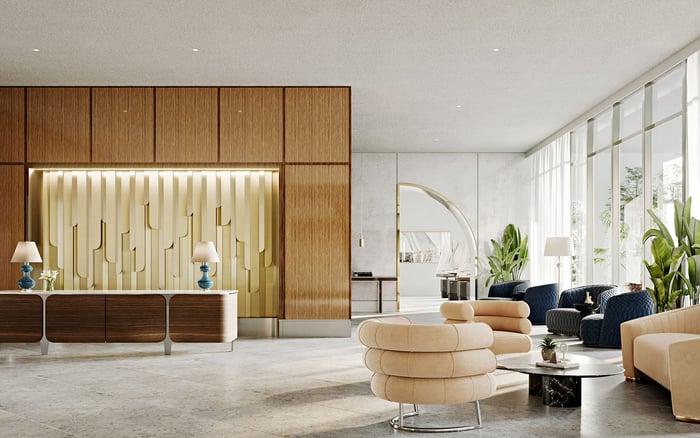
Brickell and Bal Harbour offer distinct settings for living with art. Compare access to cultural institutions, the rhythm of each neighborhood, and the building-level delivery checks that matter before buying.
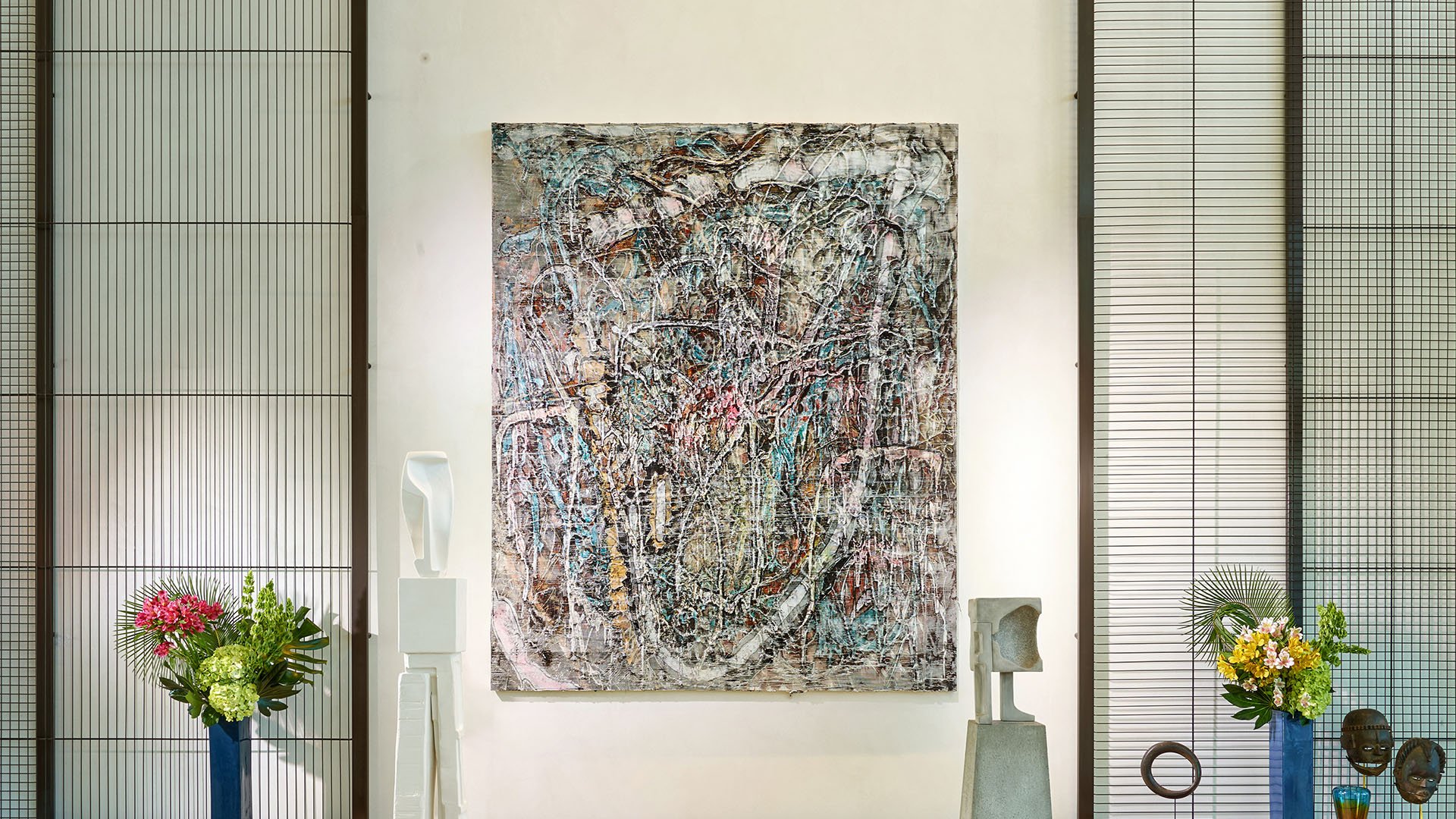
For an art collector choosing between Brickell and Bal Harbour, the distinction is not one of seriousness or taste. It is how a collection, a residence, and the places its owner wants to visit fit together. Brickell offers an urban base with convenient access to Downtown cultural institutions. Bal Harbour offers a secluded oceanside setting, luxury retail, and local public art, with museum visits extending beyond the village.
Neither address, however, answers the practical question of whether a particular work can enter a home, be installed, and be appropriately maintained. Cultural proximity is a neighborhood consideration; collection compatibility is a building and residence consideration. Keeping those decisions separate sharpens the search, particularly when a collection includes large canvases, sculpture, or works requiring specialist care.
Brickell is Miami’s financial district, a dense residential setting close to Downtown shopping, dining, and cultural venues. Pérez Art Museum Miami, Frost Science, and the Adrienne Arsht Center are accessible from Brickell, but are in the Downtown area, not Brickell itself. For buyers who want museums and performances on their regular calendar, that geography is a meaningful starting point.
Wynwood and Coconut Grove are also accessible from Brickell. Treat them as separate destinations, not as neighborhoods that all directly border it. Map the places you actually visit, then test those journeys at the hours you expect to travel. A realistic weekly itinerary tells you more than a general promise of cultural access.
When considering The Residences at 1428 Brickell, use that itinerary alongside a separate review of the residence and building. Brickell City Centre concentrates shopping, restaurants, and entertainment near several residential towers, adding an everyday dimension to the district’s appeal. Those conveniences support an urban lifestyle; they do not establish a particular property’s suitability for art.
Brickell does not require every buyer to choose the same residential atmosphere. Una Residences Brickell occupies a quieter residential waterfront stretch with convenient access to Vizcaya Museum & Gardens. Its setting illustrates why a neighborhood comparison should account for each building’s immediate surroundings rather than rely entirely on the district’s financial-center identity.
For a collector, the choice may be between activity close at hand and a calmer home base from which to reach it. Walk the surrounding streets during a viewing visit and consider the arrival experience separately from the apartment. Then assess the proposed display rooms on their own merits. A waterfront setting and a compelling interior are distinct parts of the purchase decision.
Bal Harbour is a secluded oceanside village at the northern tip of Miami Beach, positioned between Miami and Fort Lauderdale. Its cultural offerings include upscale galleries and a town-sponsored public-art program. These complement, rather than replace, excursions to museums outside the village. The appeal is a different residential rhythm, not a lesser commitment to collecting.
Bal Harbour Shops adds an open-air fashion and jewelry environment landscaped with foliage, koi ponds, and fountains. For a buyer considering Oceana Bal Harbour, the lifestyle question is whether that combination of oceanside living, retail, and local cultural encounters better suits daily preferences than Brickell’s urban setting.
A residence under consideration at Rivage Bal Harbour warrants the same practical scrutiny as any Brickell alternative. An appealing village setting does not establish loading capacity, environmental performance, or installation permissions. Nor should Bal Harbour be reduced to a broadly low-rise alternative: compare the actual properties rather than assume a uniform building type.
Bal Harbour’s road geography provides a starting point for delivery planning. A1A runs through the village, with access toward I-95 via Broad Causeway/SR-922. That helps frame a route discussion with an art transporter. It does not establish truck suitability at a building entrance, delivery availability, or the time needed to complete an installation.
Regional drive estimates are not guaranteed journey times to attractions or international airports. Passenger travel estimates are not fine-art freight schedules. For either neighborhood, ask the selected carrier to assess the actual origin, vehicle, route, arrival arrangements, and appointment window.
These considerations do not justify declaring either neighborhood universally faster, cheaper, or safer for fine-art deliveries. Proximity to an airport or PortMiami alone does not establish secure transport, specialist handling, or customs capability. Compare written plans for the specific buildings on your shortlist rather than assume an address that looks more connected on a map is better equipped.
Before committing to a residence, request a coordinated review by building management and your art-handling team. Provide the dimensions and weight of the work in its transport crate, not just its installed size. Ask them to verify the full route, not the elevator alone.
The review should address:
Loading access: Confirm vehicle clearances, unloading arrangements, and any restrictions on use of the loading area.
Service elevators: Obtain door and cab dimensions, weight capacity, and reservation requirements, then check intervening corridors and turns.
Delivery rules: Verify permitted hours, booking procedures, insurance requirements, and approval responsibilities before scheduling transport.
Environmental controls: Establish what systems serve the residence and ask a conservation specialist whether they meet the collection’s needs.
Installation: Confirm the proposed display locations, mounting approach, and any permissions needed for the planned work.
Treat these as questions to resolve, not amenities to assume. Neither Brickell towers nor Bal Harbour residences should be presumed to provide collector-grade climate control, suitable freight elevators, or particular ceiling heights. Request documentation and measurements for the property you are actually buying.
Favor Brickell if access to Downtown institutions and an urban daily routine are your priorities. Favor Bal Harbour if an oceanside village setting, luxury retail, and local public art better reflect how you want to live between cultural outings. Neither choice defines the ambition of a collection.
The right property satisfies both halves of the brief: a setting you enjoy and a documented plan for receiving, displaying, and caring for the works you own. Establish the cultural fit first, then make building-level compatibility a condition of the decision-not a problem left until delivery day.
Explore residences that align with your collection and South Florida lifestyle at MILLION.
If branded residences are on your mind — as a home or as an allocation — we would be glad to share what we are seeing, privately.
Begin a quiet conversationBrickell offers an urban base with convenient access to Downtown cultural institutions. Bal Harbour pairs an oceanside village setting with luxury retail, galleries, and local public art.
No. They are in the Downtown area and are accessible from Brickell, as is Frost Science.
They are accessible from Brickell, but should not both be described as directly bordering it. Evaluate travel to each as a separate destination.
Una Residences occupies a quieter residential waterfront stretch with convenient access to Vizcaya Museum & Gardens. The immediate setting should be evaluated property by property.
Bal Harbour offers upscale galleries and a town-sponsored public-art program. These complement museum visits outside the village.
A1A runs through Bal Harbour, with access toward I-95 via Broad Causeway/SR-922. A transporter still needs to assess the specific vehicle, route, and building arrival arrangements.
Neither can be ranked universally faster, cheaper, or safer for fine-art deliveries on the information available. Compare property-specific transport plans and handling arrangements.
Approximate regional drive estimates are not guaranteed journey times and should not be used as fine-art delivery schedules. Ask the carrier to assess the specific route and appointment window.
Check loading access, service-elevator dimensions and capacity, delivery hours, insurance requirements, environmental controls, and installation permissions. Have the art-handling team review the full route using crated dimensions.
No such capability should be assumed in either neighborhood. Verify the residence’s systems and have a conservation specialist assess their suitability for the collection.