Bal Harbour and Fisher Island require different due-diligence paths for yacht-owning buyers. The comparison should connect vessel dimensions, route constraints, berth suitability, crew routines, vendor access, and the practical relationship between the marina and residence.
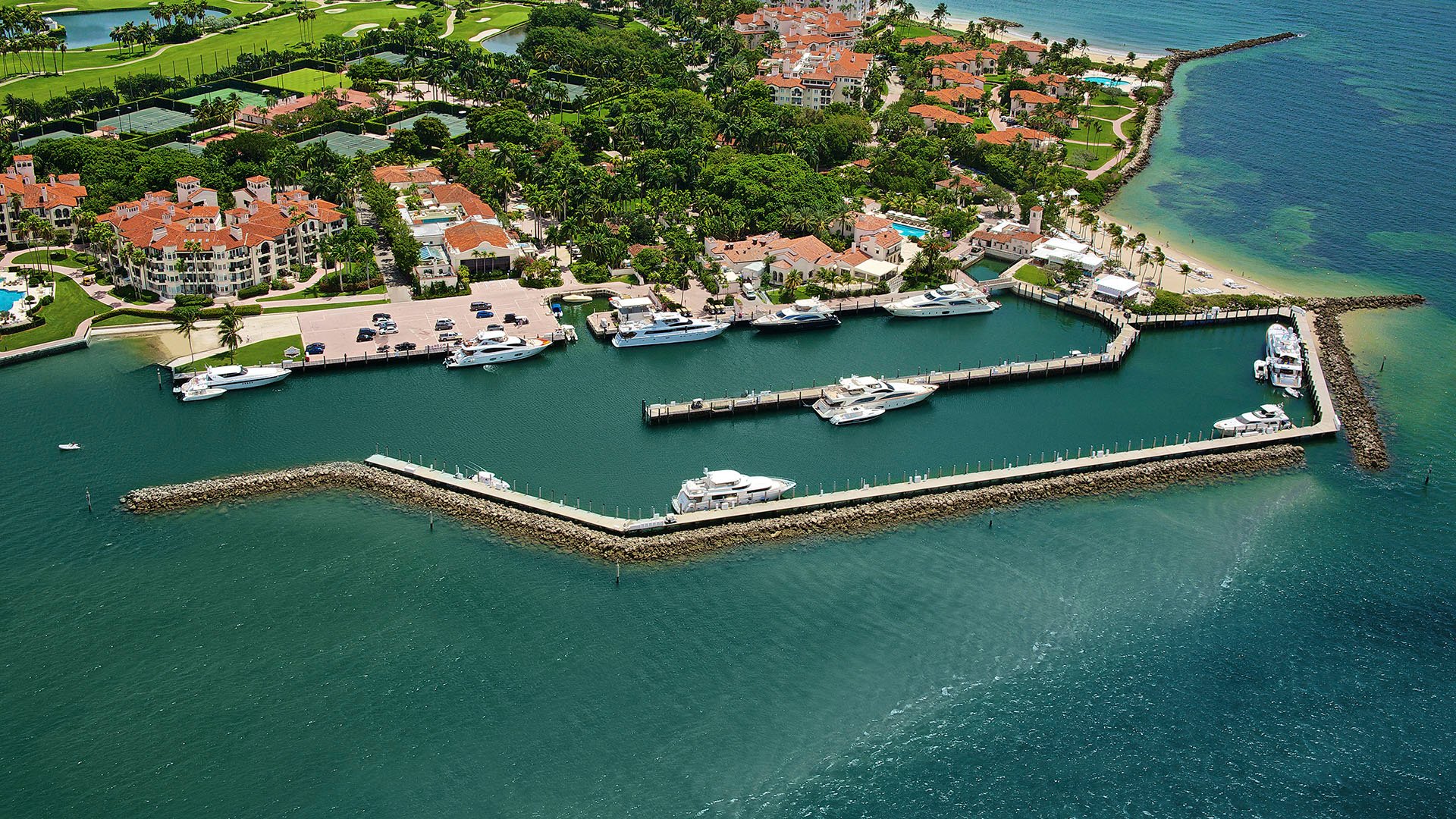
For a yacht owner choosing between Bal Harbour and Fisher Island, the central question is operational compatibility. The residence, berth, vessel, crew, contractors, and departure routine should function as one system rather than as separate decisions.
A waterfront address does not by itself establish that a particular yacht can be kept nearby or used conveniently. Buyers should begin with the vessel’s verified dimensions, normal loading condition, staffing model, maintenance schedule, and expected cruising pattern. The captain and relevant marina team should then assess the intended route and berth under current conditions.
Buyers considering Rivage Bal Harbour should complete that vessel-first review before treating proximity to the water as practical yacht access. The same discipline applies on Fisher Island, where berth compatibility and the movement of crew, guests, and vendors require equal attention.
A Bal Harbour strategy should begin with every fixed and movable element that contributes to the yacht’s air draft. Towers, arches, antennas, outriggers, and other equipment can matter as much as the vessel’s overall length. The owner should document which components can be lowered and which remain fixed in the yacht’s normal operating configuration.
Draft, beam, tide, loading condition, under-keel margin, and current navigation information also belong in the review. A route that appears workable from a general specification may be unsuitable for a particular vessel or uncomfortable under the owner’s preferred operating routine.
The analysis should extend beyond whether passage is technically possible. Owners should ask whether the route remains practical for regular departures, returns, fueling, provisioning, maintenance, and changes in conditions. If the preferred yacht and nearby berth are not compatible, the residential choice may still work, but off-site dockage could introduce transfers and additional coordination.
A residence such as Oceana Bal Harbour should therefore be evaluated alongside a captain-led route and berth assessment. The property decision and yacht plan should be tested together before either is treated as final.
On Fisher Island, buyers should concentrate on matching the exact vessel to a suitable berth and reviewing how the island’s access procedures fit the ownership program. Marina name recognition or general large-yacht positioning is not a substitute for confirmation of current availability, dimensions, depth, services, and operating requirements.
Buyers considering The Residences at Six Fisher Island should ask the captain to evaluate the complete marina approach and the proposed berth. The review should cover the vessel’s loaded draft and beam, maneuvering requirements, shore services, tender arrangements, and the owner’s normal arrival and departure pattern.
The household office or captain should also map how recurring crew members, technicians, provisioners, guests, and other contractors will reach the yacht and residence. A controlled process can support privacy, but it may require more advance coordination than an ownership program built around spontaneous service access.
Crew requirements extend beyond the number of people aboard. Buyers should examine overnight arrangements, parking and transfers, shore access, deliveries, shift changes, emergency response, contractor scheduling, and the time needed to prepare for departure.
Any marina or club rules affecting crew should be confirmed directly before a purchase or dockage commitment. Policies, berth availability, operating procedures, and personnel requirements can change, so assumptions based on general descriptions should not replace written verification.
For buyers considering The Links Estates at Fisher Island, the relevant question is whether the captain or household team can manage recurring access and service coordination consistently. For Bal Harbour buyers, the equivalent test is whether the preferred route, berth, and staffing arrangement remain workable throughout normal yacht operations.
A useful comparison places both locations against the same ownership profile. The owner and captain can list the yacht’s verified dimensions, preferred berth characteristics, crew model, vendor frequency, provisioning needs, guest movements, maintenance cadence, and typical departure times. Each item can then be tested against current marina and route information.
This process separates residential preference from operational feasibility without treating either as secondary. Bal Harbour may remain the preferred residential choice even if the yacht requires a different dockage solution. Fisher Island may better align with another owner’s berth and privacy priorities while demanding a more structured access routine.
Before finalizing a purchase, buyers should request current written information from the relevant marina or club, have the captain review the intended navigation plan, and confirm that recurring crew and vendor movements are realistic. Legal, insurance, and technical advisers can address contract terms, coverage, vessel requirements, and other matters outside the residential comparison.
The strongest choice is the one that allows the home and yacht program to operate comfortably together. For discreet guidance on aligning a South Florida residence with your yachting requirements, consult MILLION.
If branded residences are on your mind — as a home or as an allocation — we would be glad to share what we are seeing, privately.
Begin a quiet conversationThey should verify the yacht’s dimensions, intended route, berth suitability, staffing model, and service requirements with the captain and relevant marina team.
Air draft determines whether the yacht’s fixed and movable upper structures are compatible with the intended route. The measurement should reflect the vessel’s actual operating configuration.
The review should include air draft, loaded draft, beam, length, and any equipment that can be raised or lowered.
No. Buyers must separately confirm route compatibility, berth availability, marina requirements, and the practical transfer between the home and yacht.
They should confirm current dimensions, depth, availability, maneuvering space, shore services, and operating requirements for the specific yacht.
The owner should assess overnight arrangements, transfers, access procedures, shift changes, deliveries, and readiness for routine departures.
Maintenance, provisioning, and technical work may require structured coordination. Buyers should test whether their household or captain can manage recurring access efficiently.
It may, provided the owner accepts the transfers and coordination created by off-site dockage. The full departure and return routine should be tested before purchasing.
The buyer, captain, residential adviser, and relevant marina representative should review the same operating plan. Legal, insurance, and technical advisers can address their respective specialties.
They should be checked before a purchase or dockage commitment and reconfirmed when plans change. Current written information is preferable to assumptions or general descriptions.