A discreet buyer’s guide for Chicago owners evaluating South Florida homes through the lens of year-round water views, seasonal livability, light, privacy, terrace use, and long-term emotional value.
For a Chicago owner considering Miami Beach or the broader South Florida coast, water is often the emotional reason for the move. Yet the best purchase is rarely about choosing the bluest frame in a sales gallery. It is about choosing a daily rhythm that remains engaging in January, July, storm season, guest season, and the quiet weeks when the residence is simply home.
Chicago trains buyers to read light carefully. A lake view can be majestic, disciplined, and seasonal. South Florida water behaves differently. It shifts through color, reflection, tide, boating activity, cloud drama, sunset glow, and nighttime shimmer. A compelling home here should not depend on one perfect hour. It should reward breakfast, a late-afternoon call, an early-evening swim, and the moment guests step onto the terrace.
That is why the first showing should be less about applause and more about observation. Ask how the view changes from room to room. Notice whether the living area, primary suite, kitchen, and terrace all participate in the water, or whether the view is concentrated in one dramatic but narrow angle. A residence with a calmer, broader connection to water may prove more satisfying than a unit with a single cinematic shot.
Oceanfront ownership offers clarity. It is direct, elemental, and immediately legible. The horizon is a luxury in itself, especially for buyers leaving a northern city routine and seeking a more resortlike cadence. In Miami Beach, buildings such as The Perigon Miami Beach speak to buyers who want the ocean to define the entire experience, from morning light to evening calm.
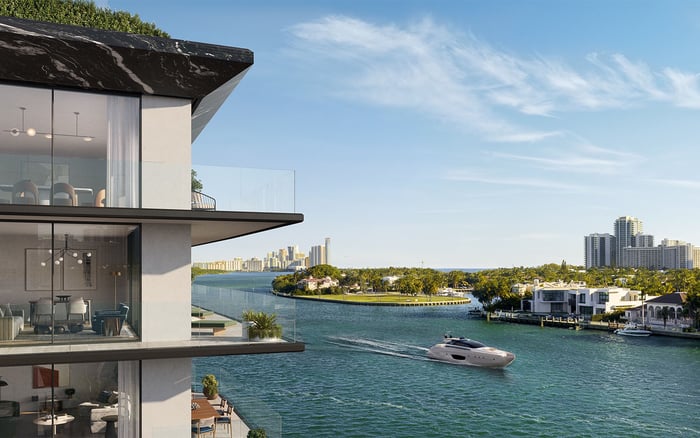
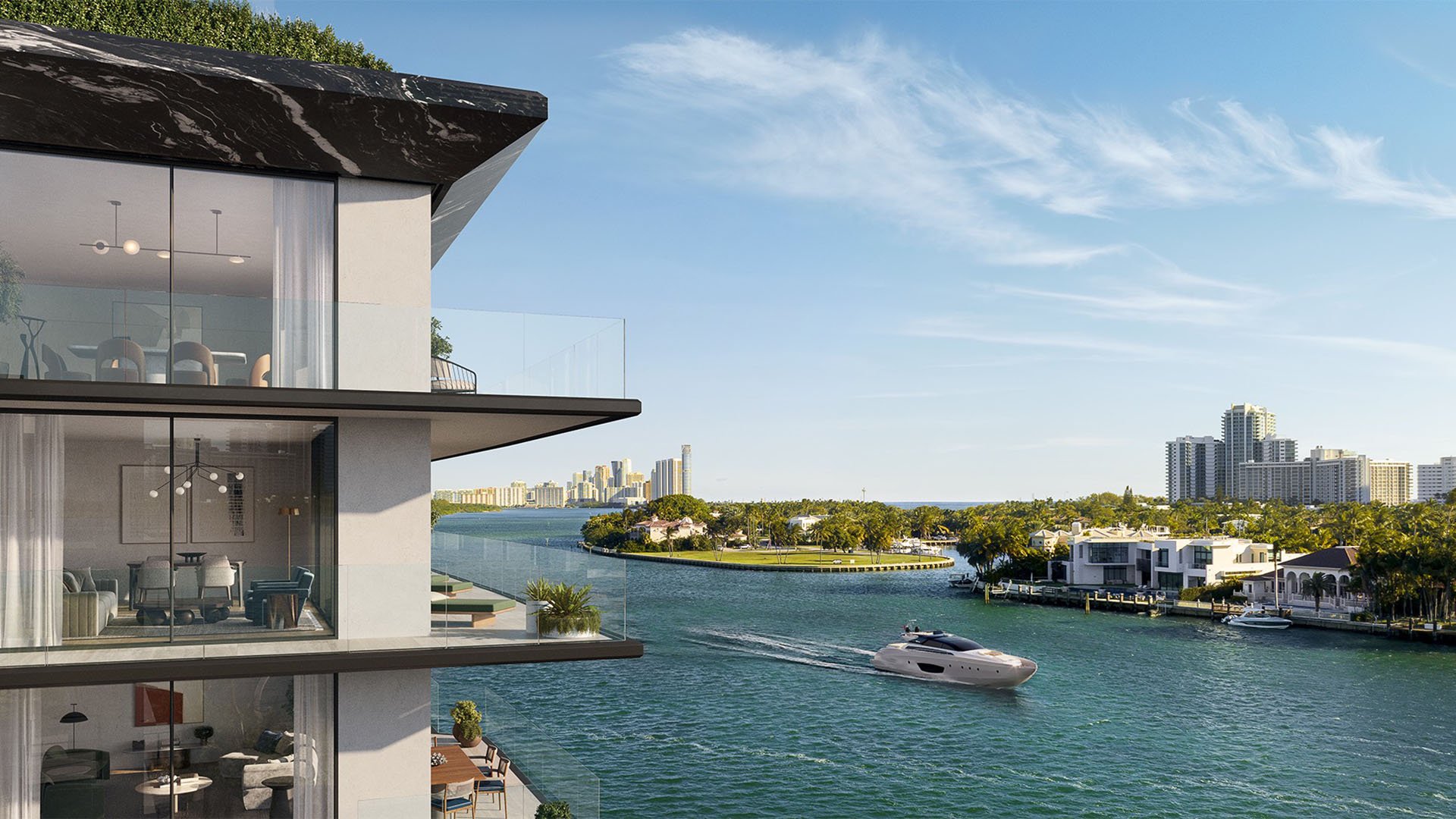
Bayfront living is more layered. It can include boating movement, islands, bridges, skyline silhouettes, and sunsets. For many Chicago buyers, this feels familiar in one respect and more theatrical in another: water remains the anchor, while the city becomes part of the composition. A bay view can be especially rewarding for owners who want visual activity without sacrificing serenity.
Urban water views along Miami’s mainland edge offer a more metropolitan setting, with the bay, river, and skyline working together. In Edgewater, Aria Reserve Miami may appeal to buyers who want a high-rise vantage with water in the foreground and city energy close at hand. The choice is not simply beach versus city. It is whether you want the water to feel meditative, social, nautical, or architectural.
A Chicago buyer may arrive saying “Miami Beach” when the true lifestyle brief is more precise. South of Fifth, Mid-Beach, North Beach, and nearby Surfside or Bal Harbour can feel materially different in pace, privacy, beach experience, and building character. Even within one neighborhood, the distinction between a direct ocean residence, a side-facing ocean view, a bay-facing home, and a lower-floor garden-and-water composition can be significant.
The most successful buyers separate address prestige from view quality. A celebrated location may still deliver a compromised angle, while a quieter building can offer a more restful daily relationship with water. The goal is to understand what you are actually buying from the main rooms, not what the neighborhood name implies.
For buyers who want a restored sense of coastal glamour with private-residence discretion, Shore Club Private Collections Miami Beach belongs in the conversation. For those who want a wellness-oriented beachfront rhythm, 57 Ocean Miami Beach is an example of how the water can shape not only the view, but the daily routine around it.
A water view can sell itself at golden hour. Ownership is more demanding. Visit, when possible, in bright midday conditions to understand glare. Return near dusk to evaluate reflections, privacy, and the quality of interior light. If you work from home, stand where the desk might go. If you entertain, sit where guests will gather. If you read outdoors, assess shade, wind, and terrace comfort.
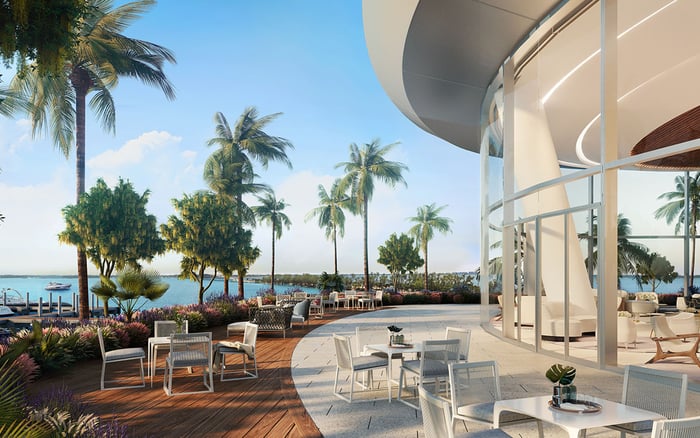
For many northern buyers, the terrace is the symbolic heart of the move. But not every terrace lives equally well. Depth matters. So does protection from wind, the relationship between indoor and outdoor seating, and whether the railing preserves the view while seated. A beautiful balcony is most valuable when it functions as an additional room, not merely a photograph.
Privacy should be studied with equal care. Water views often involve neighboring towers, passing boats, beach activity, or illuminated skylines. Some buyers welcome the sense of life; others want a more secluded frame. Neither preference is wrong. The mistake is discovering the difference after closing.
Not every compelling South Florida view needs to be oceanfront. Bay Harbor Islands, North Bay Village, Coconut Grove, Fort Lauderdale, Boca Raton, and West Palm Beach can offer distinct water experiences, each with its own tempo. For a Chicago buyer accustomed to urban convenience but seeking softness, quieter bay and inlet settings can be particularly persuasive.
In Bay Harbor Islands, La Baia North Bay Harbor Islands reflects the appeal of a more residential waterfront environment. The water is still present, but the atmosphere can feel less performative than a major beachfront corridor. This is where a buyer may begin to think less in postcard terms and more in terms of morning walks, marina proximity, guest access, and calm.
A useful exercise is to define your water preference before choosing the building. Do you want horizon, sunset, boat traffic, beach proximity, marina culture, skyline sparkle, or leafy shoreline? Those answers will quickly narrow the search and help prevent being seduced by a view that is impressive but not personally durable.
A South Florida residence should be evaluated as a complete climate instrument. Orientation, terrace usability, shading, ceiling height, glass exposure, air flow, and the relationship between amenities and the water all contribute to how the home feels throughout the year. The strongest properties make the water part of the architecture, not just a backdrop beyond it.
This is especially important for part-time owners. If the home will be used intensely during select months, ease matters. Arrival should be frictionless. The first view should reset the mood immediately. Storage, guest suites, service access, parking, and building operations may not be as romantic as the horizon, but they determine whether the residence feels like a refuge or another logistical exercise.
For search discipline, think in terms of Miami Beach, water view, oceanfront, Bay Harbor, Edgewater, and balcony criteria, then translate those labels into lived experience. A tag can begin the search, but only time inside the residence can confirm the fit.
The most enduring water-view homes have a quality that is difficult to reduce to a checklist. They feel complete even on an ordinary day. They do not require perfect weather, a special occasion, or a guest’s reaction to justify the purchase. The view becomes part of the owner’s private language: morning clarity, afternoon shadow, evening reflection, passing clouds.
For Chicago buyers, this may be the central luxury. South Florida is not merely a warmer alternative. It is an opportunity to recalibrate domestic life around light and water. The strongest choice is the home that makes that recalibration feel natural, gracious, and repeatable.
Should a Chicago buyer prioritize ocean or bay views in South Florida? Prioritize the view that best matches your daily habits. Ocean views feel expansive and elemental, while bay views often offer more visual variety and sunset drama.
Is a direct water view always better than a partial water view? Not always. A partial view with better terrace usability, privacy, and interior light can live better than a direct view with glare or awkward room flow.
How many times should I visit a residence before deciding? Visit at different times of day whenever possible. Morning, midday, and dusk can reveal very different qualities in the same home.
What should I look for from the primary suite? Look for a calm, natural relationship to the water from the bed and seating areas. The view should feel restful, not forced or overly exposed.
Do high floors always have the best water views? High floors can offer drama and distance, but lower floors may provide intimacy with shoreline, gardens, pools, or boating activity. The better choice depends on your preferred mood.
Why does terrace depth matter so much? A deeper terrace can function as a true outdoor room. If it is too shallow, it may photograph well but see limited daily use.
Should I consider areas beyond Miami Beach? Yes. Bay Harbor Islands, Edgewater, Fort Lauderdale, Boca Raton, and West Palm Beach can offer compelling water lifestyles with different levels of pace and privacy.
What is the biggest mistake buyers make with water views? They choose the most dramatic first impression instead of the most livable daily composition. A view should remain rewarding after the novelty fades.
How should part-time owners evaluate a water-view home? Focus on ease of arrival, lock-and-leave comfort, guest flow, storage, and building service. The view matters most when the rest of ownership feels effortless.
Can a city-and-water view be as desirable as beachfront? Yes. For buyers who enjoy architecture, lights, boats, and skyline energy, a city-and-water composition can be more engaging than a pure horizon.
When you're ready to tour or underwrite the options, connect with MILLION.
If branded residences are on your mind — as a home or as an allocation — we would be glad to share what we are seeing, privately.
Begin a quiet conversation