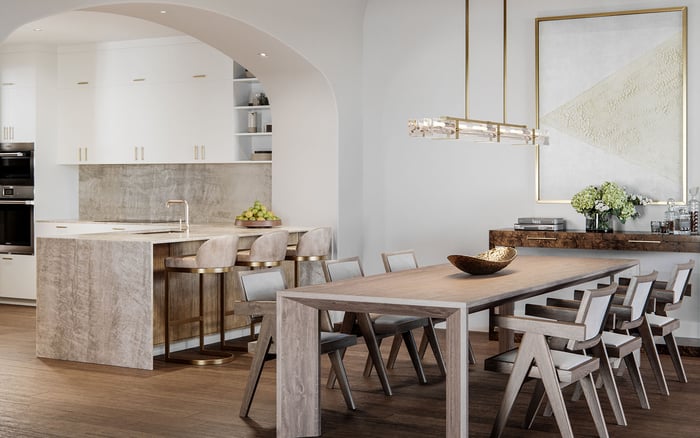
A family purchase at Ponce Park calls for more than a campus connection. Align construction timing, deposit commitments, ownership costs and occupancy rules before making the residence part of a university plan.

Buying a home before a child begins university can serve two ambitions: giving the student a settled base and creating a South Florida residence the family will use beyond graduation. At Ponce Park Coral Gables, the proposition is a luxury, full-service condominium on Ponce de Leon Boulevard, with potential university convenience-not a proven student-housing investment.
That distinction should guide the purchase. The strongest case is a residence that suits the family independently of a degree program. Consider how parents will use it during visits, whether the layout supports both study and hosting, and whether ownership remains attractive if the student changes campuses or housing preferences. University access can strengthen the decision, but it should not carry it alone.
An academic start date is fixed; a construction schedule may not be. No guaranteed delivery or closing date is established here, so buyers should obtain a written schedule before treating the residence as first-semester housing.
Ask how anticipated completion relates to closing and permitted occupancy. Then have a Florida real-estate attorney examine the contract’s construction-delay provisions, cancellation rights and closing obligations. A projected handover is not a contractual remedy if the building is unavailable when classes begin.
Build a temporary-housing plan alongside the purchase. It should accommodate a delayed move without forcing the student to reorganize the opening weeks of university. The practical question is whether the family can comfortably manage both the acquisition and an interim residence if the calendars diverge.
The relevant connection is to the University of Miami’s Coral Gables campus, not every university in Miami. Ponce de Leon Boulevard is an approach to that campus, whose main entrance is at Stanford Drive. Driving directions lead to Pavia Parking Garage, an easy walk from the Office of Admissions.
That provides orientation, not a verified door-to-classroom travel time. Test the journey to the student’s likely buildings at realistic class hours, including parking and the final walk. An admissions visit and a recurring morning commute are different exercises.
Coral Gables’ trolley connects with Metrorail for onward travel to the university and other destinations. This does not establish a direct trolley ride from Ponce Park to campus. Confirm the full route and transfers before assuming a car-free routine.
If Cora Merrick Park is also on the shortlist, apply the same address-specific test. A shared Coral Gables location does not establish an equivalent campus journey.
The published payment schedule calls for 20% at contract, 10% at groundbreaking, 10% at top-off and 60% at closing. That puts 40% of the purchase price due before closing. Reconfirm both the percentages and the contractual triggers before committing.
The marketed Residence 602 illustrates the scale: its asking price is $2.9 million for 1,957 square feet. Applying the published schedule produces $580,000 at contract, $290,000 at each subsequent construction milestone and $1.74 million at closing, before other costs.
Other marketed examples include Residence 606 at $4.675 million for 2,954 square feet, Residence 701 at $5.1 million for 3,487 square feet, and Residence 504 at $5.4 million for 2,815 square feet. These four examples imply approximately $1,463 to $1,918 per square foot. They are asking prices, not closed transactions or a complete inventory.
Compare usable layouts, not price per square foot alone. Request current plans and assess study space, privacy during family visits and storage. Have counsel review deposit protection and assignment rights, particularly if enrollment plans could change before closing.
Advertised services include a doorman, concierge, 24-hour valet, attended lobby, security, package delivery, pet care and restaurant reservations. For a family dividing its time between cities, these offerings may matter more to daily convenience than the most photogenic amenity.
The planned rooftop program includes a resort pool, zen pool, cold plunge, hot tub, rooftop bar and private-event space. Additional advertised amenities include a screening lounge, spa, fitness center, meditation courtyard and private wine cellar.
Treat these as planned or advertised features, not a substitute for reviewing delivery obligations and operating rules. Ask which services are included in dues, which carry separate charges, and how guest access and event reservations will work. An attended building does not replace a clear understanding of student occupancy, household responsibilities or the residence’s suitability for quiet study.
Purchase price and deposits are only the beginning. Obtain the proposed association budget, unit-specific dues, insurance information, parking charges and a buyer-specific property-tax estimate. Add financing costs, if applicable, and any interim housing needed before occupancy.
Local association-fee benchmarks are not Ponce Park estimates. Do not substitute a broader Coral Gables condominium sample for the unit-specific figures needed to build an ownership budget.
If The Village at Coral Gables enters the comparison, request an equally complete ownership-cost breakdown. Compare the total cost of holding each residence for the family’s intended period, not an isolated monthly fee.
Before signing, establish whether the intended arrangement is permitted: parent ownership with a student occupant, family visits, and any anticipated roommates or guests. Leasing permissions, minimum lease terms, rental caps, student occupancy rules and guest policies remain unverified and require document review.
Apply the same discipline to the exit. Do not assume the residence can be rented immediately after graduation, assigned before closing or resold on a preferred timetable. Ask counsel to examine the applicable restrictions, and assess whether the family would still want the home if rental income were unavailable.
Ponce Park is most compelling when the residence, capital commitment and longer-term family use make sense without relying on a guaranteed completion date or investment return. With those foundations established, university convenience becomes an advantage rather than the premise holding the purchase together.
For a discreet assessment of Ponce Park within your family’s university and ownership plans, connect with MILLION.
If branded residences are on your mind — as a home or as an allocation — we would be glad to share what we are seeing, privately.
Begin a quiet conversationIt is marketed as a luxury, full-service condominium, not a proven student-housing investment. The purchase should make sense as a family residence independently of university attendance.
No guaranteed delivery or closing date is established. Obtain a written schedule, review contractual protections and arrange backup housing if needed.
The transport information concerns the University of Miami’s Coral Gables campus. It does not establish convenience to every university in Miami.
No verified door-to-campus travel time is provided. Test the actual journey, including parking, transfers and walking to the student’s likely buildings.
The trolley connects with Metrorail for onward university travel. A direct trolley ride from Ponce Park to campus is not established.
The published schedule is 20% at contract, 10% at groundbreaking, 10% at top-off and 60% at closing. Reconfirm the terms and milestone triggers before signing.
Four marketed examples range from $2.9 million for Residence 602 to $5.4 million for Residence 504. These are asking prices, not closed sales or a complete inventory.
Advertised services include a doorman, concierge, 24-hour valet, an attended lobby, security, package delivery, pet care and restaurant reservations. Confirm inclusions and any separate charges.
No; local medians are not unit-specific estimates. Obtain the proposed association budget and unit-specific dues, along with insurance, parking and property-tax information, before calculating ownership costs.
Leasing permissions, minimum terms and rental caps remain unverified. Review the governing documents and contract with a Florida real-estate attorney before relying on a rental exit.