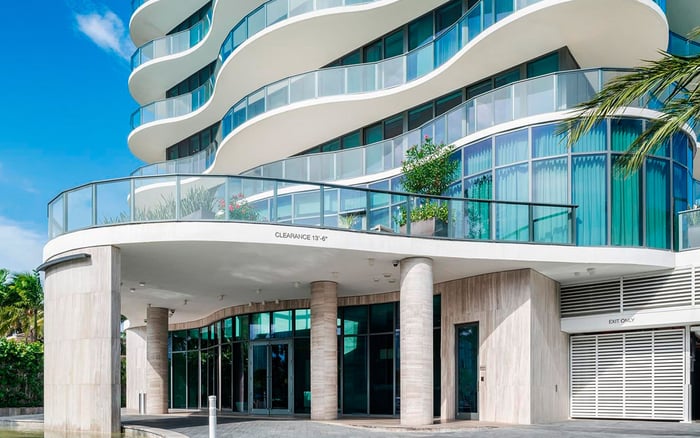
For trust and LLC buyers at Muse Residences, post-storm readiness depends on separating representative authority, building access, and permission to perform work. A carefully documented plan can help align ownership, management, and vendors before an urgent inspection is needed.

Buying at Muse Residences Sunny Isles Beach through a trust or LLC raises a practical question beyond ownership structure: who can act when the residence needs attention after a storm? At 17141 Collins Avenue, Sunny Isles Beach, Florida 33160, a buyer’s preparations should address not only who holds title, but who can communicate with management, arrange an inspection, and authorize an appropriate response.
Three distinct permissions matter: authority to represent the ownership structure, permission to enter the building and unit, and authorization to perform specific work. Establishing one does not automatically establish the others. For an owner who travels frequently, clarifying those distinctions is an important part of purchase diligence.
For a trust purchase, Florida’s Trust Code permits a trustee to furnish a certification of trust instead of the full trust instrument. The certification can identify the acting trustee and the trustee’s powers, demonstrating authority without making disclosure of the entire trust the starting point.
Ask counsel to prepare the appropriate certification and clarify who may appoint an inspector, engage a contractor, approve expenditures, and receive communications. These are planning recommendations-not a statement that Muse requires a particular form or accepts every certification without further review.
For an LLC, have counsel identify the person authorized to act and determine how to document that authority. Ask management what it requires to recognize the representative. Neither an entity’s name on title nor a representative’s possession of keys should be assumed to resolve every authorization question.
Keep the resulting instructions specific. Permission to arrange an inspection should not be presumed to confer unlimited authority to approve reconstruction. Consider naming a backup contact and setting spending limits in the owner’s instructions, while separately confirming how management will handle communications.
Florida condominium law gives the association an irrevocable right of access to units during reasonable hours when necessary to maintain, repair, or replace common elements or portions of units the association must maintain. That right also applies when entry is necessary to prevent damage to a unit or common elements.
After a storm, the distinction matters. The association may have a statutory basis to enter for damage prevention even if an owner’s private inspection has not been arranged. Conversely, a buyer, trustee, LLC representative, broker, or owner-appointed contractor does not independently acquire the association’s statutory access right.
A contractor authorized by ownership cannot treat that authorization as unrestricted permission to enter neighboring residences, roofs, mechanical rooms, or other association-controlled areas. If an inspection requires access beyond the unit, coordinate with the association rather than promising access the owner cannot independently provide.
For buyers also considering Jade Signature Sunny Isles Beach, a useful comparison starts with each building’s requirements-not an assumption of identical procedures. Request its access and representative-recognition requirements, then assess how clearly they support your intended ownership arrangement.
During a declared state of emergency, Florida condominium law protects specified access by owners and their tenants, guests, agents, or invitees, including ingress, egress, and necessary emergency-related access. Governmental orders prohibiting access remain a limitation. These protections do not amount to permission for unrestricted vendor activity or a waiver of applicable condominium requirements.
Abandoned-unit entry is a separate issue. The board’s statutory powers include inspecting an abandoned unit and adjoining common elements, making necessary repairs, addressing mold or deterioration, activating utilities, and otherwise preserving or protecting the property.
Except in an emergency, abandoned-unit entry requires at least two days’ notice, mailed or hand-delivered to the owner at the address in association records. That provision is not a universal notice rule for every association inspection. Nor should a buyer assume that seasonal absence alone settles the legal question of abandonment; obtain advice before relying on that classification.
An inspection request should distinguish observation and documentation from proposed intervention. Ask the vendor what it intends to examine, whether it needs access outside the residence, and whether any proposed activity goes beyond inspection. A clearly defined scope makes the permission request more useful to everyone involved.
Reconstruction requires additional review. Under the 2024 statutory framework, reconstruction following a property loss is generally undertaken by the association, subject to exceptions and the allocation of responsibility for the affected property. The owner-reconstruction provision requires prior written board consent for owner-performed reconstruction of portions of a unit. Have counsel confirm the current governing law and its application before relying on that framework for a particular project.
Do not confuse vendor availability, an owner’s spending approval, or permission to inspect with permission to rebuild. Applicable condominium documents and rules bind owners and their agents and invitees. Written owner authorization does not exempt a contractor from those requirements.
Before closing, ask the seller and management how a buyer-requested post-storm inspection would be arranged. Have counsel distinguish contractual inspection permission from the association’s statutory powers. A pending purchase should not be treated as an independent association-level right of entry.
Request the applicable condominium documents and current procedures. Ask about emergency communications, vendor credentials, work hours, elevator arrangements, access to controlled areas, and approval channels. Obtain written confirmation rather than assuming a particular Muse protocol.
The same diligence questions can inform a comparison with Regalia Sunny Isles Beach, without suggesting that its procedures match Muse’s. For an entity or trust buyer, knowing exactly who can request access and approve work offers a more useful basis for comparison than a general assurance that someone will handle matters.
Prepare a concise ownership contact file with the authorized representative, backup contact, counsel’s contact details, and the address designated for association communications. Keep it aligned with association records. Separately, retain the documents supporting representative authority and any written building acknowledgments or work approvals.
Before deploying a vendor, confirm the scope, destination, proposed timing, permitted areas, and approvals needed for the task. Ask how findings should be communicated and who can authorize a change in scope. Treat these as preparation steps-not guaranteed entry rights or confirmed building requirements.
The objective is a residence that can be cared for decisively, with no ambiguity about authority. A trust or LLC can remain the chosen ownership structure while a clearly documented plan connects the right decision-maker, the association, and the appropriate professional.
For a discreet conversation about your Sunny Isles Beach purchase priorities, connect with MILLION.
If branded residences are on your mind — as a home or as an allocation — we would be glad to share what we are seeing, privately.
Begin a quiet conversationMuse Residences is at 17141 Collins Avenue, Sunny Isles Beach, Florida 33160.
The association’s statutory access right does not independently belong to a buyer, trustee, or LLC representative. Representative authority, entry permission, and work authorization should be addressed separately.
Florida’s Trust Code permits a certification of trust instead of the full trust instrument, identifying matters including the acting trustee and the trustee’s powers.
Have counsel identify and document the authorized representative, then ask management what it requires to recognize that authority. Confirm acceptance before an urgent inspection is needed.
The association has an irrevocable access right during reasonable hours for specified maintenance, repair, or replacement purposes and when necessary to prevent damage to a unit or common elements.
No. The two-day notice provision discussed here concerns abandoned-unit entry, with an emergency exception, rather than every association inspection.
No unrestricted right follows from the association’s entry authority. Access to association-controlled areas should be coordinated with the association.
No. Specified owner and related access receives statutory protection, but governmental orders prohibiting access remain a limitation and emergency access is not unrestricted vendor authorization.
The 2024 statutory owner-reconstruction provision requires prior written board consent for reconstruction of portions of a unit. Counsel should confirm the current law and its application before work proceeds.
Confirm representative authority, the proposed scope, entry arrangements, permitted areas, and applicable building requirements. Keep inspection permission separate from approval to perform work.