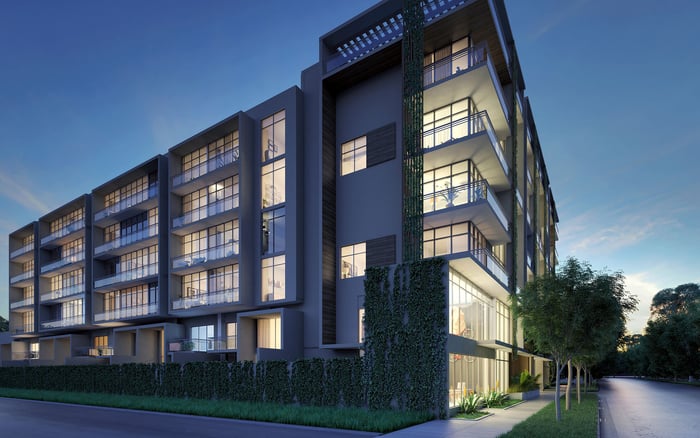
A trust or LLC purchase at Mr. C Tigertail calls for two coordinated reviews: approval of the intended ownership structure and written confirmation that the residence and parking arrangements can support the buyer’s electrical requirements.

A carefully lit collection, wine storage integrated into cabinetry, and a vehicle ready for the next morning contribute to a residence’s daily comfort. At Mr. C Tigertail Coconut Grove, buyers planning these features should investigate two matters together: whether the intended trust or LLC can complete the purchase, and whether the proposed installations can be supported and approved.
Tigertail is at 2678 Tigertail Avenue, Miami, FL 33133. The community also includes the Bayshore tower at 2655 S. Bayshore Drive. Keep the tower, residence, and parking documentation aligned throughout the transaction. A shared community identity is no substitute for confirming the rights attached to the specific property.
The central distinction is simple: an advertised amenity is not a unit-specific commitment. Electric-car charging ports and above-ground parking with security surveillance are advertised, but neither establishes a private charger at the buyer’s space or sufficient capacity for a particular installation.
Verify current trust and LLC purchaser-approval, transfer, and beneficial-owner disclosure requirements. Do not treat either ownership structure as automatically approved or assume that changing the purchaser later will be administratively straightforward.
Ask counsel to review the declaration, bylaws, resale package, purchaser application, and entity-disclosure requirements before committing to the structure. The review should identify what must be submitted, who must approve it, and whether the proposed ownership and signing arrangements satisfy the transaction’s requirements.
Confirm the intended purchaser with the seller, title company, lender, insurer, and association before changing the name on the contract. Ownership planning and renovation planning should proceed in parallel, but one does not resolve the other. An acceptable purchasing entity does not establish permission to alter electrical systems or install charging equipment.
For buyers also considering Four Seasons Residences Coconut Grove, apply the same discipline independently. Neither ownership permissions nor installation approvals should be assumed to carry from one property to another.
The electrical question is not simply whether there is room for another breaker. Total electrical-service capacity, transformer capacity, unit-panel ratings, spare capacity, and maximum simultaneous vehicle-charging load require property-specific verification. None should be inferred from the amenity offering.
Request panel schedules, panel and feeder ratings, available breaker spaces, prior alteration permits, and available building or garage electrical drawings. Have a qualified electrical professional assess those records alongside the actual residence and proposed equipment.
The written review should consider existing household loads together with art lighting, wine refrigeration, and EV charging, and identify which systems would serve each installation. Ask the reviewer to distinguish what is feasible within the residence from anything dependent on garage infrastructure or building-level approval.
The conclusion should describe the proposed configuration, unresolved dependencies, and any information still needed before committing to equipment. An informal assurance of ample power is no substitute for that analysis.
For a collection-focused interior, provide the electrical reviewer with the actual fixture, driver, dimming, control, shade, and monitoring specifications. Describe the intended system rather than simply requesting gallery lighting or assuming the collection’s lighting needs are negligible.
Ask the lighting designer and electrical professional to coordinate their proposed requirements before the decorative scheme is finalized. Identify which elements are existing, which would be replaced, and which would be added. This gives the approval review a defined scope rather than an aesthetic description.
The objective is a lighting design with documented installation requirements and a clear approval path. If the selection changes during design development, ask whether the electrical assessment needs to change with it. A preliminary review should not become a blanket assurance for a different installation.
Wine storage deserves an equipment brief, not merely a reserved opening in the millwork. Ask the specialist to document electrical demand, startup requirements, ventilation, heat rejection, condensate handling, and suitability for the proposed enclosure.
Submit that information with the electrical review and cabinetry proposal. A refrigerator selected late in the design process should not be presumed equivalent to the equipment originally assessed. Confirm that the relevant professionals have reviewed the final model and installation arrangement.
For a buyer comparing Tigertail with Park Grove Coconut Grove, use the same proposed wine-storage specification as a comparison tool. Seek a separate feasibility response for each residence rather than assuming comparable interiors imply comparable installation possibilities.
Parking descriptions illustrate why this inquiry must be precise. Apartment 302 has been described as having two parking spaces with assigned, covered, and valet parking. Unit 1706 has been described as having two valet parking spaces. Neither description establishes dedicated charging access, and two valet spaces should not be assumed to mean two independently accessible spaces.
Confirm the exact parking rights and operating arrangement in writing. Then establish whether charging would be available at those spaces or elsewhere, and on what terms.
The advertised charging amenity does not establish charger count, connector type, power rating, space assignments, or whether installation is included in a purchase. Metering, billing, and the availability of load management also require verification.
Request confirmation of charger specifications, available charging current, any load-management restrictions, installation and maintenance responsibilities, and billing. Keep these answers separate from the residence’s panel assessment so that neither is mistaken for confirmation of the other.
Miami-Dade County maintains an electrical-permit process, but the applicable permitting authority for the proposed work must be confirmed separately. Association requirements also warrant their own review.
Do not extend narrow repair exemptions to a broader renovation. County exemptions address specified repairs or replacements of wall switches and receptacles rated 15-20 amps and 120 volts or less, subject to eligibility restrictions. Certain low-voltage exemptions concern single-family installations and repairs; they should not be presumed applicable to condominium work.
Before committing to the installations, assemble a coordinated file: counsel’s ownership review, the purchaser-approval requirements, the written electrical assessment, final equipment specifications, parking and charging confirmations, and the approval and permitting path. Where an answer remains unresolved, ask the appropriate adviser how it should affect timing and commitments. The goal is not maximum equipment capacity in the abstract, but documented support for the way the buyer intends to live.
For a discreet perspective on your Coconut Grove property search, connect with MILLION.
If branded residences are on your mind — as a home or as an allocation — we would be glad to share what we are seeing, privately.
Begin a quiet conversationTigertail is at 2678 Tigertail Avenue, Miami, FL 33133, in Coconut Grove. The community’s Bayshore tower has a different address, so confirm that transaction documents identify the correct property.
Current purchaser-approval, transfer, and beneficial-owner disclosure requirements are not established in the public project information. Have counsel confirm the applicable requirements before committing to the ownership structure.
Confirm the intended purchasing entity with the seller, title company, lender, insurer, and association before changing the contract purchaser.
No. The advertised electric-car charging ports do not establish charging access at a particular parking space or confirm that installation is included in a purchase.
The public project information does not establish unit-panel ratings, spare capacity, or building-level electrical capacity. Obtain a property-specific written electrical review.
Request panel schedules, panel and feeder ratings, available breaker spaces, prior alteration permits, and available building or garage electrical drawings.
Provide actual fixture, driver, dimming, control, shade, and monitoring specifications. Ask the electrical professional to review them alongside existing household loads and other proposed installations.
Ask the equipment specialist to document electrical demand, startup requirements, ventilation, heat rejection, condensate handling, and suitability for enclosed millwork.
Not necessarily. Verify the actual parking rights, valet arrangements, and charging access rather than relying on the number of spaces described.
No. Confirm the proposed scope with the applicable permitting authority and review association requirements separately; narrow repair and single-family low-voltage exemptions do not establish permission for a condominium renovation.