
A trust or LLC purchase at Colette calls for coordinated legal, insurance, and engineering diligence. Distinguish advertised amenities from documented flood protection, and request written answers on claims history, critical equipment, and storm recovery.
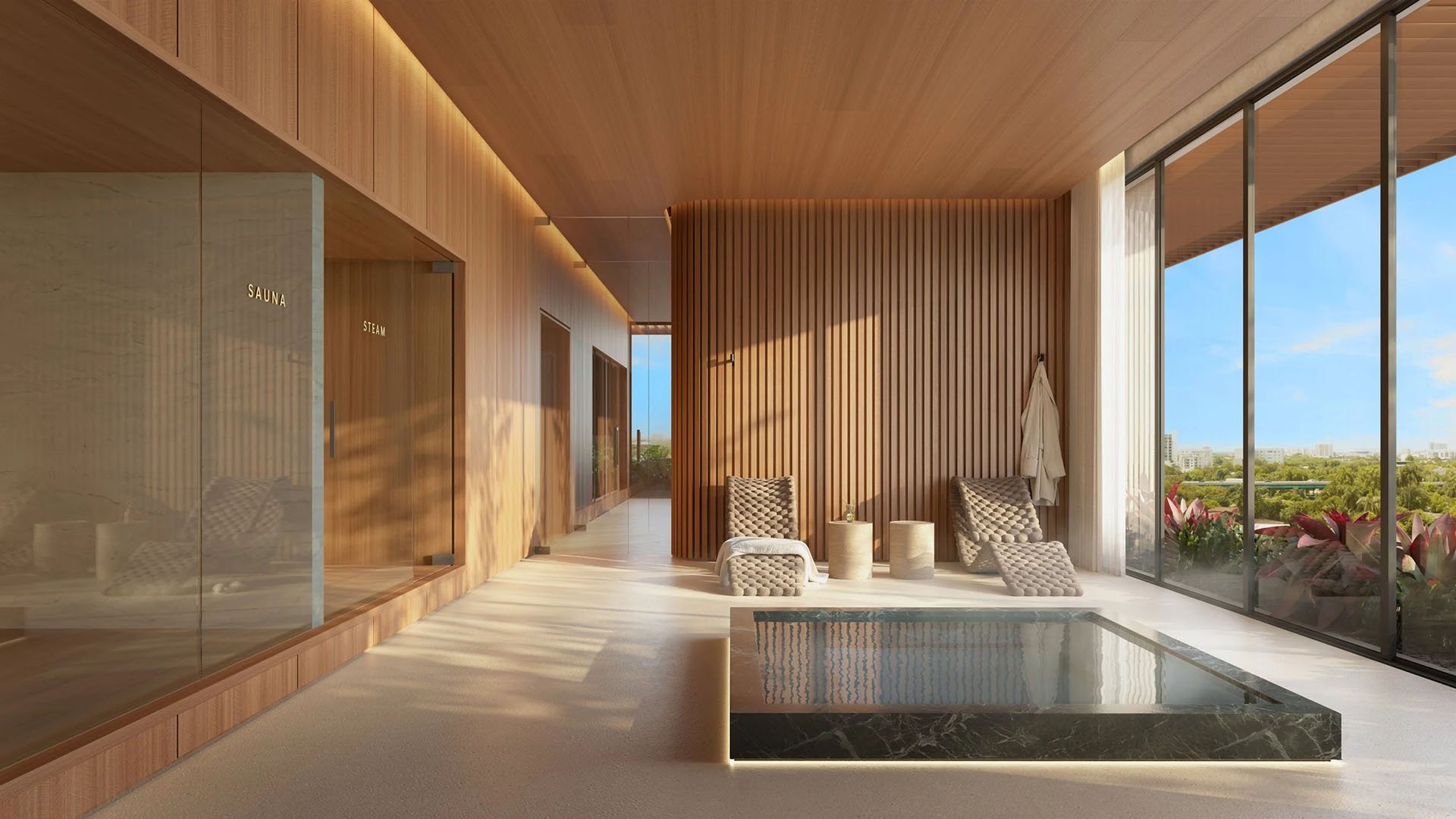
For a purchaser considering Colette Residences Brickell through a trust or LLC, the essential question goes beyond whose name appears on the contract. It is whether the legal structure, insurance arrangements, and building systems have been examined together.
Colette is a planned condominium at 1880 Brickell Avenue, Miami, FL 33129, not an established operating condominium. Advertised delivery is summer 2028-a marketing projection, not a guaranteed completion date. That distinction matters when assessing flood claims and storm readiness: a planned building cannot be evaluated as though it already has a demonstrated operating record.
Neither a Colette-specific flood-claim history nor post-storm operating performance has been established. That does not establish that a loss occurred, but it does not establish a clean loss record either. Buyers should maintain that distinction throughout negotiations.
A trust or LLC is a legal arrangement requiring project-specific confirmation, not an assumed purchasing option. Before signing, ask Florida counsel to confirm permitted entity ownership, the precise purchaser name, signature authority, required ownership disclosures, and any approval requirements.
The same review should address assignment rights and transfer fees. If the intended purchaser may change between reservation, contract, and closing, ask counsel to identify the contractual consequences. Do not assume a later substitution will be straightforward.
Keep the ownership review connected to insurance. Ask the insurance adviser to reconcile the proposed titleholder, intended occupancy, and parties requiring protection with the contemplated policies. This is recommended diligence, not confirmation that Colette permits a particular structure or offers particular coverage.
For buyers also considering 2200 Brickell, use the same document categories to organize comparisons, but obtain separate answers for each property. Ownership permissions and operating arrangements should never be carried over from one purchase to another.
A broad question such as “Has the building flooded?” is insufficient for a planned development. Request available developer or builder’s-risk loss runs, water-intrusion documentation, and written clarification of the entities, locations, and periods covered by the response. Ask what records exist and what any stated absence of claims actually covers.
No disclosed claim is not the same as no loss. A response should define its scope, not leave the buyer to infer an unqualified history. Counsel and the insurance adviser should assess unresolved questions before the buyer relies on the response.
Separately, request planned association insurance information, including flood and wind deductibles, exclusions, and responsibility for garage equipment and stored property. Ask how the proposed coverage would interact with the purchaser’s own arrangements. A covered garage, dedicated parking space, or private storage allocation does not, by itself, establish insurance protection for its contents.
Colette advertises two to three dedicated parking spaces per residence in a covered self-parking garage, with on-demand valet available 24/7 and the option to self-park. Residential Level 2 EV charging is also advertised. These are useful conveniences, but none establishes storm-time access, charging availability during an outage, or documented flood protection.
Begin with geometry. Request the garage-entry elevation, lowest parking elevation, FEMA flood zone, and applicable design flood elevation. These details remain unestablished. Have a qualified adviser examine site and drainage plans alongside the relevant elevation documentation.
Then request the locations and flood protection of generators, switchgear, transformers, pumps, fire systems, and EV electrical panels. Their placement remains unestablished, as do flood barriers, backflow prevention, pump redundancy, and permanent dewatering systems.
Private storage and bicycle storage are advertised, but their elevations and flood protection remain unspecified. Ask for those locations before deciding what to keep onsite. Covered parking is an amenity; it is not, by itself, evidence of flood protection.
The project advertises four private password-protected elevators plus a service elevator, alongside 24/7 concierge and front-desk service. These amenities do not establish emergency-power coverage or emergency staffing commitments.
Request written specifications identifying which systems receive backup power and for how long. Cover garage doors, access control, elevators, drainage, communications, and residential services. Ask whether EV charging is included rather than treating its advertised availability as an outage commitment.
A useful answer connects equipment to operating procedures: what remains available, what shuts down, who authorizes restart, and what inspection is required. A general assurance about a generator does not answer those questions.
A buyer weighing Una Residences Brickell alongside Colette can apply the same framework without assuming equivalent equipment, coverage, or recovery procedures. Compare written responses, not the breadth of amenity descriptions.
For an owner who may be away when a storm approaches, continuity planning deserves the same attention as finishes. Request written procedures for storm communications, garage closure and reentry, elevator shutdown and restart, emergency vendors, inspections, and reopening. These are diligence requests, not verified Colette policies.
Ask who communicates with the owner, trustee, or authorized LLC representative. Clarify how access instructions reach a designated local contact and what authorization that person would need. For vehicles and stored belongings, seek advance instructions rather than relying on normal valet or concierge availability.
The plan should distinguish reopening the building from restoring every service. Ask how management would communicate remaining restrictions, including limits on elevators, parking, charging, or storage access. Where a procedure is not yet final, request a clear statement of its status and a proposed time for an update.
Organize the diligence into three coordinated files: ownership and authority, loss history and insurance, and physical systems and continuity. Ask the appropriate legal, insurance, and technical advisers to identify unresolved items and explain their significance before the next contractual milestone.
The standard is not a promise that disruption can never occur. It is a documented understanding of what is proposed, what remains unconfirmed, and who will be responsible when decisions are required. At Colette, that means preserving the distinction between advertised convenience and demonstrated resilience throughout the purchase.
For a discreet conversation about your Brickell purchase priorities, connect with MILLION.
If branded residences are on your mind — as a home or as an allocation — we would be glad to share what we are seeing, privately.
Begin a quiet conversationColette is a planned condominium at 1880 Brickell Avenue in Miami. Summer 2028 is the advertised delivery projection, not a guaranteed completion date.
Project-specific permission is not established here. Florida counsel should confirm permitted ownership, purchaser naming, authority, disclosures, and approvals.
A Colette-specific flood-claim history is not established here. That does not establish either that a loss occurred or that the loss record is clean.
Request available developer or builder’s-risk loss runs and water-intrusion documentation. Ask which entities, locations, and periods each response covers.
Two to three dedicated parking spaces per residence are advertised in a covered self-parking garage. On-demand valet is advertised as available 24/7, with self-parking retained as an option.
No. Garage elevations, flood barriers, backflow prevention, pump redundancy, and permanent dewatering systems remain unestablished here.
The locations and flood protection of generators, switchgear, transformers, pumps, fire systems, and EV electrical panels remain unestablished here.
Residential Level 2 EV charging is advertised, but outage availability is not established. Request emergency-power specifications identifying supported systems and duration.
Advertised elevators and 24/7 concierge and front-desk services do not establish emergency-power coverage or emergency staffing commitments. Written operating procedures should be requested.
Request storm communications, garage closure and reentry, elevator shutdown and restart, emergency vendors, inspections, and reopening procedures. These are recommended diligence items, not verified Colette policies.

.jpg&width=700&height=438&fit=cover)