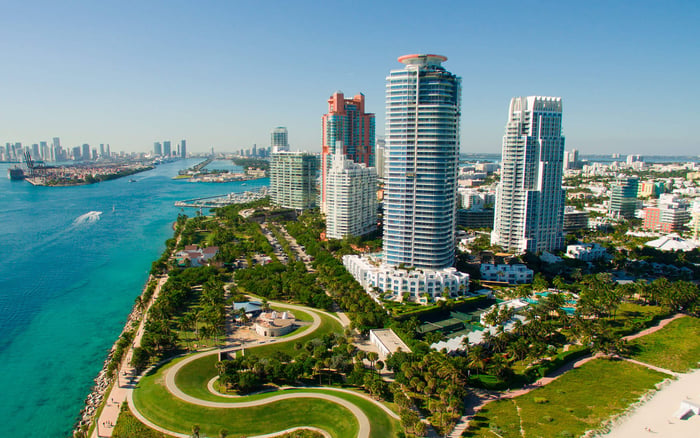
A buyer-focused framework for aligning a South Florida residence with yacht access, crew operations, provisioning, airport transfers, and gala-season schedules.

For yacht owners, South Florida gala season creates an operating calendar involving dockage, vehicle transfers, guest arrivals, crew rotations, provisioning windows, and travel among the residence, marina, airport, and evening venue.
The most suitable purchase is not necessarily the home closest to the water. Buyers should consider whether a residence can work with an appropriate marina and a realistic shoreside plan. Miami Beach, Fort Lauderdale, and Palm Beach should be evaluated as distinct potential bases rather than interchangeable coastal locations.
Before selecting a property, document the vessel’s length, beam, draft, shore-power requirements, fueling needs, and expected seasonal use. Ask the relevant marina to confirm availability and compatibility directly rather than relying on general descriptions.
A Miami Beach base may appeal to buyers whose seasonal commitments are concentrated in Miami-Dade. The practical review should cover the route between the residence and marina, expected transfer arrangements, guest pickup procedures, loading access, and the movement of luggage and provisions.
Buyers considering Apogee South Beach can evaluate the residence together with marina transfers, building arrival procedures, and the timing required to move guests or supplies. The vessel’s specifications and intended route should guide the marina inquiry.
Fort Lauderdale gives buyers another South Florida base to assess. The due-diligence process should compare berth suitability, shore power, fueling, pump-out, parking, crew facilities, provisioning procedures, bridge conditions, and access to the airport and event venues.
Buyers exploring St. Regis® Residences Bahia Mar Fort Lauderdale can consider how a marina-adjacent residence would fit their preferred crew and guest routine. The assessment should distinguish between the convenience of proximity and the separate question of whether suitable dockage is available.
Four Seasons Hotel & Private Residences Fort Lauderdale provides another residential reference point for comparing Fort Lauderdale Beach access. Buyers should test actual transfer plans, including vehicle staging, luggage handling, and late-evening returns.
Palm Beach may suit buyers whose gala schedule and social commitments are concentrated in Palm Beach County. A compact plan should still account for the distance among the residence, selected marina, airport, provisioning stops, and evening destinations.
Palm Beach Residences offers a residential reference point when comparing Palm Beach with West Palm Beach or bases farther south. Marina availability, vessel acceptance, access procedures, and service arrangements should be confirmed independently before a purchase decision.
Provisioning should be planned around the marina’s rules and the yacht’s schedule. Confirm where vehicles may load, whether carts or other assistance are available, how packages are received, and which access windows apply.
Crew laundry, showers, parking, subcontractor access, waste handling, fueling, and pump-out arrangements can be as consequential as residential amenities. Buyers should also review how crew members will move between the yacht, residence, airport, and service locations without disrupting guest plans.
Request written confirmation of berth availability, vessel limits, power compatibility, draft requirements, bridge considerations, fueling, pump-out, security procedures, parking, and cancellation terms. Transfer routes should be tested for the times when guests and crew are most likely to travel.
Treat the marina as operating infrastructure rather than scenery. Allow time for dockmaster review, vessel-specific questions, and coordination with the residence’s arrival and service procedures. The strongest plan aligns the property, marina, crew workflow, and gala calendar before closing.
How early should buyers inquire about seasonal dockage? Start the inquiry as early as practical and obtain vessel-specific confirmation before relying on a marina in the purchase plan.
Is proximity to a marina enough to guide a purchase? No. Buyers should also review vessel compatibility, transfer logistics, access procedures, services, and crew requirements.
How should buyers compare Miami Beach, Fort Lauderdale, and Palm Beach? Compare each area against the actual gala calendar, preferred marina, airport needs, guest movements, and crew workflow.
What vessel details should be ready for a marina inquiry? Prepare the yacht’s length, beam, draft, shore-power requirements, fueling needs, and intended dates of use.
Why do bridge conditions matter? A bridge can affect route suitability, so the captain or relevant maritime professional should review the intended passage for the specific vessel.
What should a crew-transfer plan cover? It should address airport trips, marina access, vehicle staging, parking, luggage handling, and travel to service locations.
What should buyers confirm about provisioning? Confirm loading locations, delivery procedures, package handling, access windows, and any marina or building restrictions.
Which marina services belong on the checklist? Ask about power, fuel, pump-out, waste handling, security, parking, crew facilities, and subcontractor access.
Should marina availability be verified before closing? Yes. Written, vessel-specific confirmation helps buyers understand whether the proposed residence-marina plan is workable.
What makes a residence suitable for gala-season yachting? Suitability depends on how effectively the home supports marina access, crew operations, provisioning, guest transfers, and the buyer’s South Florida schedule.
To compare the best-fit options with clarity, connect with MILLION.
If branded residences are on your mind — as a home or as an allocation — we would be glad to share what we are seeing, privately.
Begin a quiet conversation