A residence for Miami Open entertaining should support guest flow, service access, association compliance, transportation planning, and the owner’s wider South Florida lifestyle.

Buying around the Miami Open is less about selecting the closest glamorous address than establishing a dependable hospitality base. A suitable residence should support the complete event-day sequence: guest arrivals, pre-match dining, transportation, post-match drinks, and overnight stays when needed.
Begin by separating the guest list into three groups: people attending the tournament, friends joining only at the residence, and the service team. Chefs, servers, drivers, security personnel, and other vendors affect circulation even when they are not part of the social headcount. This distinction helps prevent a common planning mistake-assuming that a home’s comfortable entertaining capacity and a hospitality package’s credentialed capacity are interchangeable.
The best event residence is not merely spacious; it is operationally composed.
The property should complement the owner’s preferred match-day experience rather than compete with it. A smaller gathering may call for an intimate dining room and efficient car service, while a larger reception may require broader circulation, additional powder rooms, and a more capable service route.
Before touring properties, define the intended format. Consider whether the home will host a seated dinner, a standing reception, a brief gathering before departure, or a longer post-match evening. Each scenario places different demands on the kitchen, terrace, living room, elevators, parking, and staff access.
Credentials and ticket allocations should remain separate from the residential guest list. If the stadium party and the gathering at home involve different people, document both lists and plan transportation accordingly. Do not assume that additional guests can enter controlled hospitality areas without the appropriate access.
Owners should also confirm the current terms of any tournament hospitality product directly with the relevant provider. Package access, inclusions, parking arrangements, and operating procedures may vary, so residential plans should not depend on unverified assumptions.
Square footage alone does not determine whether a residence entertains well. During a showing, study the sequence from the vehicle arrival point to the lobby, elevator, entry gallery, kitchen, dining area, powder room, and outdoor space. A generous salon can still perform poorly if servers must repeatedly cross the principal seating area or guests bottleneck at a single transition point.
Evaluate seated dining, standing reception, and overnight accommodation separately. Then compare each use with the owner’s preferred level of formality and the building’s rules. Pay particular attention to furniture placement, terrace access, kitchen staging space, coat storage, acoustic separation, and the route to guest bathrooms.
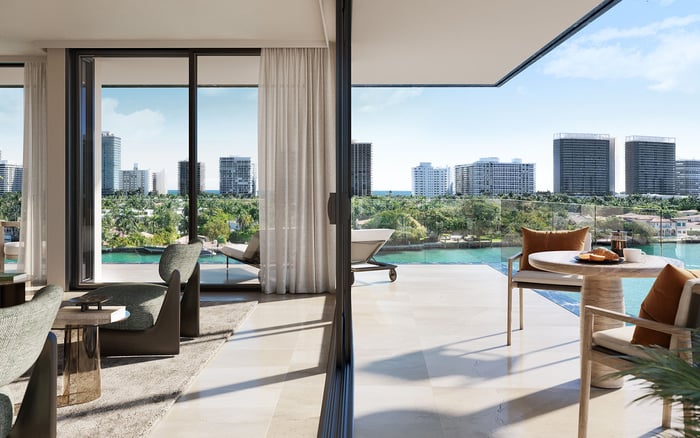
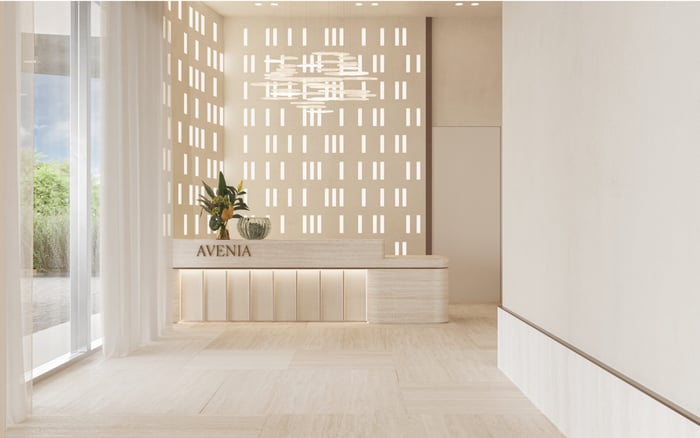
Waterfront communities can provide a polished residential counterpoint to a stadium event. In Aventura, buyers can include Avenia Aventura in a comparison of layouts, circulation, and event-day logistics. In Sunny Isles Beach, Bentley Residences Sunny Isles offers another reference point for evaluating how a coastal location fits the owner’s hosting pattern. Any project comparison should lead to unit-specific and association-level due diligence.
A private residence can give an owner control over menus, timing, and atmosphere, but building operations establish the practical limits. Before purchasing, request written rules covering outside caterers, private chefs, alcohol service, deliveries, loading access, service elevators, vendor insurance, security deposits, noise, and cleanup hours.
Ask management how guests and vendors are registered. Determine where vehicles may wait, how valet service operates during busy periods, and whether a hired driver can remain nearby. The strongest plan separates guest arrivals from service arrivals and gives vendors a clear route between the loading area and the residence.
The kitchen also deserves an operational review. Confirm whether it can support the intended menu, where prepared food can be staged, how waste will be removed, and whether staff can work without disrupting guests. If the residence depends on building amenities for part of the event, verify reservation procedures, capacity limits, fees, and guest-access rules in writing.
Tournament hospitality and residential entertaining are governed separately. Approval from a condominium does not determine what may be brought into a venue, and a stadium package does not override residential rules. Confirm each part of the plan with the party responsible for that location.
Proximity should be measured operationally rather than solely on a map. Drive the route from a prospective building to Miami Gardens at a comparable time of day. Review garage exit procedures, valet retrieval, bridge or causeway exposure, pickup arrangements, and the return journey.
A route test should begin inside the building, not at the curb. Time the elevator, lobby transition, vehicle retrieval, and passenger loading process. Repeat the exercise for the return, when several guests may arrive together and vendors may still be working in the residence.
North-oriented options may suit buyers balancing waterfront living with event-day travel. One Park Tower by Turnberry North Miami can be included in that broader comparison. Buyers considering Broward should assess Hallandale Beach and other coastal locations using the same route, building-access, and hosting criteria.
Create a backup transportation plan before each event. A second driver, staggered departures, or separate cars for staff and guests can reduce dependence on a single pickup. Overnight arrangements should also be considered for anyone whose schedule differs from that of the principal party.
For a second-home buyer, tournament-week plans must align with condominium rules. Verify minimum lease terms, annual lease limits, ownership waiting periods, guest policies, and association approval requirements. Do not assume that unused bedrooms can be offered under an arrangement that the association may treat as a rental.
Due diligence should also cover reserves, structural documentation, insurance, recent capital work, and outstanding or anticipated assessments. These issues affect more than financial exposure. Elevator modernization, garage work, construction activity, or restricted amenity access can disrupt an event plan even when the residence itself is ready.
Ask for current documents and written clarification of any rule central to the purchase decision. Informal assurances from staff, owners, or sales representatives should not replace review by the buyer’s qualified legal, financial, insurance, and inspection advisers.
Before closing, conduct a tabletop event exercise. Assign arrival windows, dining times, car departures, credentials, return transportation, overnight rooms, vendor access, and cleanup. Designate one decision-maker for the residence and another for the tournament party, while keeping the home guest list distinct from the ticketed group.
Repeat the review before each event because availability, access procedures, building operations, and transportation conditions can change. A well-selected South Florida residence should work beyond one tennis event, but Miami Open entertaining provides a useful test of whether the property can host with discretion, flexibility, and control.
For discreet guidance on selecting a South Florida residence for event-driven entertaining, connect with MILLION.
If branded residences are on your mind — as a home or as an allocation — we would be glad to share what we are seeing, privately.
Begin a quiet conversationPrioritize guest flow, service access, transportation logistics, and building rules rather than relying on square footage alone.
Separate tournament attendees, residence-only guests, and service personnel so capacity and transportation can be planned accurately.
Evaluate seated dining, standing reception, and overnight accommodation as separate use cases.
Request written rules for outside caterers, private chefs, alcohol service, deliveries, vendor insurance, deposits, and cleanup hours.
A clear service route allows vendors to reach the kitchen and remove waste without disrupting guest areas.
Test the full trip at a comparable time, including elevator access, valet retrieval, vehicle loading, bridges or causeways, and the return journey.
Not necessarily, but the lists should remain separate because venue access depends on the applicable credentials.
Review leasing restrictions, guest policies, approval requirements, reserves, insurance, structural documentation, capital work, and assessments.
Yes. Elevator, garage, amenity, or other building work can disrupt arrivals, services, parking, and guest access.
Create a written schedule for arrivals, dining, departures, credentials, transportation, overnight rooms, vendor access, and cleanup.