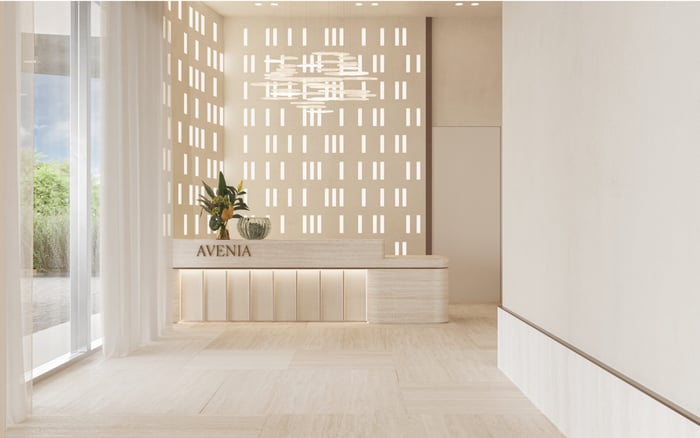
A buyer-focused framework for evaluating governance at Avenia Aventura, with emphasis on board authority, turnover documentation, budget clarity, reserves, insurance, and shared-cost exposure.

At the ultra-premium level, a residence is more than its architecture, outlook, and amenity program. It is also an ownership interest shaped by board authority, financial discipline, insurance, maintenance planning, and the allocation of common expenses. For buyers considering Avenia Aventura, these governance questions deserve the same scrutiny as the floor plan and finish schedule.
It is not established whether Avenia Aventura has a developer-appointed or owner-controlled board. Nor are its directors, officers, management company, or governance history identified. The prudent approach is not to assume either developer or owner control, but to request the documents that answer the question directly.
This distinction is especially important in Aventura, where purchasers may weigh lifestyle value alongside long-term stewardship. Governance determines how priorities are set, contracts are supervised, and financial decisions are communicated.
Board control is the starting point because it identifies who currently makes association decisions. A buyer should request the declaration, bylaws, current director and officer roster, recent election records, meeting minutes, and any notices addressing board composition. None of these project-specific records is established here.
The review should distinguish formal authority from day-to-day administration. A management company may implement policy, but the governing documents and valid board actions should clarify who can approve budgets, engage vendors, enforce rules, and authorize significant work.
For new-construction purchases, timing matters. Contract documents and association disclosures may describe rights retained during the development period, voting arrangements, and the process by which owners gain representation. These terms should be read together, not inferred from sales language.
No verified turnover date, trigger, schedule, or completion status is established for Avenia Aventura. Buyers should treat turnover as a documented legal and operational event, not a conversational milestone.
A complete review may encompass turnover notices, election materials, financial records, contracts, warranties, plans, insurance information, engineering materials, and records showing what was delivered to the owner-controlled association. The exact package depends on the property's documented structure and circumstances.
The quality of transition records can shape how efficiently a future board understands its obligations and unresolved items. Buyers comparing other South Florida options, such as One Park Tower by Turnberry North Miami, can apply the same principle: determine which governance phase applies, which records support it, and who holds decision-making authority today.
No verified Avenia Aventura operating budget, assessment schedule, expense breakdown, or owner contribution figure is established. A quoted monthly charge, without its underlying assumptions, is insufficient for meaningful investment analysis.
A careful budget review should identify recurring operating costs, management expenses, utilities, maintenance contracts, insurance, staffing, security, and other services assigned to the association. Concierge, valet, access control, and similar offerings may be typical of luxury properties, but they are not established here as Avenia Aventura obligations.
Buyers should also ask how expenses are allocated among units and whether the budget reflects a full operating period. Where records exist, variances between projected and actual costs can be as informative as the headline assessment. The governing principle is simple: clarity matters more than a superficially low monthly figure.
Reserve balances, reserve-study conclusions, funding levels, and anticipated special assessments are not established. Nor are any project-specific structural inspections, engineering records, repair plans, or deferred-maintenance history.
That absence should prompt targeted questions, not conclusions. Buyers can request the current reserve study, reserve account statements, adopted funding plan, capital schedule, engineering materials, and board discussions concerning major work. If no such record applies, the association or appropriate project representative should be able to explain why.
Insurance warrants equally close attention. No premiums, deductibles, limits, claims history, or projected increases are documented for Avenia Aventura. A current insurance summary can help counsel and an insurance adviser evaluate association coverage, owner responsibilities, deductible exposure, and potential gaps.
The same discipline applies when comparing other South Florida projects such as Bentley Residences Sunny Isles or Shell Bay by Auberge Hallandale. Each property should be evaluated through its own governing documents, budgets, insurance terms, and maintenance obligations-not through category assumptions.
It is not established whether Avenia Aventura would have a standalone condominium association, a master association, or multiple sub-associations. Nor is there a documented shared-facilities agreement or allocation formula involving residential, retail, hotel, marina, or other components.
That structure can materially affect both voting and expenses. A buyer should identify every association or entity to which the residence is subject, then reconcile each budget, assessment, governing document, and use agreement. The review should establish which party maintains each shared area, how costs are allocated, and whether owners pay directly or through another association.
Counsel should also examine amendment rights, dispute procedures, service agreements, and any rights reserved to a developer or another component owner. The objective is a clear map of authority and financial responsibility.
Governance diligence is most effective before contractual deadlines become compressed. Buyers should coordinate legal, financial, insurance, and property-condition reviews, with requests tailored to the residence and transaction.
The essential file includes the declaration, bylaws, rules, current budget, assessment schedule, reserve materials, insurance summary, recent minutes, election records, contracts, engineering documents, and any turnover or shared-facilities package. These records can reveal not only what ownership costs today, but how decisions may be made tomorrow.
For Avenia Aventura, the central luxury is clarity: verified authority, intelligible costs, and a documented plan for stewardship.
Is Avenia Aventura currently controlled by the developer? It is not established whether the board is developer-appointed or owner-controlled.
Has developer turnover occurred? No verified turnover date, trigger, schedule, or completion status is established.
Who serves on the association board? The current directors and officers are not identified.
Is there a verified monthly assessment? No verified assessment schedule, operating budget, or owner contribution figure is established.
Are reserve balances known? Reserve balances, funding levels, and reserve-study findings are not established.
Is a special assessment anticipated? No anticipated special assessment is documented, and none should be assumed without records.
Are structural or deferred-maintenance issues documented? No project-specific inspection, engineering, repair, or deferred-maintenance records are established.
What insurance details are available? Premiums, deductibles, limits, claims history, and projected increases are not documented.
Does the property have a master association? A standalone, master, or multi-association structure has not been established.
Which documents should a buyer prioritize? Prioritize governing documents, budgets, reserves, insurance, minutes, engineering records, turnover materials, and shared-facilities agreements.
For a confidential assessment and a building-by-building shortlist, connect with MILLION.
If branded residences are on your mind — as a home or as an allocation — we would be glad to share what we are seeing, privately.
Begin a quiet conversation