A discreet framework for coordinating Chicago and Bal Harbour residences, from overnight security and household-staff permissions to access records, camera retention, and privacy.
A two-city life between Chicago and Bal Harbour should feel effortless at the front door. Behind that ease should be a precise arrangement among the owner, household manager, private security personnel where retained, and each building’s management. The objective is not identical procedures in two residences, but consistent expectations within two distinct sets of rules.
Second-home ownership demands particular attention to periods when no family member is present. A familiar housekeeper arriving early, a replacement technician, or an evening guest can expose ambiguity in an otherwise polished operation. Before selecting a residence, ask whether the building can explain who authorizes entry, who records it, and who resolves an exception.
Treat the following as a due-diligence framework, not a description of every condominium’s requirements. Advertised services are useful starting points; written procedures deserve closer scrutiny.
Begin with staffing by shift. Request the actual security post schedule, including overnight lobby headcount, service-entrance coverage, and whether personnel are employees or contractors. If management cannot share sensitive details, ask what coverage it can confirm in writing. A reference to 24-hour security does not, by itself, establish the number or location of personnel.
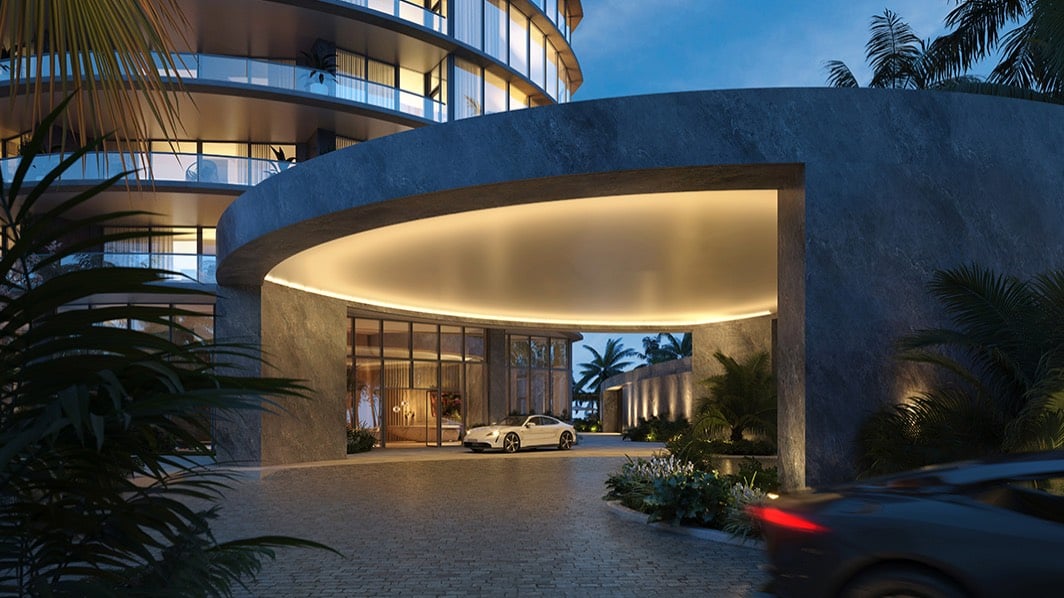
At Rivage Bal Harbour, advertised plans describe a street-level gated entrance restricting lobby access to residents and guests, alongside 24-hour security and valet service. These descriptions warrant specific questions about implementation, staffing, and arrival procedures. They should not be read as evidence of completed construction or demonstrated operating performance.
Advertised services at Bal Harbour Tower likewise include 24-hour security, a doorman, controlled access, concierge services, and complimentary valet parking. The meaningful comparison is how those services connect: who verifies a visitor, what happens after verification, and where elevator permissions begin and end.
For a buyer considering Oceana Bal Harbour, apply the same written questionnaire rather than assuming a comparable residential setting means equivalent protocols. Evaluate secure entrances, monitored lobbies, controlled garage access, and documented procedures separately.
Ask each management team to agree on a primary household contact and a backup. This is a proposed coordination arrangement, not an entitlement to override association rules. Where a private security team is involved, clarify which instructions it may communicate and which decisions remain with the resident or building management.
Create a short operating brief for each home. Identify the accepted authorization channel, approved contacts, the escalation route for an unrecognized visitor, and the person to notify after an incident. Keep the brief separate from the family’s detailed travel itinerary.
Confirm whether approvals must pass through a resident portal, concierge, or another accepted channel. Do not assume a text message accepted in one building will authorize entry in the other. Ask how a shift change affects an existing approval and how the next team receives unresolved instructions.
Before the first extended absence, walk through a hypothetical late arrival with management. Establish what happens if the household contact cannot be reached, without requesting an exception that bypasses the building’s controls.
Standing permission should be an explicit choice, not the residue of an old appointment. Request written guest and vendor procedures covering authorization, revocation, elevator access, and any escort requirement. Distinguish a recurring housekeeper from an occasional vendor, and confirm how substitute personnel are handled.
Advance preparation may include submitting crew names, vehicle license plates, and company insurance documents before an appointment. These are not universal Bal Harbour requirements. Ask each building what information it requires, how far in advance, and where it should be sent.
Define the entire visit, not just the arrival. Confirm the scope of work, security check-in, permitted service route, elevator arrangements, and completion or checkout record. For recurring visits, ask whether permissions can be limited to agreed times and how cancellations are communicated.
When a staff relationship ends, request confirmation that standing permissions and associated credentials have been revoked. Removing a name from the household’s own roster is no substitute for confirming that the building’s records have changed.
During due diligence, examine the journey from garage or valet arrival to the residence. Evaluate valet-only vehicle access where offered, controlled elevators, and the points at which an individual’s authorization is checked. Ask whether entrance approval also grants access to residential floors.
Service circulation deserves a separate walkthrough. Establish whether deliveries, housekeeping, and vendors use routes separated from resident corridors and private elevator areas. A beautifully resolved entrance does not explain how a service visit reaches the apartment.
If the search extends to Surfside and The Surf Club Four Seasons Surfside, maintain the same distinction between arrival experience and access control. Request the property’s own procedures rather than transferring expectations from another address.
Review overnight arrangements independently. Ask how household staff, guests, and vendors gain entry after hours, whether service routes change, and who can authorize an exception. Daytime familiarity should never be treated as proof of overnight permission.
Ask who holds master keys or credentials, how staff entry into a unit is recorded, and whether management can produce an access audit trail. Clarify who may request those records and how an owner’s representative is authorized to receive them.
For CCTV, request coverage, image resolution, and retention periods in writing. Retention matters especially during extended absences: an incident discovered on return may predate the available footage. Ask how to make a preservation request and who receives it; do not assume footage remains available indefinitely.
In Chicago, assess any proposed doorway camera against association rules and neighbor privacy. Consider a downward angle rather than a lens directed outward toward neighboring activity, subject to approval and the actual layout.
For both residences, ask who can view visitor records, staff details, and absence instructions. Seek clarity on storage, sharing, and deletion rather than treating controlled physical entry as proof of digital confidentiality. As a household preference, share only the operational information needed for the task, through the building’s accepted channel.
Before each departure, review the active staff roster, pending appointments, outstanding credentials, and escalation contacts. Confirm any changes through the appropriate building channel. On return, review exceptions and unresolved access questions with the household manager before renewing standing arrangements.
The standard is simple: neither residence should depend on an owner being immediately available to explain an ordinary visit. Written permissions, clear authority, and restrained information sharing can make a two-city household easier to manage without making its private life more visible.
For a considered approach to your next South Florida residence, explore MILLION.
If branded residences are on your mind — as a home or as an allocation — we would be glad to share what we are seeing, privately.
Begin a quiet conversationRequest staffing information by shift, including overnight lobby and service-entrance coverage. Clarify whether personnel are employees or contractors.
No. It does not establish headcount, post locations, or operating performance; request written clarification from management.
Propose a primary household contact, a backup, and a written escalation route. Confirm which instructions private personnel may communicate without overriding building rules.
Regional practices include submitting crew names, vehicle license plates, and company insurance documents. Confirm the actual requirements with each building.
Make standing access an explicit decision and confirm any time restrictions. Ask how cancellations, substitute workers, and revoked permissions are handled.
Do not assume so. Confirm each building’s accepted channel, which may involve a resident portal, concierge approval, or another specified method.
Review vehicle access, elevator controls, and authorization checkpoints. Separately examine whether service routes are separated from resident corridors and private elevator areas.
An incident may remain undiscovered until after footage has been deleted. Request retention periods and the procedure for seeking preservation in writing.
Ask who holds master credentials, how unit entry is recorded, and whether an access audit trail can be produced. Confirm how credentials are revoked when access is no longer needed.
Check association rules and consider neighboring residents’ privacy. A downward angle rather than an outward-facing view is an option to assess, subject to approval and layout.