Brickell and Downtown Miami offer distinct branded-residence choices, but neighborhood medians tell only part of the story. A discerning comparison begins with location, residence type, service obligations and the full cost of ownership.
For branded-residence buyers, Brickell versus Downtown Miami is less a contest between addresses than a choice between distinct ways of owning. The name above the entrance matters, but the more consequential questions lie behind it: which services are contractually included, how the residence can be used, and whether its location supports the life its owner intends to lead.
In Q1 2026, median condo pricing was approximately $950 per square foot in Brickell and $730 in Downtown Miami. That roughly 30% Brickell premium offers useful context, not a valuation formula. It reflects the broader condominium market rather than a matched selection of branded residences.
The distinction is essential. A lower neighborhood median does not establish that an equivalent branded home costs less, just as a higher median does not prove superior service or resale prospects. Compare the residence, its ownership structure and its obligations before drawing conclusions from the address.
Brickell’s branded-residence selection includes Cipriani, Baccarat, St. Regis, Mandarin Oriental and Dolce&Gabbana. That breadth gives buyers several names to consider without making the offerings interchangeable. A hospitality association, a fashion identity and a residential service proposition each warrant evaluation on their own terms.
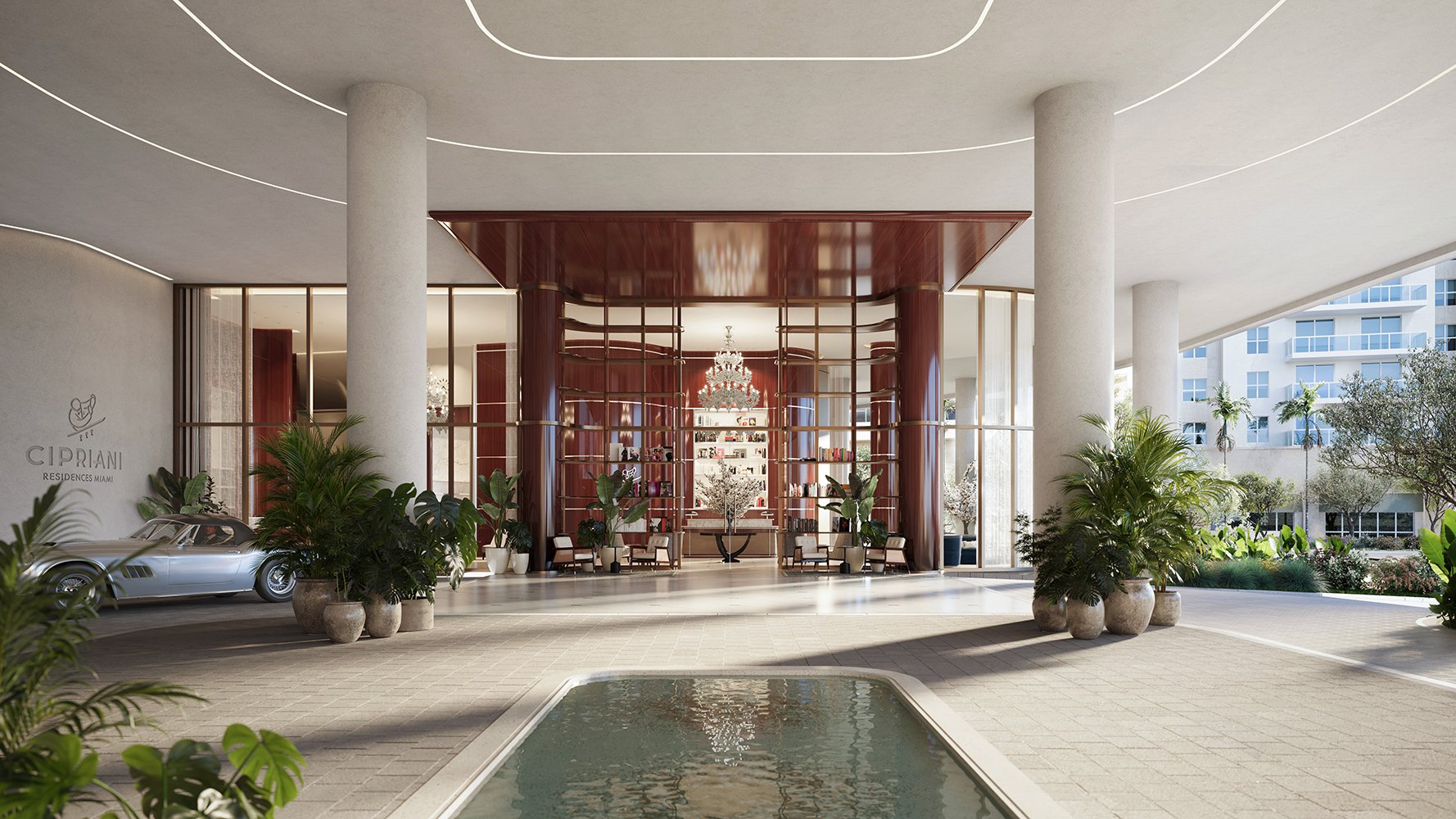
A buyer considering Cipriani Residences Brickell should begin with the intended ownership experience rather than assumptions attached to the name. Request the service schedule, identify which benefits are included in recurring charges, and establish which require separate payment. Brand recognition is an introduction, not a substitute for the documents.
Location also demands more precision than the broad Brickell label allows. Treat Brickell Key separately from mainland Brickell when evaluating daily life. For The Residences at Mandarin Oriental, Miami, that means weighing the island setting against the mainland addresses on a shortlist, rather than treating them as one undifferentiated neighborhood.
Test each address against ordinary routines: departures for work, household arrivals, deliveries and the destinations visited most often. For a primary home, everyday convenience may matter more than an impressive first viewing. Brickell can be a compelling primary-residence candidate, but that is a judgment about buyer fit, not a universal neighborhood advantage.
Downtown Miami’s branded offerings include Waldorf Astoria, Aston Martin and Delano. Their presence makes it inappropriate to reduce Downtown to a lower-cost alternative to Brickell. The relevant comparison is between specific homes and ownership arrangements, not neighborhood averages alone.
Aston Martin Residences Downtown Miami belongs in that project-level comparison. Assess the residence under consideration for its layout, outlook, privacy and service commitments against alternatives you would genuinely purchase. A neighborhood-wide price gap cannot answer those questions.
The same discipline applies to Waldorf Astoria Residences Downtown Miami. Familiarity with a hospitality name should prompt detailed questions about residential operations, not assumptions that every hotel benefit accompanies ownership. Confirm who provides services, what owners are entitled to receive and how those obligations are documented.
For buyers drawn to Downtown on value grounds, the strongest test is straightforward: does a particular residence deliver the desired experience at a more attractive total commitment? That remains a property-specific assessment, not a conclusion established by the neighborhood’s lower median.
Starting prices illustrate how widely the purchase proposition can vary. In the upper-luxury comparison, The Residences at 1428 Brickell starts around $4.4 million, Mandarin Oriental around $3.9 million and 619 Brickell by Nobu around $3 million. These are pricing snapshots, not confirmation of current inventory, and they do not describe equivalent homes.
At a different entry point, Meliá Miami Brickell’s pricing has ranged from approximately $548,000 to $698,000, with starting prices also stated at around $600,000. The development comprises eight stories and 110 residences. Clarify those prices at the individual-unit level before building a budget around them.
Downtown offers another distinct proposition in Delano Residences & Hotel Miami. The 90-story, 421-residence project at 400 Biscayne Boulevard carried an approximately $800,000 entry price in February 2026, when it was in pre-construction. Neither that price nor that status assures current availability.
Lower-priced neighborhood launches require equal care. Starting prices around $430,000 at 501 First and $500,000 at Palm Tree provide Downtown context, not evidence of an ultra-luxury branded discount. ONE W12’s approximately $300,000 launch figure dates to 2024; by a 2026 snapshot, it was 97% sold. Historical entry pricing is not an available purchase opportunity.
The most meaningful comparison may emerge beyond the purchase price. Build a residence-specific ownership budget that separates association assessments, insurance responsibilities, reserves, any brand-related charges and optional services. Do not assume these costs are equivalent across projects or included in a single advertised figure.
Rental rights deserve their own review. Meliá Miami Brickell’s offering includes an optional hotel rental program. That makes the participation agreement important, particularly for buyers balancing personal stays with rental use. It does not establish guaranteed income or unrestricted access to the residence under every operating arrangement.
Ask counsel to examine permitted rental periods, owner-use provisions, management requirements and applicable charges. A brand name alone establishes neither hotel management nor unrestricted rentals. Similarly, a second-home plan should work without relying on an assumed income stream to justify the carrying costs.
For a primary residence, prioritize the address and operating model that remain comfortable through an ordinary week. For a second home, focus on arrival arrangements, services during absences and the rules governing personal use. For any rental-oriented purchase, evaluate the actual agreement rather than a general promise of flexibility.
Neither neighborhood earns an automatic resale advantage from the figures above. Choose the residence whose documented services, location and total ownership commitment best match your priorities. The sounder luxury purchase is not necessarily the one with the more prestigious label or lower entry price, but the one that requires the fewest compromises in use.
For a discreet comparison of Brickell and Downtown Miami residences aligned with your ownership priorities, connect with MILLION.
If branded residences are on your mind — as a home or as an allocation — we would be glad to share what we are seeing, privately.
Begin a quiet conversationA Q1 2026 neighborhood comparison placed median condo pricing around $950 per square foot in Brickell versus $730 in Downtown Miami. Those figures cover the broader condo market, not a matched comparison of branded residences.
Its lower neighborhood median does not establish a like-for-like branded-residence discount. Buyers should compare specific homes, documented services and total ownership costs.
Brickell’s selection includes Cipriani, Baccarat, St. Regis, Mandarin Oriental and Dolce&Gabbana. Brickell Key should be evaluated separately from mainland Brickell when considering location.
Downtown Miami’s offerings include Waldorf Astoria Residences Miami, Aston Martin Residences and Delano Residences Miami. Each requires its own assessment of services and ownership terms.
Buyers should assess the island setting separately from mainland Brickell. Test each address against regular travel, household and service needs.
An approximately $800,000 entry price was dated February 2026, when the development was identified as pre-construction. It should not be treated as confirmation of current availability or status.
Pricing has ranged from approximately $548,000 to $698,000, with starting prices also stated at around $600,000. Buyers should confirm pricing for a specific available residence.
Its offering includes an optional hotel rental program. Buyers should review participation terms, owner-use provisions and charges without assuming guaranteed income.
A brand name alone does not establish which hotel services accompany ownership. Buyers should verify the operator, included services, additional charges and contractual obligations.
Compare association assessments, insurance responsibilities, reserves, any brand-related charges and optional services. The neighborhood pricing figures do not establish which project has lower recurring costs.