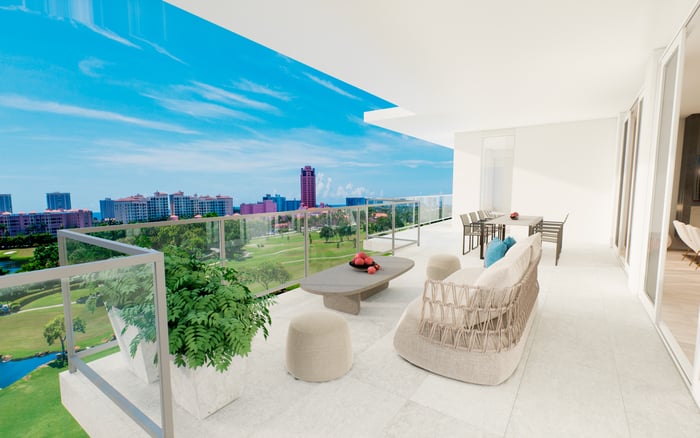
A disciplined framework for separating the value of Glass House Boca Raton's location, design, delivery, services, and resale prospects from the power of its name.
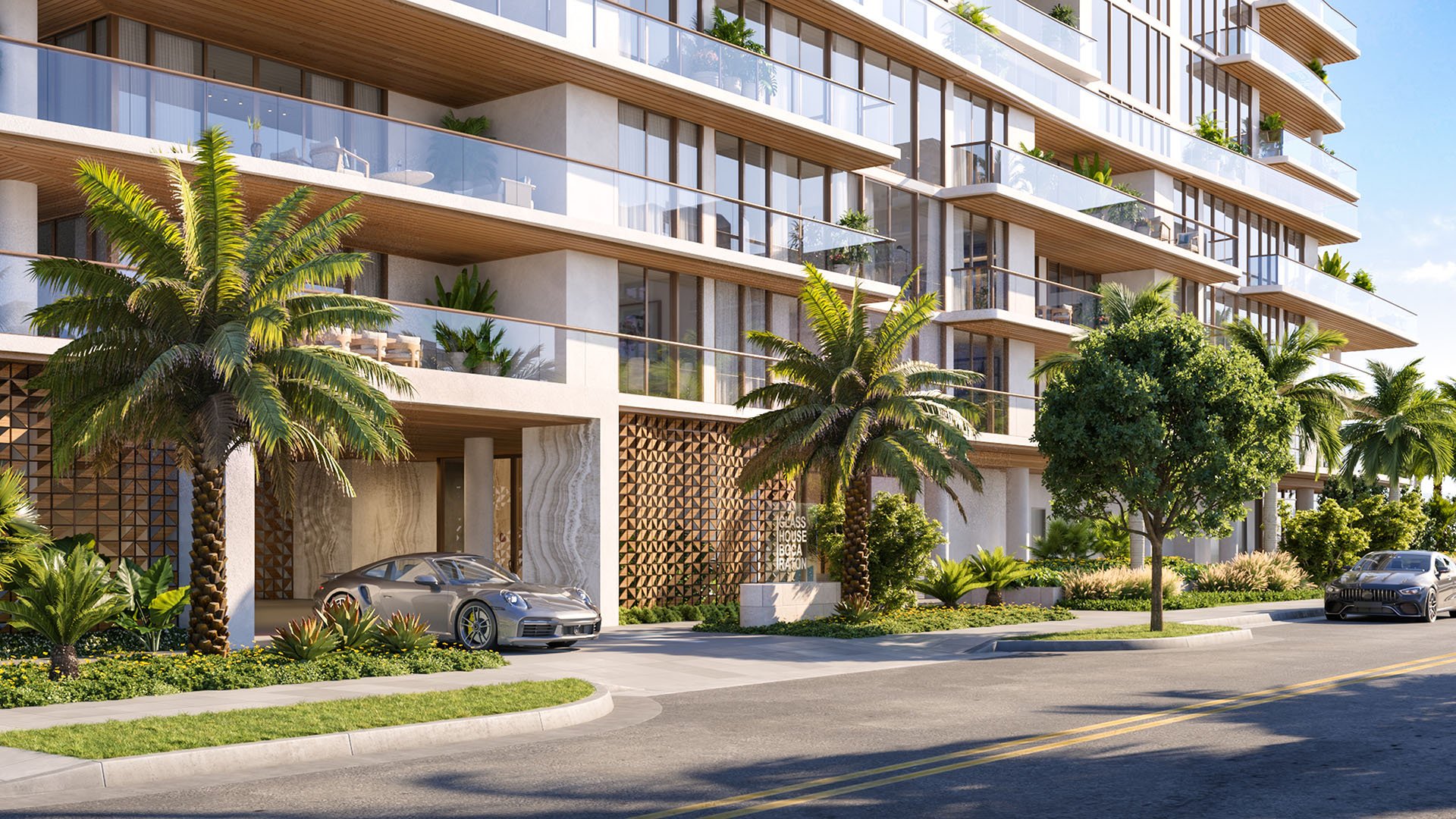
A name can create immediate recognition, but recognition is not the same as enduring value. At Glass House Boca Raton, the relevant question is not whether the identity feels compelling. It is whether the price attributed to that identity is supported by benefits that remain meaningful after the presentation center closes and the building enters daily operation.
The cleanest starting point is incremental price per square foot. Compare the residence under consideration with non-branded Boca Raton condominiums genuinely similar in location, size, views, finishes, amenities, and development stage. A broad market average is too blunt. The comparison set should isolate what the buyer is paying for rather than conflate fundamentally different products.
This distinction is especially important in pre-construction, when much of the ownership experience is conveyed through plans, specifications, renderings, and service promises. The name may justify part of the asking price-but only after location, physical quality, and operational value have been considered separately.
Begin locally. Alina Residences Boca Raton can frame the conversation around another Boca Raton condominium option, while The Residences at Mandarin Oriental Boca Raton and Mr. C Residences Boca Raton broaden the branded context. These properties are not automatic equivalents. They are reference points from which a buyer can refine a properly matched set.
Adjust for the attributes that materially shape value. Two residences with similar interior area may differ in orientation, outlook, floor level, terrace utility, privacy, layout efficiency, finish package, or stage of completion. Amenities also require normalization. A visually impressive space has limited comparative value when its daily utility, access rules, staffing, or ongoing cost differs from the alternative.
The objective is not to produce one perfect comparable. It is to establish a range showing how much of the asking price can reasonably be explained by the underlying real estate. The residual is the candidate brand premium-not proof that the premium is warranted.
A disciplined analysis divides the proposition into location, design, construction, services, and resident experience. Evaluate location through the practical and emotional qualities buyers will continue to recognize. Test design for livability as well as visual distinction. Judge construction against detailed specifications and, ultimately, delivered execution.
Services warrant a separate calculation. In branded residences, buyers often respond to the promise of consistency, convenience, and a recognizable standard of care. Yet that value depends on sustained operations. Ask which services are fundamental, who is responsible for delivering them, how quality will be monitored, and how their cost may affect ownership over time.
Resident experience is the least tangible category, but it should not become a catchall for unsupported value. Determine whether the building is likely to foster a distinctive community and ownership experience or whether its amenities and finishes can be reproduced elsewhere. A defensible premium rests on advantages competitors cannot readily copy.
Marketing can signal ambition; it cannot substitute for execution. Buyers should compare every material representation with the governing purchase documents, schedules, specifications, and permitted substitution language reviewed by their professional advisers. The focus belongs on what must be delivered, not merely what is pictured or described.
Create a room-by-room schedule covering materials, fixtures, appliances, lighting, glazing, mechanical systems, storage, and exterior living areas where applicable. Identify what is fixed, what may change, and what remedy exists if an important element is altered. Apply the same discipline to common areas and amenities.
Risk reduction has value only when it is tangible. Construction quality, contractual clarity, operational capability, and credible service systems can support a premium. Logos, launch events, and polished messaging may inspire confidence, but they do not provide equivalent protection. Buyers should price the distinction.
The promised lifestyle may depend on staffing and services whose cost or quality can change after occupancy. Review the proposed operating structure, focusing on recurring charges, reserve planning, service scope, staffing assumptions, maintenance obligations, and potential cost variability. The key question is whether the experience remains attractive at its fully loaded ownership cost.
Test several scenarios rather than accept a single estimate. Consider what happens if operating expenses rise, a valued service is modified, or usage rules restrict access to an amenity. A premium supported primarily by hospitality-style service is more exposed to operational inconsistency than one grounded in durable physical qualities.
This does not make service value illusory. Exceptional operations can be central to luxury ownership. It means the buyer should identify the accountable party, determine which standards are enforceable, and assess whether the economics are sustainable for the resident body.
Resale performance may depend more on post-occupancy execution and service consistency than on the strength of the launch narrative. The name alone does not establish that today's premium will persist after construction or into the resale market.
Imagine the property competing several years after delivery, when newer Boca Raton projects may offer fresh design, updated amenities, or different branding. Which Glass House attributes would still command attention? Scarcity, quality, privacy, thoughtful layouts, dependable operations, and a coherent resident experience can remain persuasive. Easily replicated features may not.
Liquidity also depends on the depth of the future buyer pool. A highly specific proposition can inspire strong loyalty while appealing to fewer purchasers. Buyers should consider whether the residence offers enduring utility and whether its most valuable characteristics are evident without the original sales story.
The final decision should connect every increment of price to a measurable benefit in quality, lifestyle, risk reduction, or expected resale demand. A premium can be rational when the building delivers advantages alternatives cannot readily reproduce-and when those advantages are likely to survive changing market tastes.
The correct conclusion is not predetermined. Glass House Boca Raton may fit one buyer's priorities precisely, while another may find stronger value in a different combination of location, design, service, and cost. The discipline lies in paying for a residence and ownership experience that can be tested, not for the name in isolation.
What is a brand premium at Glass House Boca Raton? It is the incremental price per square foot above carefully matched non-branded Boca Raton condominium alternatives.
Which comparables should a buyer use? Use residences aligned in location, size, views, finishes, amenities, and development stage.
Does a recognized name guarantee resale value? No. Future value depends on delivered quality, consistent operations, and whether later buyers value the same attributes.
How should buyers evaluate construction quality? Compare marketing representations with contractual specifications, substitution provisions, and the quality ultimately delivered.
Why should services be priced separately? Their scope, quality, and cost may change after occupancy, affecting both lifestyle value and carrying expense.
What makes a premium more defensible? Durable advantages that competing developments cannot readily reproduce offer stronger support than branding alone.
Are amenities enough to justify a premium? Not necessarily. Buyers should assess their utility, access, staffing, cost, and availability elsewhere.
How can buyers assess operational risk? Examine accountability, staffing assumptions, recurring charges, reserves, maintenance duties, and service standards with advisers.
What should a resale stress test consider? Consider newer competition, changing buyer preferences, service consistency, ownership costs, and the depth of future demand.
What is the central buying rule? Pay a premium only when measurable gains in quality, lifestyle, risk reduction, and potential liquidity support it.
For a tailored shortlist and next-step guidance, connect with MILLION.
If branded residences are on your mind — as a home or as an allocation — we would be glad to share what we are seeing, privately.
Begin a quiet conversation