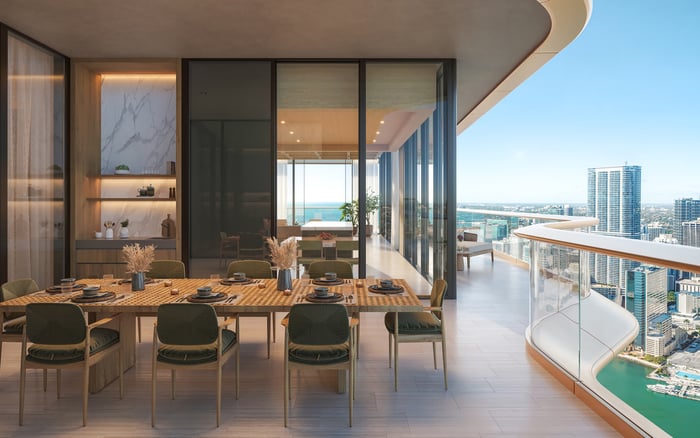
A buyer-focused guide to evaluating Boca Raton waterfront property, from seawall elevations and dock geometry to vessel access, permit records, and property-specific insurance review.
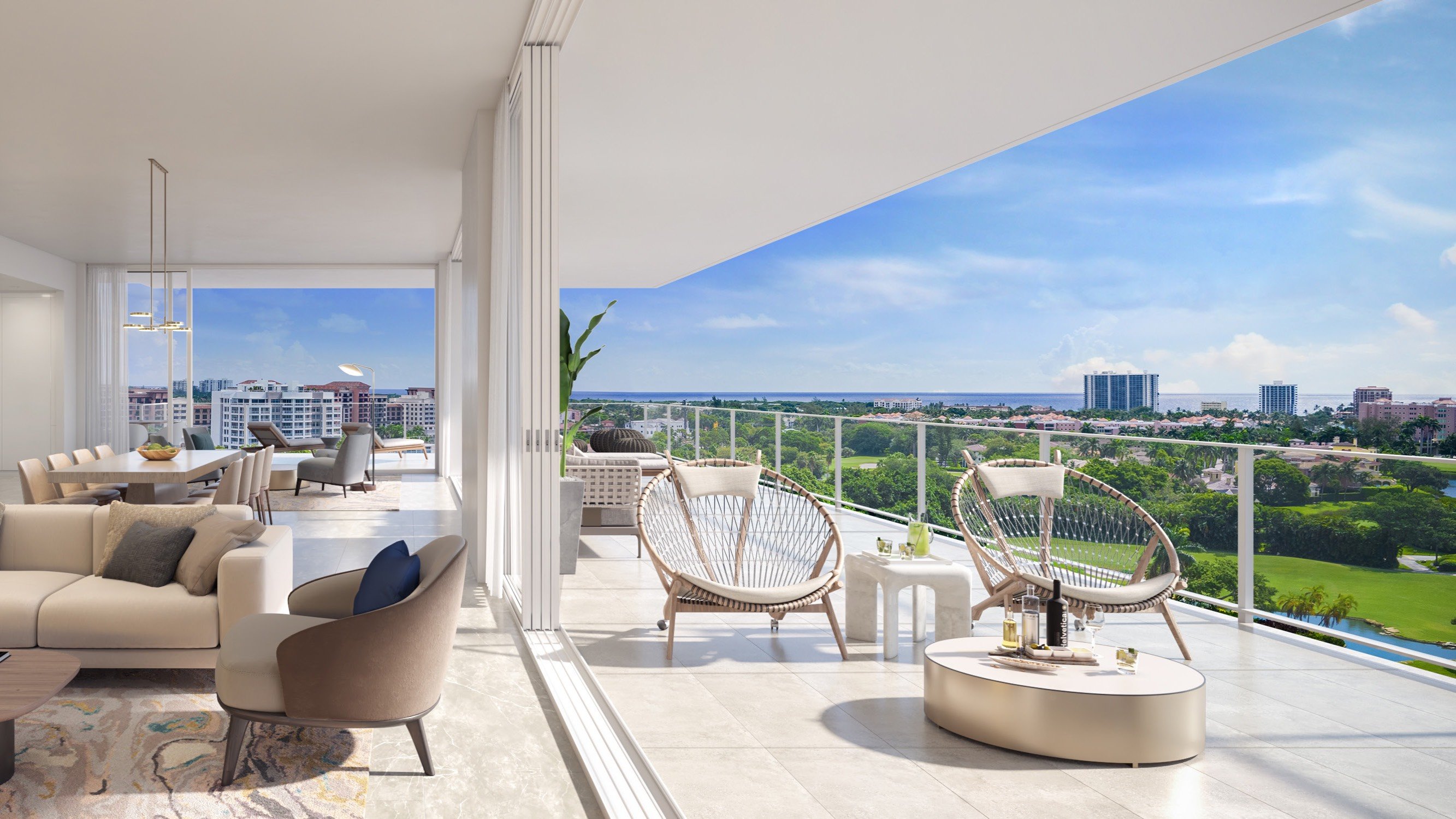
The most compelling Boca Raton waterfront purchase is more than a residence with a beautiful outlook. It is a property whose shoreline, dockage, boating route, and insurance arrangements support the way its owner intends to live. A terrace can convey the atmosphere in minutes; the waterfront's suitability requires closer examination.
Begin by confirming jurisdiction. A Boca Raton mailing address does not establish that a property falls within the city's municipal boundaries. The dock and seawall standards discussed here apply to properties within that jurisdiction. Then separate four questions: what exists, what was approved, what could be replaced, and whether the intended vessel can use the route.
For buyers also considering Alina Residences Boca Raton, that review helps sharpen the purchase brief: is private dockage essential, or is the residence itself the priority? Do not assume a project's boating amenities or rights without reviewing its specific documentation.
A seawall warrants its own technical review, separate from the home's interiors. Ask a qualified professional to assess its condition and explain any recommended repairs, replacement considerations, or further investigation. Request available plans, permits, and inspection records, then compare them with the shoreline improvements in place.
Within Boca Raton's municipal boundaries, the required elevations for new or replaced public and private seawalls and docks are 4.0-6.0 feet NAVD88. NAVD88 is an elevation reference, not a measurement of height above the water on the day of a showing. Have the survey and design materials interpreted accordingly; photographs are no substitute.
New or replaced seawalls should also accommodate a future 12-to-18-inch height increase without structural alteration. Designs must harmonize with adjacent grades and neighboring seawalls, and seawalls and bulkheads may not extend beyond the property line.
For a buyer, the question is not simply whether the wall appears sound. It is whether professional review identifies a credible path for maintenance or replacement within the property's boundaries and surrounding grades. Obtain a written scope and pricing for recommended work before treating a proposed improvement as straightforward.
Water frontage and usable dockage are not interchangeable. Residential docks may project up to 6 feet into waterways narrower than 100 feet and 8 feet into waterways at least 100 feet wide. Those measurements exclude dock pilings and are taken from the property line, seawall, or bulkhead nearest the waterway.
Docks must be set back at least 10 feet from adjacent property lines. Waterfront lots with 100 feet or less of frontage are generally limited to one dock. Single-family residential docks generally must also remain within a 45-degree projection from the seawall at each side property line, alongside the applicable waterway-projection limits.
Read these requirements together, not as separate allowances. Ask the appropriate design professional to plot the existing dock and any proposed configuration on the survey. Generous frontage alone does not establish that the desired dock arrangement will fit.
Safety details matter as well. Docks longer than 50 feet require two ladders extending at least two feet below mean low water; shorter docks require at least one ladder. Docks that create navigation hazards or abut marsh, swamp, or mangrove areas may be prohibited. Private docks are prohibited in Boca Raton Inlet, subject to a potential exception for passenger-loading docks with the required federal and municipal approvals.
Treat vessel access as a separate investigation from dock suitability. Before committing, ask a qualified marine professional to verify the intended route against the boat's actual dimensions and operating requirements. The review should address bridge clearances, opening schedules where relevant, water depths, and maneuvering conditions-not rely on an attractive map or a broad description of ocean access.
Do not describe a route as unrestricted without route-specific verification. A successful visit to the dock does not resolve every question about the journey beyond it. Request findings that identify the vessel evaluated, the route considered, and any conditions requiring further confirmation.
The same discipline applies when a search includes Glass House Boca Raton: compare each residence against the actual boating plan, without transferring assumptions about access or dockage from one property to another.
An existing dock, lift, or seawall should prompt a records request, not an assumption of compliance. Assemble the survey, available approved plans, permits, and inspection documentation. Ask your advisers to reconcile the paperwork with what is physically present and flag unresolved questions before closing.
Dock, seawall, and boat-lift permit applications require plans, a survey or site plan, contractor documentation, applicable professional design materials, and federal approval. Applicable outside approvals must precede city dock permits and can involve federal, state environmental, regional water-management, and drainage authorities.
For proposed changes, request a property-specific explanation of the approval sequence. Distinguish an existing improvement from a proposed design and an approved project. None is a substitute for the others when evaluating the purchase.
Flood exposure belongs in the acquisition review, not on a post-closing checklist. A large portion of Boca Raton lies within designated Special Flood Hazard Areas. Flood Insurance Rate Maps inform minimum construction elevations and required flood-resistant construction methods in mapped zones.
Confirm the building's flood-zone status and obtain property-specific insurance quotations early enough to evaluate them. Assistance is available to determine whether a building lies within a Special Flood Hazard Area. Flood insurance is encouraged even outside those areas, and coverage for buildings and contents is available to both owners and renters.
Ask an insurance adviser to explain proposed flood and wind coverage, deductibles, limits, exclusions, and the treatment of docks, lifts, and seawalls. Do not infer coverage from the existence of a policy or use another property's premium as the budget for this purchase.
A search that includes The Residences at Mandarin Oriental Boca Raton alongside a private waterfront home should begin with the same priorities: how the residence will be used, whether boating is indispensable, and which ownership responsibilities the buyer is prepared to accept.
Before the final commitment, bring together the structural findings, permit review, vessel-route verification, and insurance quotations. Resolve discrepancies in writing and distinguish confirmed conditions from proposed improvements. The objective is not to diminish the pleasure of waterfront ownership, but to ensure the property can support it.
For a discreet conversation about your Boca Raton property priorities, connect with MILLION.
If branded residences are on your mind — as a home or as an allocation — we would be glad to share what we are seeing, privately.
Begin a quiet conversationConfirm municipal jurisdiction first. A Boca Raton mailing address alone does not establish that the city's dock and seawall standards apply.
The limits are 6 feet for waterways narrower than 100 feet and 8 feet for waterways at least 100 feet wide, excluding dock pilings. Measurements begin at the property line, seawall, or bulkhead nearest the waterway.
Docks must be set back at least 10 feet from adjacent property lines. Other applicable geometry and projection requirements must also be considered.
Lots with 100 feet or less of waterfront frontage are generally limited to one dock. Confirm the permitted arrangement for the specific property.
The engineering standards specify 4.0–6.0 feet NAVD88 for new or replaced seawalls and docks. These are referenced elevations, not heights above the day's water level.
New or replaced seawalls should accommodate a future 12-to-18-inch height increase without structural alteration. Their design must also harmonize with neighboring seawalls and adjacent grades.
No; verify the entire intended route against the vessel's dimensions and operating needs, including bridges, depths, and maneuvering conditions.
Request the survey, available approved plans, permits, and inspection documentation for the dock, seawall, and lift. Have advisers compare those records with existing improvements.
Flood insurance is encouraged even outside those areas. Obtain property-specific advice and quotations rather than treating the mapped zone as the sole insurance consideration.
Do not assume coverage. Ask an insurance adviser to confirm the proposed policy's treatment of docks, lifts, and seawalls, including exclusions and limits.