A waterfront home's suitability for your boat depends on more than lift capacity. Understand loaded vessel weight, hull compatibility, floating-lift permit limits, and the local approvals to verify before purchasing.
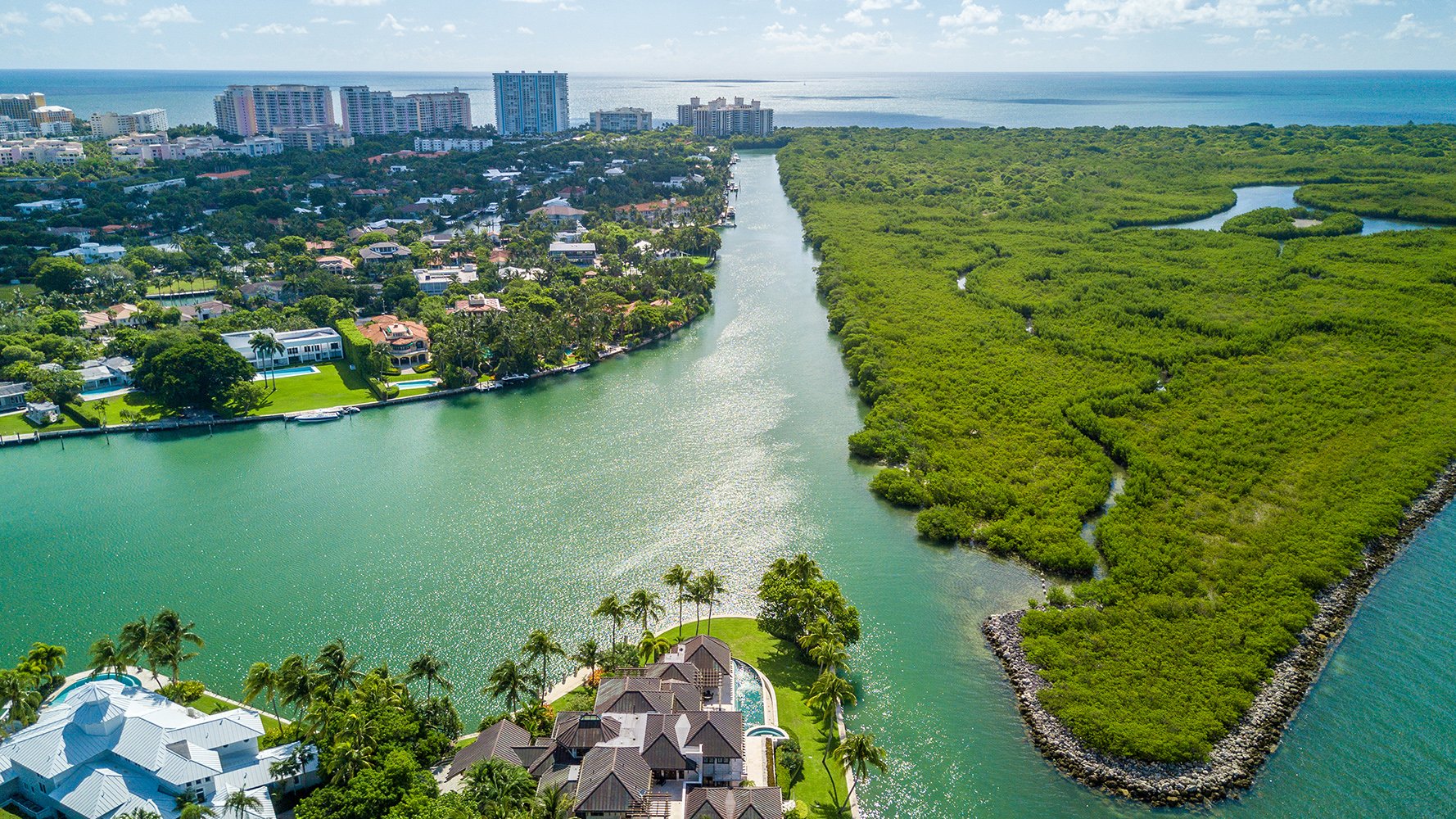
A beautifully composed waterfront home can still be the wrong address for a particular vessel. The deciding detail may be less visible than the terrace or pool: whether the lift can carry the boat fully loaded, support its hull correctly, and occupy a legally acceptable position in the waterway.
For a buyer, these are three separate tests. Mechanical capacity, vessel compatibility, and permitted installation dimensions must all align. A substantial capacity rating does not resolve a narrow slip, and a generous dock does not establish permission for a replacement lift. Treat the waterfront installation as a distinct part of the acquisition, not an accessory assumed to suit whatever boat arrives next.
Start with the vessel's fully loaded weight, not its advertised dry weight. Engines, fuel, water, batteries, equipment, and accessories all belong in the calculation. A comparison that excludes them is incomplete, however reassuring the gap between the boat's brochure weight and the lift's rating may appear.
Before relying on an existing installation, assemble the boat's specifications and a realistic inventory of what it carries. Ask a qualified lift professional to reconcile those details with the proposed equipment. No single capacity or universal safety margin can responsibly be applied to every South Florida residence and vessel.
Future ownership plans deserve the same discipline. If a larger boat or different tender is part of the brief, evaluate that configuration before committing to the property. A lift suited to today's vessel is not evidence that tomorrow's boat will fit.
Weight capacity alone does not establish compatibility. Length, beam, draft, hull shape, lifting points, and cradle dimensions also require review. The question is not simply whether the equipment can raise the load, but whether the complete arrangement suits the vessel.
Catamarans illustrate the distinction: a wide-beam boat may fall below a lift's rated weight yet exceed the available lift or slip width. A system configured for a conventional monohull should not be assumed suitable for a stepped hull, personal watercraft, catamaran, or yacht tender.
Residential configurations include vertical, elevator, hydraulic, floating, davit, and personal-watercraft lifts. Selection should follow the vessel and waterfront site, not aesthetics alone. Request a configuration-specific review rather than accepting a broad assurance that the property has a boat lift.
Florida Rule 62-330.428 provides a conditional general permit for qualifying floating vessel platforms and floating boat lifts at an individual, detached, private single-family residence. Its scope includes construction, alteration, operation, maintenance, and removal of qualifying installations.
Under that pathway, cumulative over-water area is limited to 1,000 square feet in artificial waters and residential canal systems, including other floating platforms or lifts along the owner's shoreline. In other waters, the limit is 675 square feet, reduced to 300 square feet within Outstanding Florida Waters.
These are area limits-not lifting capacities, vessel-weight allowances, or permissible boat lengths. They should not be applied indiscriminately to pile-mounted or elevator lifts. Meeting a square-footage threshold alone does not establish that an installation qualifies.
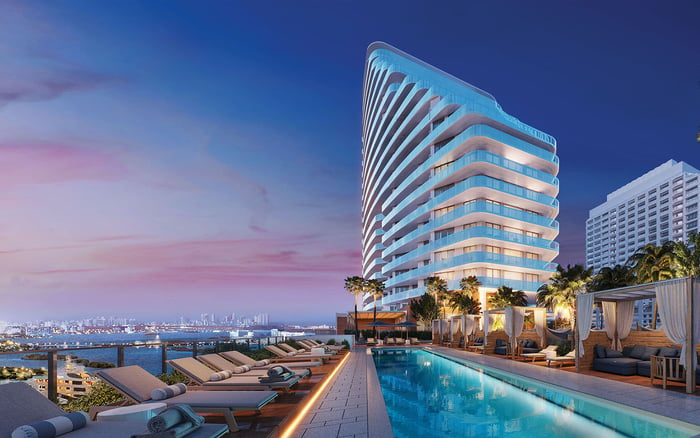
For a buyer comparing a private home with The Ritz-Carlton Residences® Miami Beach, the distinction between property types matters. This single-family floating-lift pathway is not blanket authorization for multifamily properties, marinas, or commercial sites. Any boating arrangement under consideration needs its own review.
In Miami-Dade, a staff-approved, short-form DERM Class I pathway may apply to qualifying lifts on new or existing docks, seawalls, or bulkheads. A projection threshold of no more than 25% of waterway width is another point to confirm with DERM for a qualifying single-family installation before design or purchase.
Neither point is a promise of approval. Establish whether the proposed work qualifies and which additional county or municipal permissions apply. State authorization does not replace applicable local environmental or building approvals.
In Coral Gables, a 2013 legal interpretation addressed permitting one set of davits, one watercraft lift, or one floating watercraft lift for a single-family dwelling or duplex. Treat that historical position as a matter for current municipal verification, not an entitlement to multiple installations or an assurance of approval today.
For Fort Lauderdale, verify a mooring-structure intrusion threshold of 25% of waterway width or 25 feet from the property line, whichever is less. Greater intrusion may require a City Commission waiver. Confirm how that measurement applies to the proposed installation rather than estimating it during a viewing or from a listing photograph.
In Broward, the scope of work also matters. Qualifying boat-lift installations may fall within an environmental-resource general-license framework, while larger or expanded work may require a full Environmental Resource License.
If the residential shortlist also includes Sixth & Rio Fort Lauderdale, keep the residence decision separate from vessel accommodation. Neither a project's name nor its location establishes a particular lift entitlement; the intended arrangement must stand on its own approvals and dimensions.
In Palm Beach County, verify the treatment of boat lifts as Type 8 marine structures and the application requirements for signed-and-sealed lift drawings with pile details. Use those drawings to assess what can be installed, rather than letting a preferred boat dictate an untested assumption.
Buyers considering Alba West Palm Beach alongside a private waterfront home should apply the same discipline: establish the relevant property type, vessel arrangement, and approval route without transferring a single-family permission to another residential setting.
A useful acquisition file brings together the vessel's loaded specifications, the lift's rated capacity and configuration, the proposed dimensions, and the applicable permit documentation. Ask the marine professional reviewing the installation to identify compatibility issues, and confirm authorization questions with the relevant agencies.
Do not assume a universal installation cost or permit timeline. The more useful question is whether this vessel, this equipment, and this waterfront site can work together under the applicable approvals. That alignment turns an attractive shoreline into a practical home for the boat you intend to own.
Explore South Florida residences with a more considered waterfront brief at MILLION.
If branded residences are on your mind — as a home or as an allocation — we would be glad to share what we are seeing, privately.
Begin a quiet conversationNo. Use fully loaded weight, including engines, fuel, water, batteries, equipment, and accessories.
No. Length, beam, draft, hull shape, lifting points, and cradle dimensions also need review.
Not necessarily. Its beam may exceed the available lift or slip width even when its weight is within capacity.
Options include vertical, elevator, hydraulic, floating, davit, and personal-watercraft lifts. The appropriate configuration depends on the vessel and site.
It provides a conditional general permit for qualifying floating vessel platforms and floating boat lifts at individual, detached, private single-family residences.
Cumulative over-water limits are 1,000 square feet in artificial waters and residential canal systems, 675 square feet in other waters, and 300 square feet within Outstanding Florida Waters.
No. They regulate over-water area, not lifting capacity, vessel weight, or permissible boat length.
No. Applicable county environmental and municipal building approvals still require separate attention.
Verify a threshold of 25% of waterway width or 25 feet from the property line, whichever is less. Greater intrusion may require a City Commission waiver.
Verify Type 8 marine-structure treatment and requirements for signed-and-sealed lift drawings with pile details. Confirm the applicable requirements for the proposed installation.