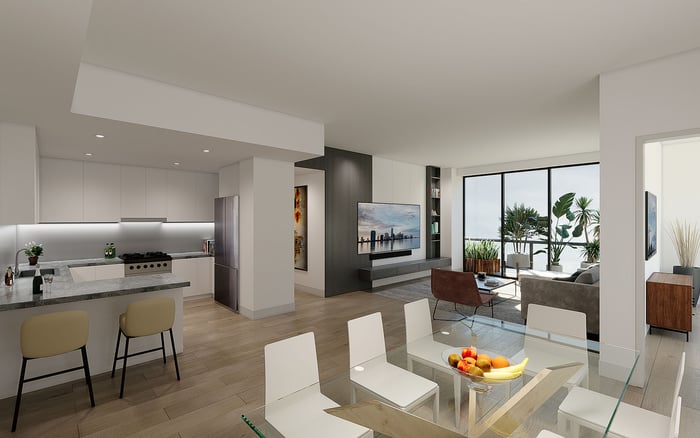
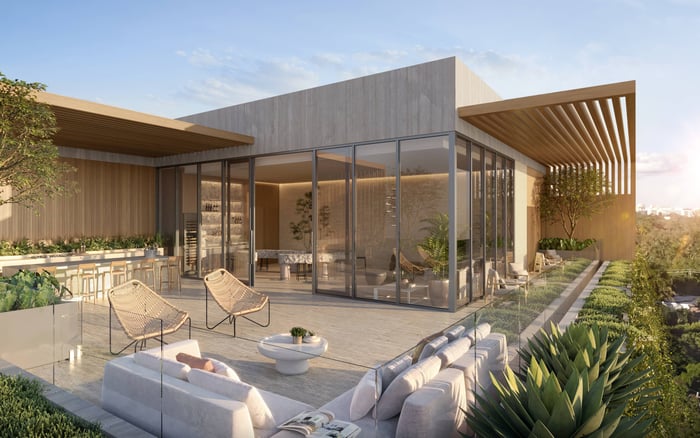
A considered purchase at The Well Coconut Grove calls for more than a floor-plan review. This buyer’s audit focuses on parcel identity, insurance-loss records, garage and equipment elevations, emergency power, and the written procedures behind service restoration.

The most consequential questions in a luxury purchase rarely appear on a floor plan. At The Well Coconut Grove, a buyer’s review should extend beyond the residence to the infrastructure supporting access, essential services, and recovery after a storm. The objective is not to presume a problem, but to distinguish documented operating capability from an attractive assurance.
Property-specific flood-claim history, garage-flooding records, equipment elevations, generator specifications, and continuity procedures remain unverified here. This is not a finding of damage or noncompliance. It means neither a clean loss history nor a particular level of protection should be assumed. The requests below are buyer-diligence recommendations, not descriptions of installed project features.
The listed addresses include a contact location at 2640 S. Bayshore Drive, Suite 101, Miami, FL 33133, and a separate address at 2855 Tigertail Avenue, Coconut Grove, FL 33133. They should not be treated as two confirmed building addresses. Nor should the contact location automatically become the subject of a flood-record search.
Ask counsel to reconcile the legal parcel identification, ownership entity, development description, and condominium documents before commissioning parcel-specific inquiries. Where records cover different parcels or entities, request a written explanation of their relationship to the purchase.
This discipline also makes comparisons more useful. A buyer considering Four Seasons Residences Coconut Grove should apply the same parcel-first standard, without assuming nearby developments share flood exposure or insurance histories.
Request available developer, construction-risk, and association loss runs. The response should address open, closed, denied, and reserved claims, with the insured entity and coverage period clearly identified. If an association record does not yet exist, distinguish that circumstance from a record showing no losses.
The meaningful question is not simply whether a claim was paid. Ask what event prompted each claim, which property or equipment was involved, how it was resolved, and whether remediation documentation is available. A denied claim warrants explanation, not automatic dismissal; an unresolved claim calls for a status update, not speculation.
Keep conclusions proportionate to the documents. An absence of verified claims does not prove that no loss occurred. Equally, a request for loss runs is not evidence that this development has experienced flooding. Have the buyer’s insurance adviser identify the periods and entities covered, then separate documented findings from unanswered questions.
The expected completion is mid-2028. Treat that as a forecast, not a confirmed delivery date or an assurance about the property’s earlier history. A future completion date does not rule out prior parcel losses or construction-period claims.
Ask counsel to review how the purchase agreement allocates storm-damage responsibility during construction, before closing, and around association turnover. The insurance review should follow the same timeline: which entity holds the relevant coverage at each stage, and what documents will be available to the purchaser?
For evidence that cannot yet exist, such as future operating test records, ask when it is expected and who will provide it. A dated follow-up obligation is more useful than an open-ended promise of information later.
Parking is described as assigned, garage, and valet. The offering for residence TH 05 specifies two garage spaces, but that allocation should not be generalized to other residences. Confirm the residence’s parking rights separately from the garage’s storm procedures.
Request a certified survey and civil and mechanical, electrical, and plumbing plans showing garage, ramp, electrical-room, pump-room, elevator-equipment, and emergency-power elevations relative to the applicable base-flood elevation. Have a qualified professional interpret those relationships rather than relying on verbal assurances such as “elevated” or “protected.”
The review should establish where water could enter, which components could be exposed, and which services depend on those components. Request the proposed vehicle-removal procedure, shutdown triggers, valet responsibilities, and arrangements for owners who are away when action is required.
A comparison with Park Grove Coconut Grove is most useful when it poses equivalent documentary questions, rather than treating a parking description as evidence of resilience. No comparative resilience conclusion is established here.
A generator discussion should answer specific service questions. Request its location, capacity, fuel arrangements, and load schedule, together with testing records when available. Ask explicitly whether the intended emergency loads include elevators, water pumps, garage gates, access control, and resident communications.
Have the reviewing professional examine the supporting equipment as well as the generator itself. The question is whether the proposed arrangement can sustain the identified services under the conditions described-not merely whether backup power appears in a presentation.
Do not assume emergency power means normal building operations. Ask management to distinguish services intended to remain available from those subject to controlled shutdown and those requiring inspection before restoration. These are questions to resolve, not verified characteristics of The Well.
A hurricane-preparedness review for a Coconut Grove business should cover emergency contacts, evacuation routes, communications, backup power, and data protection. A broader continuity review should address assigned emergency roles, staff training, asset inventories, cloud backups, alternative worksites, and recovery procedures. These measures provide a useful framework; they do not establish this project’s adoption of any measure.
Request a written sequence covering shutdown, vehicle removal, evacuation, staffing, resident updates, vendor response, re-entry, and service restoration. For each stage, ask who has authority, what triggers action, and how residents receive instructions if ordinary communications are interrupted.
Flood barriers belong in the discussion as a question, not an assumed feature. If proposed, ask for deployment responsibilities and procedures. For an owner managing the residence remotely, the plan should explain whom to contact and what authorized assistance can be arranged.
Ask an insurance adviser to examine flood coverage, deductibles, exclusions, equipment and common-element protection, and any proposed business-interruption coverage for the relevant insured entity. Keep building-level protection distinct from the owner’s arrangements. Confirm applicability rather than assuming one policy answers every concern.
Before committing, organize the findings around four decisions: whether the parcel is correctly identified, which loss periods are documented, whether physical exposure has been professionally assessed, and whether continuity responsibilities are written down. Record unresolved items and ask counsel how they should affect the transaction. The goal is not certainty about every storm. It is clarity about protection, responsibility, and recovery.
For a discreet perspective on your next South Florida residence, explore MILLION.
If branded residences are on your mind — as a home or as an allocation — we would be glad to share what we are seeing, privately.
Begin a quiet conversationA clean property-specific flood-claim history is not established. An absence of verified claims should not be interpreted as proof that no losses occurred.
Confirm the legal parcel identification first. The Bayshore contact address and Tigertail marketing address should not be treated as two confirmed building addresses.
Request available developer, construction-risk, and association loss runs covering open, closed, denied, and reserved claims. Identify the insured entity and period for each record.
No. Mid-2028 is a marketed completion expectation, not a confirmed delivery date.
The two-space detail applies to residence TH 05 and should not be generalized. Confirm parking rights for the specific residence under consideration.
Request a certified survey and civil and mechanical, electrical, and plumbing plans showing garage and critical-equipment elevations relative to the applicable base-flood elevation. Have a qualified professional interpret them.
Ask for generator location, capacity, fuel arrangements, load schedules, and testing records when available. Confirm which essential services the proposed system is intended to support.
No project-specific adoption is established here. Flood barriers are a diligence question, not a verified project feature.
It should address shutdown, vehicle removal, evacuation, staffing, communications, vendor response, re-entry, and service restoration. Ask who is responsible and what triggers each action.
Have counsel review contractual responsibility during construction, before closing, and around turnover. An insurance adviser should separately assess applicable coverage, deductibles, exclusions, and equipment protection.