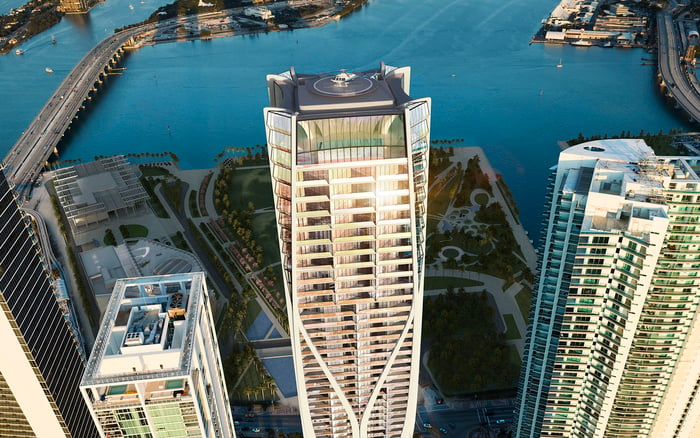
For art-minded buyers at The Cove Residences in Edgewater, a beautiful wall is only the beginning. Written approvals, attachment specifications, delivery access, and vendor insurance deserve their own pre-purchase audit.

A significant artwork can shape the choice of a residence as decisively as its outlook. At The Cove Residences Edgewater, the buyer’s question extends beyond whether a canvas fits a wall. Can the proposed work be approved, supported, delivered, and installed under the applicable condominium requirements?
The distinction matters for framed works, substantial mirrors, shelving, and integrated display systems. A floor plan establishes spatial possibilities-not permission to drill or an allowable load. Buyers should not assume a wall-loading limit, an approved attachment method, an art-review procedure, or a vendor-insurance schedule without property-specific written guidance.
For a Cove Miami purchase, treat the collection as a separate due-diligence file. The objective is a written path from acquisition to installation, not a reassuring conversation about what should be possible.
Begin by requesting the current declaration, bylaws, rules, alteration guidelines, move-in procedures, and vendor-access requirements. Request the versions applicable to the proposed residence and establish who has authority to approve the installation. Distinguish a sales discussion from a formal decision by the party responsible for administering those requirements.
Ask counsel to review the purchase agreement and offering documents for what is included with the unit and what would constitute a separate alteration. Ask the relevant professionals whether the contemplated work triggers any permit or other approval requirement. Calling it an art installation does not resolve the issue.
Confirm the delivery address and access instructions against the purchase and condominium documents before preparing transport instructions or insurance paperwork. Identify the residence, the proposed work, and the specific decisions requested, and retain written responses with the installation file.
A useful submission starts with an object schedule. For each piece, record dimensions, total installed weight, frame or enclosure details, proposed position, and mounting system. Include brackets and supporting components in the weight rather than describing the artwork alone.
Next, request wall-specific guidance. Ask which substrates are present at the proposed location and which attachment methods are allowed for drywall, concrete, structural columns, demising walls, or common-element surfaces, where applicable. These surfaces are not interchangeable, and an interior location should not be treated as permission for unrestricted drilling.
Ask for allowable loads, approved anchors, prohibited drilling zones, and any requirement for engineering review. Clarify whether a proposed limit applies to an individual attachment, a complete assembly, or a particular wall condition. These are recommended questions, not established Cove policies.
A buyer also considering Aria Reserve Miami should request an independent set of answers there. A mounting detail accepted at one property is not evidence of permission at another. Compare the clarity of each residence’s written installation pathway, not an assumed neighborhood standard.
Request the applicable application form, review procedure, submission requirements, and decision-maker. Ask directly rather than building a submission around an assumed process.
For oversized or built-in works, propose a package containing the object schedule, location drawings, attachment details, installer information, and any requested engineering documentation. Ask which changes would require renewed review, including a heavier frame, a different anchor, or a relocated display.
The desired response is approval of a defined scope-not a general statement that residents may hang art. Clarify any conditions, whether separate access authorization is needed, and how long approval remains applicable. Keep design acceptance, permitting questions, and vendor access distinct until each is resolved.
When comparing EDITION Edgewater with The Cove, use the same proposed installation brief. This keeps the buyer’s questions consistent without suggesting that the buildings share approval thresholds or procedures.
An installation plan should follow the work from arrival to its final position. Request loading-access information, door clearances, elevator dimensions and capacity, and the route through corridors into the residence. Have the delivery team assess the packaged dimensions, not just the uncrated object.
Ask about reservation lead times, permitted delivery hours, protective padding, staging arrangements, associated fees, and restrictions on unpacking or temporary storage. Confirm whether the delivery and installation teams need separate access arrangements. These are buyer audit questions, not verified Cove requirements.
Apply the same property-specific discipline when comparing Villa Miami. Request its own access requirements rather than carrying assumptions from another Edgewater address.
Before retaining an installer, request the current certificate-of-insurance checklist. Ask for required coverage types and limits, submission deadlines, certificate-holder wording, additional-insured instructions, and any required endorsements. Do not infer a Cove-specific insurance minimum from another building’s paperwork.
Send the written requirements to the installer and insurance adviser before fixing the delivery date. Ask who reviews submissions, how acceptance is communicated, and whether every participating vendor must submit separately. Resolve discrepancies before arrival rather than treating the certificate as a last-minute administrative task.
Separately, discuss protection for the artwork during transit, handling, staging, and installation. Ask whether art-transit, installation-floater, or riggers’ coverage is required or appropriate for the proposed work. These are questions for the relevant parties, not a statement that Cove mandates those policies.
Where feasible, ask counsel to address the relevant due diligence through written acceptance of the artwork, attachment method, delivery route, installer, and insurance arrangements. Identify what remains unresolved and who must answer it before making installation-dependent commitments.
For an art-minded buyer, the most useful assurance is specific: a particular work, on a particular wall, using an accepted method, with an authorized team. That is how a compelling floor plan becomes a residence ready for the collection intended to inhabit it.
For a considered approach to South Florida residences and collection-led buying decisions, explore MILLION.
If branded residences are on your mind — as a home or as an allocation — we would be glad to share what we are seeing, privately.
Begin a quiet conversationRequest written guidance for the specific wall, mounting assembly, and proposed artwork. Do not treat a floor plan as a load specification.
Do not assume permission to drill or attach artwork. Confirm the applicable rules and attachment requirements before installation.
Request the current declaration, bylaws, rules, alteration guidelines, move-in procedures, and vendor-access requirements applicable to the residence.
Ask for the applicable application form, submission requirements, and authorized decision-maker. Obtain a written response covering the proposed scope.
Describe the artwork’s dimensions, total installed weight, location, mounting system, and installer. Ask whether drawings or engineering documentation are required.
Request elevator dimensions and capacity, door clearances, loading access, delivery hours, staging rules, reservation requirements, and fees. These are audit questions rather than verified Cove policies.
Obtain a written checklist covering coverage types and limits, submission instructions, certificate-holder wording, additional-insured requirements, and endorsements.
Another building’s approval does not establish permission at Cove. Request property-specific installation and access requirements.
Confirm the delivery address and access route against the purchase and condominium documents. Have the transport team assess the packaged artwork’s dimensions.
Where feasible, ask counsel to address written acceptance of the proposed artwork, attachment method, delivery route, installer, and insurance arrangements within the relevant due diligence.