A buyer-focused audit of Bahia Mar's flood-loss records, garage and equipment protection, emergency power, and hurricane continuity, separating documented details from questions that require written answers.
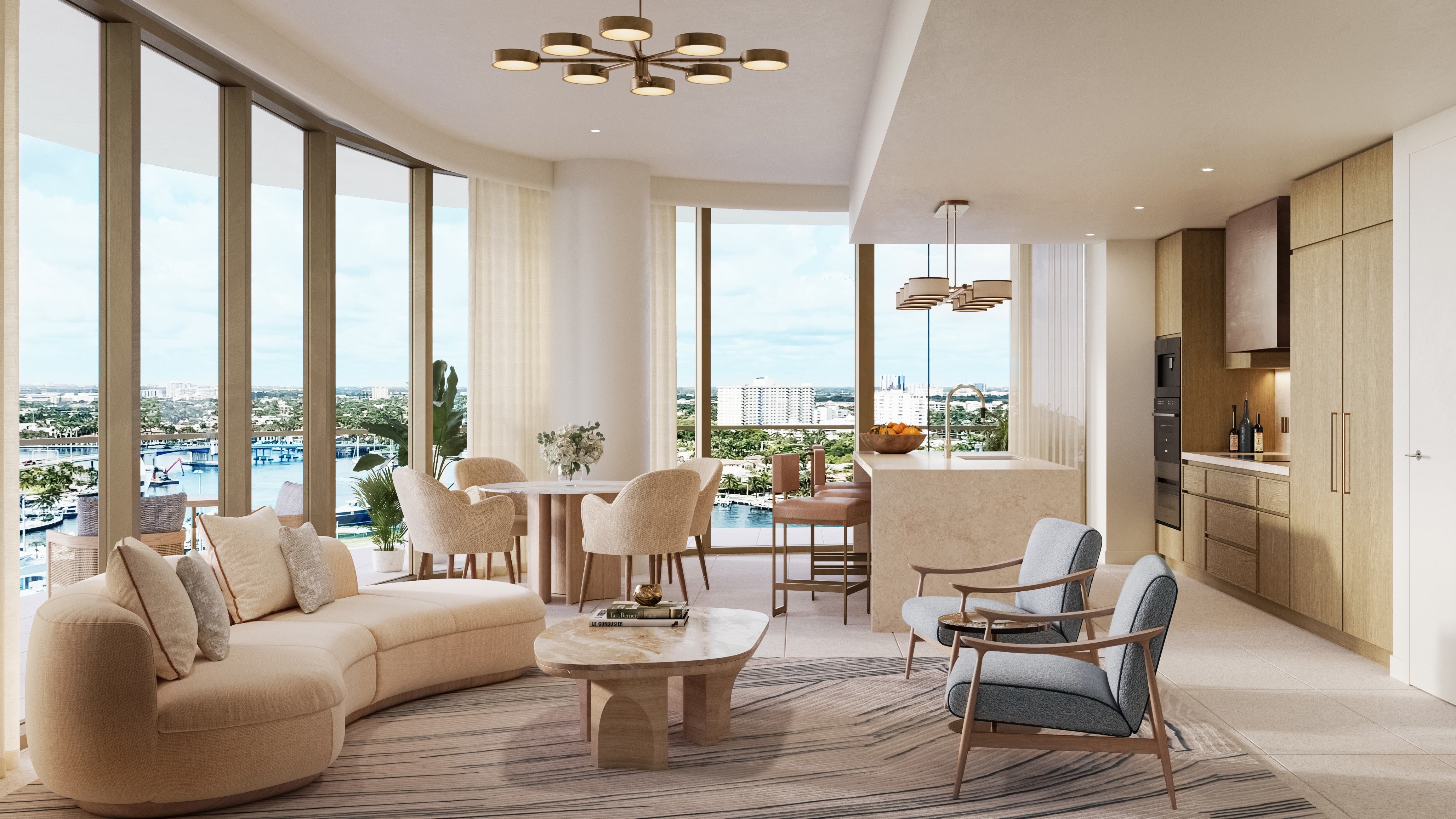
At St. Regis® Residences Bahia Mar Fort Lauderdale, the setting is central to the proposition: a proposed development at 801 Seabreeze Boulevard, between the Atlantic Ocean and Intracoastal Waterway. The 39-acre waterfront concept brings together residences, a St. Regis resort, a private marina and a beach club. For a buyer considering Fort Lauderdale Beach, that combination warrants an operational review as thoughtful as the choice of a view or floor plan.
The decisive questions lie beyond the apartment: which systems remain available during an interruption, how garage-level assets are protected, and who authorizes recovery. A residence layout cannot answer them. Nor does the information available here establish a clean flood-claim history, critical-equipment elevations or a detailed hurricane continuity plan. Those require written diligence, not assumptions about the brand.
The project is described as pre-construction, with two 23-story residential towers distinguished from a separate resort component. Residence counts differ: 160 across two towers and 239 across three. Buyers should establish the precise tower, product and legal entity associated with their purchase before comparing totals or interpreting shared amenities.
PRH/TRR BM Tower 1, LLC and PRH/TRR BM Tower 2, LLC are identified as separate developers. That distinction does not establish separate associations, insurance programs or cost allocations. Request the condominium documents and applicable shared-facility agreements rather than inferring legal boundaries from tower names.
The same discipline applies when considering Andare Residences Fort Lauderdale alongside Bahia Mar: compare the actual purchase documents, not simply the presentation. Changes arising from governmental permits and approvals are also allowed at Bahia Mar. Ask which drawings are current, which approvals remain outstanding and how material changes would be communicated.
Start with a five-year request for site and entity loss runs covering flood, wind, storm surge, water intrusion, mold and business interruption. Identify the relevant insured entities and distinguish existing Bahia Mar facilities from the proposed towers. A historic site claim is not automatically a claim against a future condominium; equally, a new entity's short history says little about the site's earlier experience.
Have an insurance adviser reconcile the records with policy periods, insured locations, named insureds, claim status and any documented remediation. Where an entity has existed for less than five years, request records for its full existence and identify the predecessor facilities separately. Ask whether the response addresses all relevant policies or only one coverage category.
No insurer loss runs or official claims records for the proposed residences are established here. That indicates neither a clean history nor an adverse one. The useful outcome is a clearly defined record: what property was insured, what event occurred, what was repaired and what remains unresolved. An unsupported assurance is not the equivalent of a documented answer.
Parking descriptions establish convenience, not flood performance. Residence 1003 is described with assigned, covered, garage and valet parking, plus secured garage access. Residence R 1906 specifies one garage space. Neither description establishes the garage's elevation, drainage capacity or protection against water entry.
Request the flood-zone determination, survey, design flood elevation, finished-floor and garage elevations, and applicable freeboard requirements. Have a qualified engineer review them together. The available residential floor plans are not a complete civil, mechanical or electrical engineering package and do not establish garage flood protection.
Next, request a schedule locating electrical rooms, transformers, switchgear, generators, fuel systems, pumps, elevator machinery and communications equipment. The question is not simply whether the residence sits high above the water, but whether the systems it depends on are protected. Ask for elevations and protection details, including how equipment can be accessed after an interruption.
Garage drainage warrants its own review: calculations, redundant sump pumps, backup power, discharge routing, check valves, high-water alarms and manual controls. These are document requests, not confirmed Bahia Mar features. Also request corrosion-protection specifications for garage, marina and exterior mechanical and electrical equipment, together with inspection and maintenance requirements.
The equipment listed for Residence 1003 includes “Generator” and “Amps 200 Or More.” Those entries do not establish generator location, capacity, runtime or which systems receive emergency power. They should prompt a technical request, not a conclusion about uninterrupted residential service.
Obtain the generator specifications and supported-load schedule. Ask separately about elevator operation, water pumps, garage drainage, access control, communications, common-area lighting and any residence-level loads. Request fuel-storage details, refueling arrangements, testing procedures and the assumptions behind any stated runtime.
The review should also examine the equipment serving the generator. Ask how fuel delivery, controls and electrical distribution are protected, and what happens if one supporting component becomes unavailable. The goal is a defined operating scope, including limitations, rather than a broad promise that the building has backup power.
The advertised 24/7 St. Regis butler service speaks to everyday hospitality. It does not, by itself, document hurricane staffing, evacuation procedures or recovery arrangements. Buyers weighing Four Seasons Hotel & Private Residences Fort Lauderdale can apply the same distinction between service expectations and written emergency responsibilities, without assuming equivalent systems at either property.
For Bahia Mar, request a coordinated plan encompassing the condominium, hotel, marina and beach club. The proposed 250-slip marina makes component-by-component responsibilities especially important to clarify. Ask who directs evacuation, who remains on site when permitted, how owners receive updates and which services may be suspended.
The recovery portion should address water availability, elevator inspections, communications, owner access and reopening authorization. Ask whether each component can reopen independently and how shared infrastructure affects that decision. A detailed plan is not established here; that is not evidence that none exists. The buyer's task is to obtain it and understand its limits.
Close the audit with counsel and an insurance adviser reviewing deductibles, casualty repairs, emergency assessments and cost allocation among project components. Ask who funds damage to shared infrastructure, who controls repair decisions and whether owners face access restrictions while other facilities recover.
For unfinished designs, distinguish current specifications from commitments reflected in the purchase documents. Tie unresolved questions to the relevant drawing, policy or agreement, and request updated answers when designs change. The strongest purchase decision connects the residence's appeal with a documented understanding of the systems supporting it.
For a discreet perspective on South Florida ownership and buyer diligence, explore MILLION.
If branded residences are on your mind — as a home or as an allocation — we would be glad to share what we are seeing, privately.
Begin a quiet conversationThe proposed development is at 801 Seabreeze Boulevard in Fort Lauderdale, between the Atlantic Ocean and Intracoastal Waterway.
A clean flood-claim history is not established. Buyers should request insurer loss runs and distinguish existing facilities from the future towers and their entities.
Request five-year site and entity loss runs covering flood, wind, storm surge, water intrusion, mold and business interruption. For newer entities, request records for their full existence.
The descriptions give 160 residences across two towers and 239 across three. Buyers should confirm the specific tower and product included in each description rather than treating the totals as interchangeable.
No; the available package presents residence layouts, not a complete engineering package establishing garage elevations or flood-protection measures.
Residence 1003 is described with assigned, covered, garage and valet parking and secured garage access; Residence R 1906 specifies one garage space. These descriptions do not establish flood performance.
No; it does not establish generator location, runtime or supported systems. Request capacity specifications, supported-load schedules and fuel arrangements.
No; everyday hospitality service is distinct from documented evacuation, emergency staffing and recovery procedures.
Not necessarily; separate developer entities do not, by themselves, establish separate associations, insurance programs or cost-allocation arrangements.
Request coordinated procedures for the condominium, hotel, marina and beach club, including evacuation, staffing, water, elevators, communications and reopening. Review related owner-access and shared-cost obligations in the governing documents.