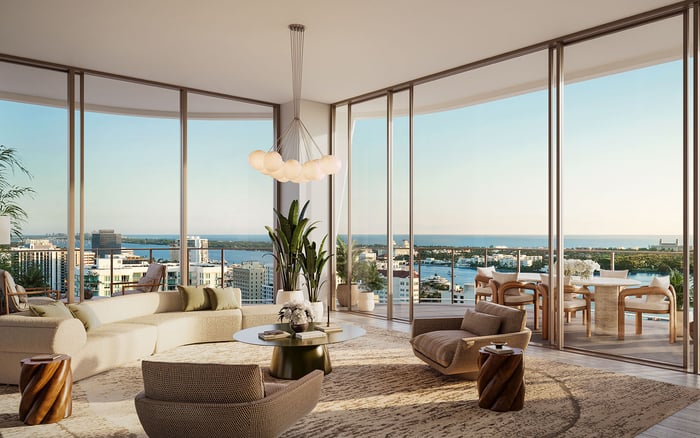
A buyer-focused examination of Mr. C Residences West Palm Beach, separating advertised hospitality benefits from documented ownership rights, reservation privileges, and resale eligibility.

At Mr. C Residences West Palm Beach, the advertised offering extends beyond private terraces, floor-to-ceiling glass, and Italian cabinetry. Marketed as a 27-story tower with 146 private residences in downtown West Palm Beach, the project also includes 110 hotel guest suites under the Mr. C Hotels brand founded by Ignazio and Maggio Cipriani.
The appeal is a home complemented by hospitality. The buyer’s task is to establish which elements belong to the condominium, which require payment or enrollment, and which are subject to separate operating terms. A preferred rate is not a reservation guarantee. An invitation is not a transferable membership.
That distinction matters for both personal enjoyment and eventual resale. The question is not simply what the brand offers, but what this owner-and the next-can actually claim.
Begin with five categories: condominium ownership rights, hotel-facility access, residential services, portfolio privileges, and any separately governed club membership. Do not assume the last category exists merely because the experience is hospitality-led.
The advertised residential amenities include a garden-level lap pool with cabanas, wellness facilities, a library, meeting rooms, and lounges. Building features include a dedicated porte-cochère, residential lobby, private high-speed elevators, secured above-ground parking, and EV charging ports. These are planned offerings, not a complete account of their conditions of use or legal classification.
Portfolio benefits are a separate proposition. Advertised privileges include preferred rates on hotel stays and signature dining, alongside invitations to select special events across the Mr. C portfolio. Whether those benefits attach to title, the original purchaser, or a separately registered participant remains unestablished here.
For a buyer also considering Alba West Palm Beach, the same categories provide a framework for diligence. Compare documented rights and costs rather than treating every advertised amenity as an equivalent ownership benefit.
Advertised services at Mr. C include concierge reception, housekeeping, butler service, poolside food and beverage service, and a custom residences app. In-residence dining and event catering are also part of the advertised hospitality offering.
Availability does not establish inclusion in recurring condominium charges. Request a service schedule identifying what is included, what costs extra, how appointments are made, and whether minimum charges or advance notice apply. Ask who delivers each service and which agreement governs it.
An owner planning occasional stays may value arrival preparation and housekeeping differently from someone living in residence year-round. Translate the service menu into a personal usage budget rather than assigning value to the number of offerings. Treat facilities and services as advertised or planned unless their operational status is separately confirmed.
The advertised residential garden-level pool should not be conflated with the hotel rooftop pool, bar, and lounge. The distinction between residential and hotel facilities does not, by itself, establish exclusive resident access to either setting.
Request a facility-by-facility access schedule. It should identify whether each space is a residential common element, hotel facility, or separately controlled premises, along with the rules for owners, household members, guests, and tenants. Clarify charges, capacity restrictions, and any requirement for the owner to accompany visitors.
Bellini Restaurant and Café are part of the advertised hospitality offering. Their presence does not establish a resident table allocation, a guaranteed reservation, or unrestricted event access. Ask separately about dining eligibility, preferred pricing, private functions, and what any resident preference means in practice.
The advertised benefits described here do not establish a detailed reservation-priority policy covering booking windows, blackout dates, guest limits, cancellation terms, and resale eligibility. An important distinction therefore remains unresolved: booking assistance is not necessarily priority over other customers.
Ask for written terms addressing five points:
Which facilities, services, hotel stays, or events can an owner reserve?
Through which channel must the request be submitted?
How far ahead can an owner book, and is that earlier than other users?
What charges, deposits, cancellation rules, and blackout periods apply?
Does the same treatment extend to guests, tenants, and resale purchasers?
Request a worked example for a busy holiday stay or dinner reservation. The answer should distinguish a discounted price, access to available inventory, and inventory reserved specifically for owners. These are different benefits and should be evaluated separately.
The advertised benefits described here do not establish a definitive benefits schedule distinguishing original purchasers from resale purchasers. That absence does not prove benefits are nontransferable or revocable. It means transferability and durability need to be checked against the governing documents.
Request a written schedule identifying each privilege, its eligible holder, and the rule governing succession. It should address transfer approvals, enrollment fees, registration requirements, eligibility definitions, and any modification or termination rights. Ask whether an ownership change requires a fresh application and whether benefits remain available during that process.
Eligibility deserves particular attention if the residence will be held through an entity or trust, or used by multiple family members. Have counsel establish who qualifies rather than assuming every beneficial owner or occupant receives identical treatment.
Even when comparing Cipriani Residences Brickell, do not infer shared benefits or reciprocal access from a familiar name. Each purchase requires its own contractual review. For resale underwriting, distinguish documented successor-owner rights from privileges whose continuation has not been established.
Request the current condominium prospectus and exhibits, declaration, bylaws, operating rules, purchase agreement, assignment provisions, and any applicable hotel or club agreements. Ask counsel to identify which advertised benefits are documented in the prospectus, purchase agreement, or other governing agreements before relying on them in a purchase decision.
Have counsel connect each material sales representation to its governing provision. A written benefits summary is useful, but it should be reconciled with the documents that control eligibility, payment, access, and amendment rights.
Keep rental questions separate. The presence of hotel suites does not establish that a residence qualifies for a rental program. Request written rental restrictions, management terms, owner-use limits, and successor-owner eligibility before incorporating rental assumptions into the purchase analysis.
Mr. C’s advertised combination of private residences and hospitality merits detailed review precisely because the experience extends beyond the floor plan. Evaluate the physical home, residential amenities, paid services, and portfolio privileges separately before deciding what each is worth to you.
The strongest buying position is not skepticism toward the brand. It is clarity about what is promised, what costs extra, what requires a reservation, and what the next purchaser receives.
For a discreet perspective on South Florida residences and the details that distinguish ownership experiences, explore MILLION.
If branded residences are on your mind — as a home or as an allocation — we would be glad to share what we are seeing, privately.
Begin a quiet conversationThe project is marketed as a 27-story tower with 146 private residences and 110 hotel guest suites. Advertised features should not be treated as confirmation that every facility or service is operational.
Advertised benefits include preferred rates on hotel stays and signature dining, plus invitations to select special events across the Mr. C portfolio. Their eligibility and duration require review of the applicable terms.
A preferred rate does not itself establish reservation priority. Buyers should request written booking windows, inventory rules, blackout dates, and cancellation terms.
Both are advertised services, but their inclusion in recurring condominium charges is not established here. Request an itemized schedule of included and separately charged services.
The distinction between residential amenities and hotel facilities does not establish exclusive resident rooftop access. Confirm access rights, charges, and guest rules in writing.
Bellini Restaurant and Café are part of the advertised hospitality offering, but guaranteed resident reservations are not established here. Dining access and preferred pricing should be reviewed separately.
Automatic transfer and nontransferability are not established here. Request a written comparison of original-purchaser and resale-purchaser eligibility.
Whether portfolio privileges attach to title, the original purchaser, or a separately registered participant is not established here. Have counsel confirm that distinction in the governing agreements.
No rental-program eligibility should be inferred from the presence of hotel suites. Obtain written rental restrictions, management terms, owner-use limits, and successor-owner eligibility.
Request the current prospectus and exhibits, declaration, bylaws, operating rules, purchase agreement, assignment provisions, and applicable hotel or club agreements. Counsel should reconcile material benefit descriptions with the governing language.