A buyer’s guide to separating Faena Residences Miami’s service promise from assessment obligations, discretionary gratuities, and personal spending, with a practical framework for reviewing budgets and controlling à la carte costs.
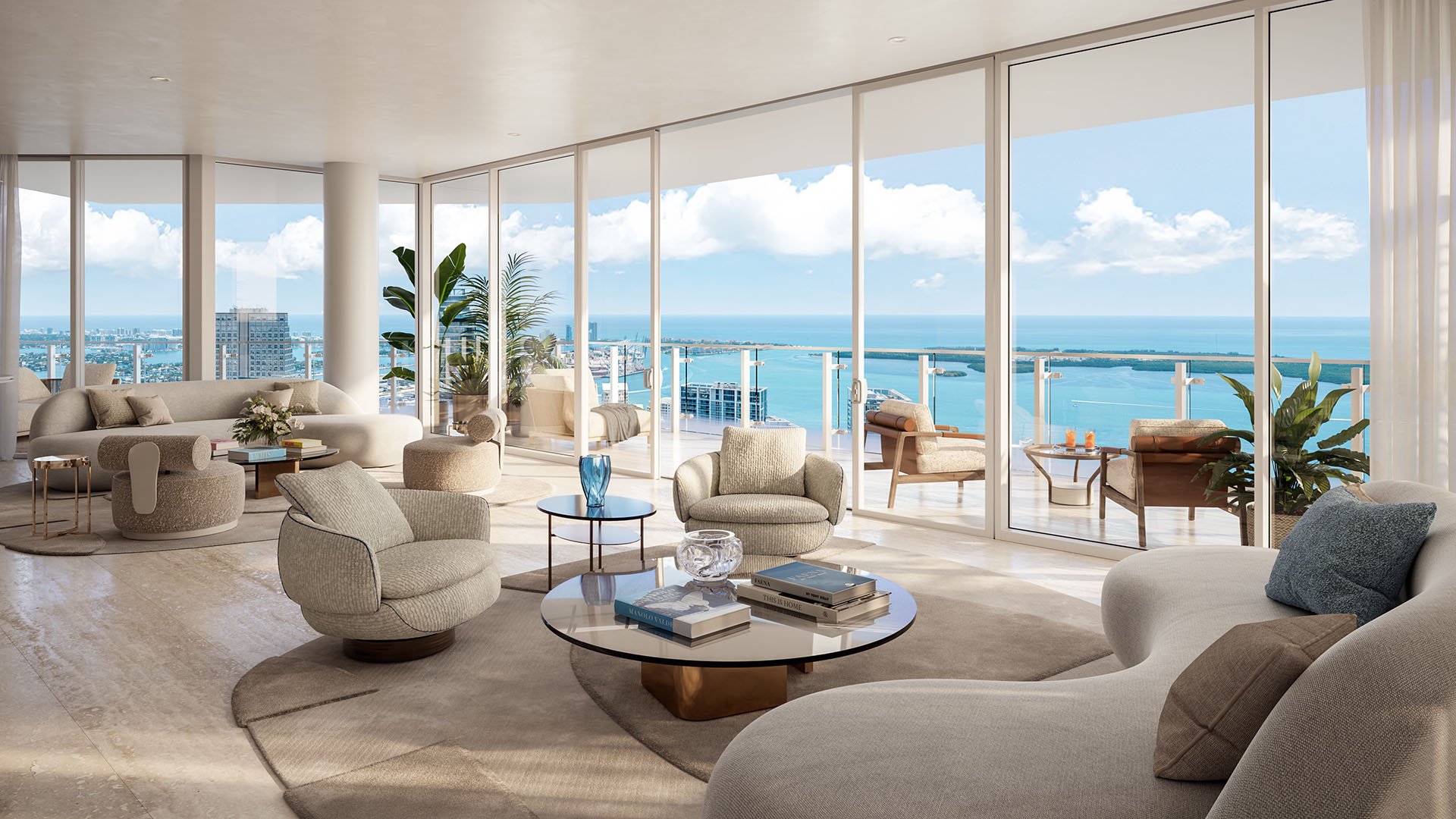
The appeal of Faena Residences Miami Downtown Miami extends beyond the residence itself. Planned for the Miami River district, the fully serviced condominium is marketed around five-star residential service, wellness, dining, culture, and waterfront access. For a buyer, the essential question is not simply what can be arranged, but what ownership pays for before the first reservation is made.
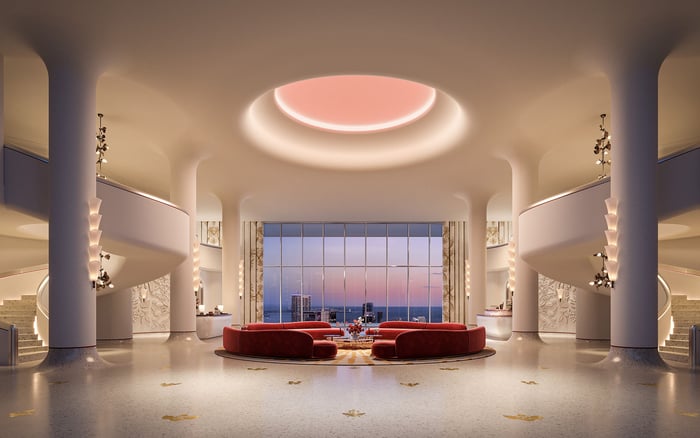
The marketed specifications describe two 68-story towers, 434 residences, and a 45,000-square-foot Sky Bridge housing amenities. Reconcile these specifications with the latest offering documents; they are not substitutes for contractual terms. Advertised facilities include a dedicated 24-hour concierge and front desk, an infinity-edge pool, private dining, a restaurant, wellness facilities, and creative spaces.
Service availability is not service inclusion. A concierge may arrange an experience without its underlying cost being covered by the assessment. That distinction should guide the entire purchase review.
The published average association-fee estimate is $1.14 per square foot per month-not a verified final, association-approved assessment. For illustration only, that rate produces a monthly charge of $1,710 for 1,500 square feet and $3,420 for 3,000 square feet. Neither calculation confirms the charge for a particular residence or the allocation formula that will govern it.
A verified final annual association operating budget has not been established. Request the proposed operating budget, reserve schedules, insurance assumptions, and expense-allocation formula. Ask which square-footage measure underlies the estimate and how the declaration assigns each residence its share.
The service promise also requires a staffing explanation. Seek headcount by function and shift, wage and benefit assumptions, overtime allowances, and contracted-service pricing. An advertised 24-hour desk describes availability; it does not disclose the labor budget required to deliver it.
Finally, ask whether projected amenity revenue or operator subsidies support the proposed assessment. If so, identify the assumptions, duration, and treatment of any shortfall. These are questions for the financial documents, not grounds to assume a subsidy exists.
Request the declaration, bylaws, rules, management agreement, applicable brand or licensing agreements, and resident-service exhibits. Together, they should clarify who provides each service, who pays, and what can change. Have counsel reconcile material service promises with the documents that govern ownership.
Keep the Miami River development separate from Faena House Miami Beach and Faena’s Miami Beach hotel operations. Neither hotel tipping customs nor service prices should be carried over to this purchase.
For any restaurant, wellness facility, or club arrangement, ask whether the provider is the association, a management affiliate, or an independent operator. Then establish who controls pricing, reservations, eligibility, and dispute resolution. A seamlessly integrated experience can still involve separate contractual and billing relationships.
Request a service matrix classifying every advertised offering as included, capped, discounted, charged by use, subject to gratuity, or dependent on separate membership. Add columns for guest access, cancellation terms, booking priority, and the party issuing the bill. Mark unresolved entries as unconfirmed rather than treating them as complimentary.
Start with the services your household is most likely to use regularly:
Dining: Separate concierge coordination from food, beverages, delivery, staffing, and any private-room reservation charge.
Wellness and beauty: Distinguish facility access from treatments, practitioners, products, and advanced wellness sessions.
Shopping: Separate arranging a curated experience from purchases, transportation, and any personal-shopping fee.
Events and culture: Clarify admission, guest charges, private bookings, and any separately priced programming.
A comprehensive resident price schedule has not been established for the advertised Glam Room, spa, beauty, and advanced wellness offerings. Private dining, lounges, event spaces, and cultural programming likewise lack a complete schedule specifying what is complimentary. Obtain written pricing or a clear pricing mechanism before assigning these benefits a financial value.
A verified residential gratuity policy has not been established. Neither “tips included” nor “tipping prohibited” is supported. Request a written policy distinguishing discretionary tips, pooled gratuities, automatic service charges, and hospitality fees.
Ask which services carry each charge, whether it is mandatory, who receives it, and how it appears on the statement. If available, request a sample itemized bill showing the treatment of dining or wellness services. Automatic charges and optional gratuities should be clearly distinguishable at the point of payment.
Do not import hotel tipping percentages or assumed annual staff-gift amounts into the ownership budget. Establish the residential policy first, then decide on any voluntary giving separately. A shared understanding of billing and tipping among household members and guests can reduce inadvertent duplicate payments without diminishing gracious service.
Private boat rides are advertised, but their funding and billing treatment remain unestablished. Ask separately about boat bookings, dockage, crew, fuel, and launch charges. Confirm what, if anything, ownership includes and whether availability depends on advance reservations or additional agreements.
Poolside food-and-beverage service is also advertised without established resident prices, minimum spends, automatic service charges, or gratuity treatment. Treat the pool amenity and the dining transaction as separate budget questions until written terms connect them.
A private social club in the Sky Bridge is advertised, but that alone does not establish ownership-based membership rights, guest charges, or reservation fees. Ask whether membership is automatic, optional, or separately contracted, and what rights continue if the operator changes.
If your shortlist also includes Cipriani Residences Brickell, apply the same inclusion matrix rather than assuming similar service language means similar financial terms. This is a framework for comparing documents, not a claim that the projects share assessment structures or hospitality policies.
For Faena, build three ownership scenarios: the proposed assessment once documented, a higher labor-and-insurance case, and a personal service-usage case reflecting your dining, wellness, entertaining, and marine plans. Treat these as buyer assumptions, not project forecasts.
Request household spending controls such as itemized statements, booking confirmations showing total charges, and approval thresholds for guest or staff-authorized purchases. Confirm which controls management can actually provide. The objective is not to ration enjoyment, but to make its cost clear and deliberate.
For a considered approach to South Florida residential ownership, explore MILLION.
If branded residences are on your mind — as a home or as an allocation — we would be glad to share what we are seeing, privately.
Begin a quiet conversationThe planned fully serviced condominium is in the Miami River district. It should be evaluated separately from Faena’s Miami Beach hotel and residences.
No. It is a published average estimate of $1.14 per square foot per month, not a verified final, association-approved assessment.
The illustrative calculation is $1,710 monthly. It does not confirm the charge or expense allocation for any particular residence.
Request the proposed operating budget, reserve schedules, insurance assumptions, and expense-allocation formula. Also ask about staffing costs, projected amenity revenue, and any operator subsidies.
No such inclusion is established. Arranging in-residence dining, shopping, or wellness experiences does not mean their underlying costs are assessment-funded.
Neither position is supported by a verified residential gratuity policy. Request written distinctions between discretionary tips, pooled gratuities, automatic service charges, and hospitality fees.
A comprehensive resident price schedule is not established in the available project information. Request pricing that distinguishes facility access from treatments, practitioners, and products.
Their inclusion or separate billing is not established. Ask about bookings, dockage, crew, fuel, launch charges, and any additional agreements.
Marketing descriptions of a private social club do not establish automatic membership rights. Obtain written terms covering eligibility, guests, reservations, and separate fees.
Request an inclusion matrix, itemized statements, total-price booking confirmations, and household approval thresholds. Confirm which controls management can provide and model personal usage separately from association costs.