
A waterfront terrace deserves the same scrutiny as the residence behind it. Compare the outdoor settings at these two Ritz-Carlton addresses, then clarify maintenance, wind exposure, storm preparation, and absentee-owner responsibilities before buying.
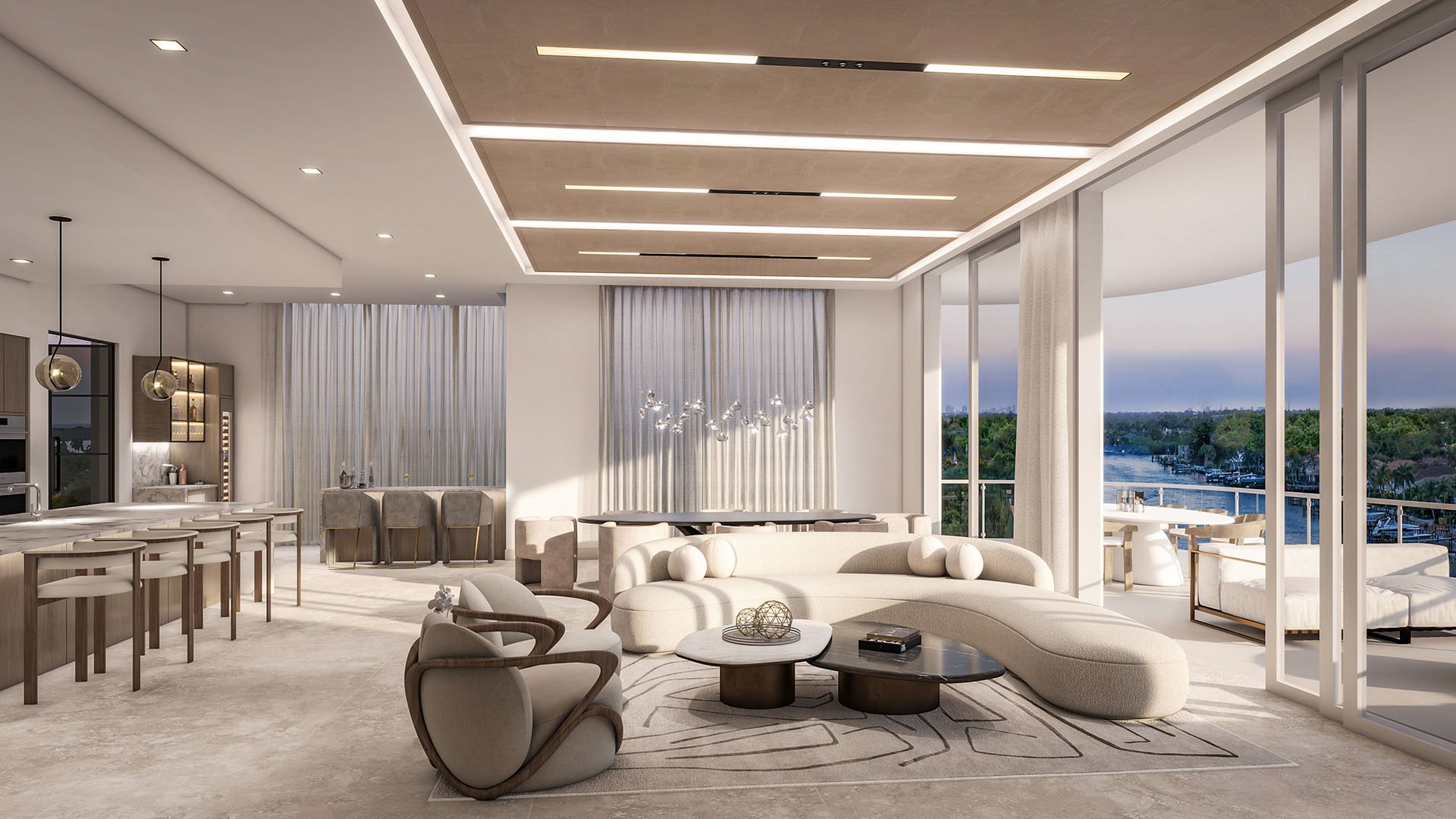
A beautifully proportioned terrace can make a waterfront residence feel like a private open-air retreat. The more consequential purchase questions concern what happens between evenings outdoors: who maintains the surfaces, who checks the drains, and who moves the furniture when the owner is elsewhere.
At The Ritz-Carlton Residences® Palm Beach Gardens and The Ritz-Carlton Residences® Sunny Isles, the distinction between outdoor amenities and private-terrace obligations deserves particular attention. A hospitality identity cannot substitute for a written allocation of responsibility. Neither a generous outdoor footprint nor an extensive service offering establishes that terrace cleaning, storm preparation, or repairs are included in recurring charges.
For buyers, the objective is straightforward: understand the outdoor space as precisely as the interior, and document maintenance and storm arrangements before committing.
At 2200 PGA Boulevard, The Ritz-Carlton Residences® Palm Beach Gardens combines expansive terraces with more than 1,000 feet of Intracoastal waterfront. The development comprises 106 residences and a 29-slip private marina. Shared outdoor amenities include an infinity-edge pool with Intracoastal views and full-service cabanas.
Consider those shared amenities separately from the private terrace. One residence configuration pairs 2,875 square feet of interior space with a 524-square-foot terrace. This is a unit-specific example, not a standard for the development. Confirm the dimensions and configuration of the residence under consideration.
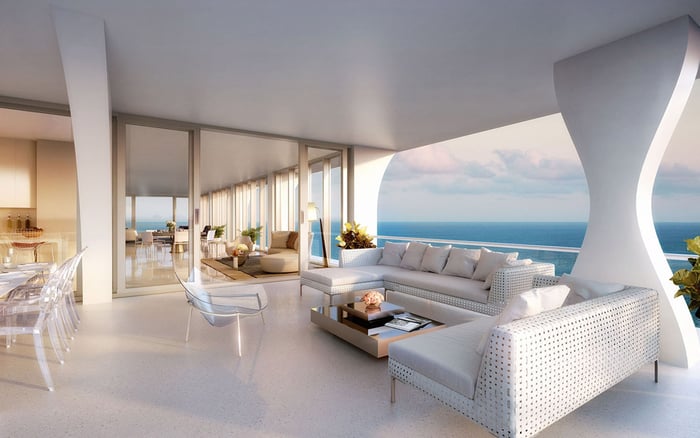
At 15701 Collins Avenue in Sunny Isles Beach, The Ritz-Carlton Residences® Sunny Isles offers an oceanfront setting with cascading terraces and sweeping Atlantic views. Oversized terraces and private pools are features of select residences, not universal provisions.
The Intracoastal and oceanfront settings suit different lifestyle preferences. Neither setting, on its own, establishes which residence is safer in wind. A meaningful assessment requires building-specific engineering information and attention to the actual unit-not a conclusion drawn from the waterway alone.
Before furnishing the terrace, request a written responsibility schedule. It should distinguish routine washing and drain care from work involving waterproofing, tile, sealants, railings, fasteners, and corrosion treatment. Ask who inspects each component, who authorizes work, and who pays.
Do not assume that every item within a privately used outdoor area is the owner's responsibility, or that every exterior component falls within the association's maintenance program. Have the declaration and related documents reviewed for the specific allocation, including any relevant common-element or limited-common-element provisions.
The practical questions matter just as much. Confirm permitted cleaning methods, approved contractors, access procedures, and how to report suspected drainage or waterproofing problems. Ask whether maintenance visits require the owner or a representative to be present.
For the purchase decision, divide anticipated costs into routine care, periodic component work, and storm-related services. Seek written confirmation of what recurring assessments cover and what may be charged separately. Without that distinction, even a service-rich address can leave a buyer uncertain about the cost of maintaining the terrace.
Palm Beach Gardens residences feature floor-to-ceiling, triple-panel, impact-resistant glass doors and windows. This is an important physical specification, not a complete storm-preparation protocol. It does not establish what must happen to furniture, planters, umbrellas, decorative objects, or outdoor electronics.
Nor should that Palm Beach Gardens specification be extended to Sunny Isles. For either purchase, confirm the protection provided at every exterior opening and whether manual preparation is required. Have an appropriately qualified professional address technical questions about the particular residence.
Ask management which restrictions govern terrace furnishings and installations, including proposed anchoring, screens, and attachments. Obtain approval requirements before commissioning custom outdoor pieces. The question is not simply whether a furnishing suits the architecture, but whether its placement and securement comply with the building's written requirements.
A useful hurricane plan should explain who acts, when action is required, and what happens if the owner cannot be reached. Do not presume a terrace-clearing deadline, wind-speed trigger, management-entry right, storage service, or preparation fee at either property. Obtain each applicable provision in writing.
Have management walk through a residence-specific inventory: seating, tables, cushions, planters, umbrellas, electronics, and decorative items. For each category, establish whether removal or another approved securement method is required, who performs it, and where items may be stored. Confirm that a storage solution is permitted before choosing it.
Next, clarify the operational sequence. Ask how notices are delivered, what authorization is needed, whether outside vendors may enter, and what procedure applies if an owner does not respond. Confirm service limitations and charges rather than relying on a general assurance that staff can help.
Finally, address the return to use. Request procedures for post-storm terrace inspections, documenting damage, reporting concerns, and restoring furnishings. Treat preparation and restoration as separate tasks unless the written service arrangement explicitly includes both.
For an absentee owner, the terrace plan should function without a last-minute flight home. Identify a primary representative and a backup, then confirm that access arrangements and authorizations satisfy management's requirements. Establish who can approve charges and how completion will be communicated.
Select Sunny Isles residences raise additional questions. Penthouse configurations include expansive terraces, summer kitchens, private gardens, and infinity pools. For any residence with these features, obtain unit-specific maintenance duties and storm instructions, including responsibility for equipment and post-storm inspections. Do not assume that hospitality services include their care.
Buyers also considering St. Regis® Residences Sunny Isles should apply the same document-first comparison. Compare written obligations and available services, not presumed similarities between branded addresses. This is a purchasing discipline, not a claim that the properties share terrace rules.
Request the current declaration, bylaws, association rules, hurricane plan, terrace-use restrictions, architectural guidelines, and written management protocol. Read them alongside the exact residence plan and any proposed service agreement. Resolve conflicting or ambiguous descriptions before relying on an operational promise.
The strongest terrace purchase is not necessarily the largest. It is the one whose upkeep, permitted use, preparation requirements, and costs fit the owner's life-including the months spent elsewhere.
Explore South Florida residences with a more considered ownership perspective at MILLION.
If branded residences are on your mind — as a home or as an allocation — we would be glad to share what we are seeing, privately.
Begin a quiet conversationPalm Beach Gardens is at 2200 PGA Boulevard, Palm Beach Gardens, Florida. Sunny Isles is at 15701 Collins Avenue, Sunny Isles Beach, Florida.
No, the 524-square-foot terrace is a unit-specific example paired with 2,875 square feet of interior space, not a building-wide standard.
No comparative wind-safety ranking is established here. Buyers should seek building-specific engineering information and a qualified assessment of the particular residence.
Palm Beach Gardens residences feature floor-to-ceiling, triple-panel, impact-resistant glass doors and windows. That specification should not be assumed to apply to Sunny Isles.
It does not establish a complete storm protocol. Confirm the required treatment of terrace furnishings and any manual preparation for exterior openings.
The allocation should be confirmed in the governing documents and written service terms. Review washing, drainage, waterproofing, tile, sealants, railings, fasteners, and corrosion treatment separately.
No property-specific deadline or wind-speed trigger is established here. Obtain the current hurricane plan and written instructions from the relevant management team.
Do not assume that service or entry authority is available. Confirm authorization, access, storage, charges, and nonresponse procedures in writing.
No. Private pools are features of select residences; confirm the exact configuration and associated responsibilities for the unit being purchased.
Request the declaration, bylaws, current rules, hurricane plan, terrace-use restrictions, architectural guidelines, and written management protocol. Review these alongside the residence plan and any service agreement.