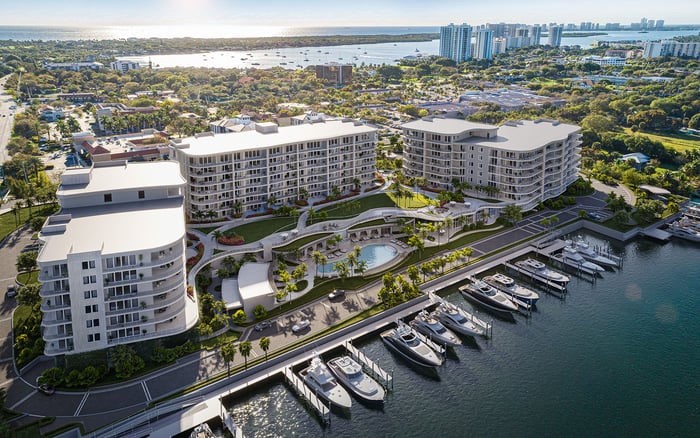
Palm Beach County waterfront buyers can evaluate condominium governance by examining association records, reserve planning, engineering materials, assessments and capital priorities. This guide offers a consistent due-diligence framework without ranking individual residences or presuming their financial strength.

For Palm Beach County buyers, architecture, water views and service are only part of the condominium evaluation. Association finances, disclosure practices and capital planning also deserve close attention. A disciplined review asks what work may be contemplated, how priorities are established and how the association expects owners to fund its decisions.
No public-facing presentation can establish the quality of an association's finances. Buyers should rely on current documents, professional advice and direct answers from the appropriate association representatives rather than branding or appearance alone.
Request the association materials available for buyer review, which may include budgets, reserve schedules, financial statements, engineering materials, assessment records and relevant meeting minutes. Read the documents together: a budget without the related capital plan, or an engineering item without the board's funding response, may provide an incomplete picture.
Compare planned reserve contributions with identified projects and ask how any gap would be addressed. Regular assessments, special assessments and association borrowing can affect owners differently, so the proposed funding structure should be evaluated alongside the expected timing of work.
This approach can be used when considering West Palm Beach residences such as Alba West Palm Beach and Forté on Flagler West Palm Beach. These links identify projects for consideration and do not represent conclusions about association finances.
A useful review connects available engineering materials with the association's projected work, budget assumptions and funding decisions. Buyers can ask whether anticipated projects have defined scopes, schedules and payment strategies, and whether meeting minutes explain material changes.
Waterfront buyers may also ask how the association evaluates exterior and water-adjacent components, without assuming that every property faces the same conditions or obligations. The goal is to understand the building-specific record rather than apply a generalized conclusion.
The same questions remain relevant when reviewing newer options such as The Ritz-Carlton Residences® West Palm Beach. Buyers should examine the documents applicable to the specific residence, including available budget assumptions, warranties and governance materials.
There is no basis here to rank individual Palm Beach County waterfront residences by reserve strength or disclosure quality. A more defensible method is to apply one review matrix to every candidate. Useful categories include document availability, reserve planning, anticipated work, assessment history, association debt and the clarity of board communications.
Monthly charges should not be interpreted in isolation. Buyers can separate routine operating expenses from planned capital obligations and ask whether the available records explain how each category is funded.
Apply the same framework to Boca Raton opportunities such as Glass House Boca Raton and northern Palm Beach County choices including The Ritz-Carlton Residences® Palm Beach Gardens. Each property requires independent verification; inclusion here is not an endorsement of reserve strength or governance.
Before making an offer, consider how different funding outcomes would affect the anticipated cost of ownership. Scenario planning can include changes to regular assessments, a possible special assessment, association borrowing and the timing of planned work. These are analytical scenarios, not predictions about a particular building.
Buyers can also ask whether unresolved projects or unclear funding decisions could influence their ownership plans. The appropriate conclusion should come from current property-specific records and advice from qualified professionals.
For a substantial acquisition, consider coordinated review by Florida legal, accounting and engineering professionals. Counsel can interpret governing documents and applicable obligations, an accountant can review budgets and financial assumptions, and an engineer can explain technical materials within the scope of an engagement.
The objective is not to find a residence that will never require capital. It is to understand whether the available records present anticipated needs and funding decisions clearly enough for an informed purchase decision.
What should begin an HOA financial review? Start with the association records available to the buyer and identify any missing documents or unanswered questions.
Which records should a waterfront buyer request? Ask for available budgets, reserve schedules, financial statements, engineering materials, assessment records and relevant meeting minutes.
Does document availability prove financial strength? No. The documents still require review for consistency, completeness and alignment between anticipated work and funding.
Why compare reserve planning with the budget? The comparison helps a buyer understand whether planned contributions correspond with identified capital priorities.
Why does the proposed funding method matter? Regular assessments, special assessments and borrowing can create different timing and cost considerations for owners.
Are lower monthly charges always better? Not necessarily. Buyers should determine what the charges cover and whether separate capital obligations are contemplated.
How should buyers compare multiple residences? Use the same review categories for each candidate and avoid treating branding, amenities or appearance as evidence of financial strength.
Do newer residences require financial due diligence? Yes. Buyers should review the property-specific budget, applicable warranties, governance materials and available capital assumptions.
What can indicate a need for deeper review? Missing records, unexplained funding gaps, unclear project scopes or inconsistent board communications merit additional questions.
Who can assist with association due diligence? Florida legal, accounting and engineering professionals can review documents within their respective areas of expertise.
When you're ready to tour or underwrite the options, connect with MILLION.
If branded residences are on your mind — as a home or as an allocation — we would be glad to share what we are seeing, privately.
Begin a quiet conversation