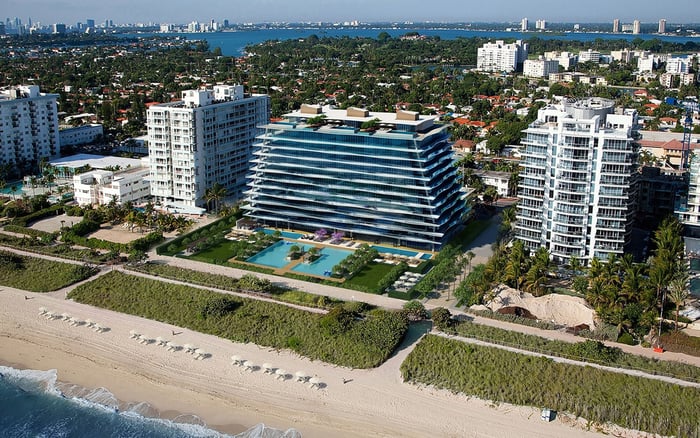
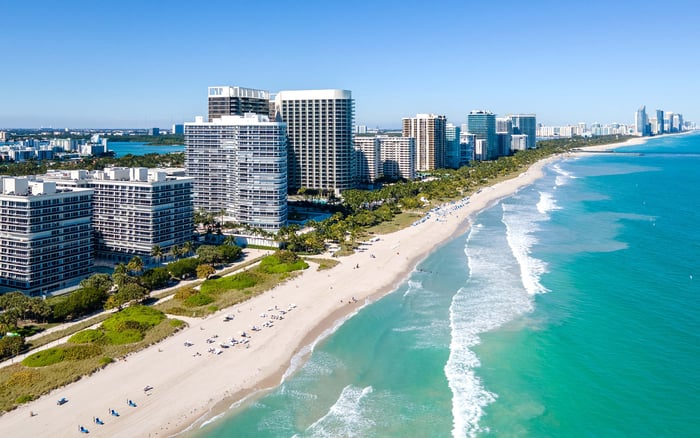
A buyer-focused ranking of Surfside waterfront residences, led by The Surf Club Four Seasons, with a disciplined framework for evaluating reserves, insurance, engineering obligations, assessments and association governance.

Surfside combines intimate scale, Atlantic frontage and globally recognized residential design. Yet for buyers evaluating Waterfront property, the most consequential luxury may be less visible: an association equipped to fund operations, maintain the structure and meet future obligations without financial disruption.
A reserve balance alone does not establish that strength. It must be weighed against anticipated repairs, insurance costs, inspection findings and other capital commitments. Physical condition matters equally, as deferred work can ultimately translate into higher dues or a special assessment.
For readers of MILLION's Buyer's Guides, the essential principle is simple: compare buildings individually rather than through a town-wide average, and treat every conclusion as provisional until current association records have been reviewed.
1. The Surf Club Four Seasons Surfside: strongest documented candidate
The Surf Club Four Seasons ranks first based on its 2025 profile as a “fortress asset,” with virtually no turnover and no assessments. That profile suggests ownership stability, but it does not replace a review of the current budget, reserves, insurance and engineering files.
Recurring costs also merit attention. HOA fees of approximately $3.78 per square foot illustrate that a strong ownership profile can coexist with substantial monthly expenses.
2. Ocean88: clearest direct association-research starting point
Ocean88 offers a direct starting point for building-specific association research. Even so, its strength can be determined only through current financial, insurance, engineering and governance materials.
3. Solimar: useful foundation for building-level comparables
Solimar offers sale and rental inventory that can help establish property-specific comparables. These are more useful than broad Surfside averages when evaluating carrying costs, pricing and the market's response to a building's financial position.
A disciplined search should extend beyond the initial ranking. Buyers can place The Surf Club Four Seasons Surfside alongside other approved Surfside choices, then request equivalent documents for each building rather than assume design prestige signals association strength.
For a wider comparison, Arte Surfside, Fendi Château Residences Surfside and Ocean House Surfside can each be added to the review set. Their inclusion is not a financial endorsement; it enables buyers to compare distinct residential propositions through the same reserve, insurance, engineering and governance lens.
A well-funded account can still prove inadequate if significant repairs, insurance increases or inspection-related work are approaching. Conversely, a smaller balance may require context about recently completed capital projects and the association's funding plan.
Reserve analysis should therefore be matched line by line with engineering findings, repair schedules and inspection or recertification timelines. Buyers should identify which projects are funded, which remain under discussion and whether current dues appear sufficient for the stated plan.
Special-assessment history adds another layer. Repeated assessments may indicate that routine dues and reserves have not fully covered the building's needs. An absence of assessments is encouraging, but it never substitutes for current documentation.
Before contract deadlines expire, request the current budget, recent financial statements, reserve analysis, insurance summary, governing documents, engineering reports and board-meeting minutes. A review of 12 to 24 months of minutes can expose projects, disputes, bids or funding decisions that a year-end balance alone will not explain.
Insurance warrants separate scrutiny. Confirm what the association insures, the applicable limits and deductibles, and what must be covered through the owner's individual policy. Flood exposure should also be investigated for the specific property address rather than inferred from Surfside as a whole.
For a Resale purchase, ask whether any assessment has been approved, discussed, deferred or paid in installments. The contract should clearly address responsibility for existing obligations, while qualified legal, engineering and insurance professionals evaluate the underlying materials.
A polished amenity program has value only when its cost structure is understood. Compare monthly charges with staffing, insurance, maintenance requirements and the services residents actually receive. High dues are not inherently negative, just as low dues are not inherently efficient.
The more useful question is whether association spending appears appropriate and sustainable for the building's physical condition and service level. That relationship shapes both the ownership experience and long-term marketability.
What does a strong condominium reserve mean? It means available funds are credible in relation to expected repairs, insurance costs, inspection findings and other capital obligations.
Is the largest reserve balance always best? No. The balance must be measured against the building's condition, upcoming work and formal funding plan.
Which Surfside residence leads this shortlist? The Surf Club Four Seasons leads based on its documented ownership profile and assessment history, subject to review of current files.
Does a history of no assessments prove financial strength? No. It is encouraging, but current budgets, reserves, engineering obligations and insurance costs remain decisive.
Which financial records should buyers request? Request the current budget, recent financial statements, reserve analysis and disclosures concerning assessments or capital projects.
Why are board minutes important? Minutes can reveal contemplated repairs, bids, disputes and funding decisions that may not be apparent in headline financial figures.
How much meeting history should be reviewed? A practical request is 12 to 24 months of board-meeting minutes, together with the latest available financial and engineering records.
How should insurance be evaluated? Confirm the association's coverage, limits and deductibles, then identify the protection required under the owner's policy.
Should flood exposure be assessed town-wide? No. Investigate flood exposure at the specific property address and coordinate the findings with appropriate insurance advice.
Are lower monthly dues necessarily preferable? No. Dues should be judged against amenities, staffing, insurance, maintenance and the adequacy of reserve funding.
When you're ready to tour or underwrite the options, connect with MILLION.
If branded residences are on your mind — as a home or as an allocation — we would be glad to share what we are seeing, privately.
Begin a quiet conversation