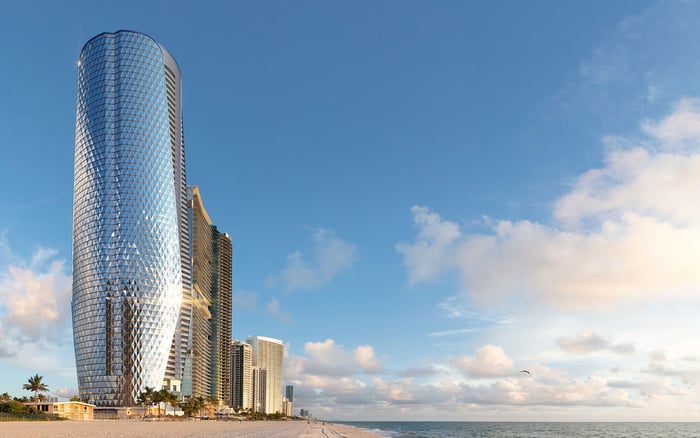
A buyer-focused guide to evaluating South Florida penthouses through residence density, circulation, amenity use, access control, and privacy-oriented due diligence.

A penthouse can offer elevation and outdoor space without delivering a consistently private ownership experience. Buyers focused on discretion should examine the entire path from arrival to residence, including access control, elevator circulation, service routes, guest procedures, parking, deliveries, and the use of shared amenities.
Low residence density can be an important starting point, but total unit count alone does not settle the question. A buyer should also consider how many homes share each floor, whether elevator lobbies are shared, how residences are arranged, and whether common spaces are appropriately planned for their expected users.
The strongest candidates for privacy-oriented buyers are properties that perform well across several categories rather than relying on a single headline feature. This framework can be applied throughout Miami-Dade, Broward, and Palm Beach counties.
1. Boutique residential buildings
A smaller residential community may reduce routine traffic in lobbies, elevators, and amenity areas. Buyers should still verify floor-by-floor layouts, staffing patterns, guest access, and whether the building's common spaces suit the resident population.
2. Penthouses with controlled circulation
Private or limited-access elevator arrangements can create separation between the residence and shared corridors. The practical value depends on how owners, guests, staff, and deliveries move through the property, so circulation plans and operating procedures deserve equal attention.
3. Homes with limited shared exposure
Layouts with fewer adjoining residences may appeal to buyers concerned about noise and visual separation. Floor plans should be reviewed carefully because building scale does not necessarily reveal the number of shared walls or proximity to service areas.
4. Properties with well-distributed amenities
Amenity crowding depends on capacity, location, operating rules, and the number of eligible users. Pools, lounges, fitness areas, beach facilities, and arrival spaces should be assessed individually rather than treated as a single amenity package.
5. Penthouses that function as private domains
Some buyers may accept a larger residential community when the penthouse itself provides meaningful separation, substantial private outdoor areas, and direct access features. Others may prefer a quieter boutique environment even when the residence offers fewer private amenities.
Branded residences can appeal to buyers who value structured service, staffed operations, and managed arrival experiences. Those benefits should be weighed against building scale, the design of shared spaces, and any interaction with other users.
South Florida buyers comparing branded options can include St. Regis® Residences Sunny Isles, The Ritz-Carlton Residences® Sunny Isles, and Bentley Residences Sunny Isles in their project-specific due diligence. Current plans, availability, policies, services, and penthouse configurations should be confirmed directly before any comparison or purchase decision.
Request current floor plans and identify every residence, elevator lobby, stairwell, mechanical area, and service space adjoining the penthouse. Ask how access credentials work and whether owners, staff, guests, and vendors use separate or overlapping routes.
Review the rules governing guests, deliveries, parking, rentals, pets, renovations, and amenity reservations. These operational details can shape everyday privacy as much as architecture does.
Visit shared spaces at different times when possible. Observe lobby activity, elevator wait patterns, pool and fitness use, noise transfer, valet operations, and the transition between public, resident-only, and private areas.
Finally, verify current availability, association documents, costs, construction or completion status, and residence-specific details with qualified professionals. Marketing language should not replace document review, physical inspection, and project-specific due diligence.
Does a low residence count guarantee privacy? No. Floor layouts, access systems, staffing, guest procedures, and amenity operations also shape the ownership experience.
Why do residences per floor matter? Fewer homes sharing a floor may reduce corridor and elevator-lobby activity, but the actual layout must be reviewed.
Is a private elevator enough to make a penthouse private? Not by itself. Buyers should also examine service access, delivery routes, emergency circulation, and guest procedures.
How should buyers evaluate amenity crowding? Compare each space's capacity and operating rules with the number and type of people permitted to use it.
Can a large building still suit a privacy-focused buyer? Yes. A well-separated penthouse and carefully managed circulation may offset some of the activity associated with a larger community.
Are boutique buildings always quieter? No. Construction, neighboring spaces, staff routes, and operating policies can matter more than overall scale.
What documents should a buyer review? Buyers should examine current association documents, rules, disclosures, floor plans, and other materials recommended by their qualified advisers.
Why should rental policies be checked? Rental rules may influence turnover, guest activity, access procedures, and the character of shared spaces.
Should buyers visit at more than one time of day? When possible, multiple visits can provide a better view of arrival activity, elevator use, amenity demand, and noise conditions.
Must availability and project details be confirmed? Yes. Availability, policies, plans, costs, schedules, and residence-specific features can change and should be verified directly.
To compare the best-fit options with clarity, connect with MILLION.
If branded residences are on your mind — as a home or as an allocation — we would be glad to share what we are seeing, privately.
Begin a quiet conversation