A buyer-focused due-diligence framework for comparing North Bay Village residences through elevator privacy, visitor controls, service circulation, staffing, and day-to-day discretion.
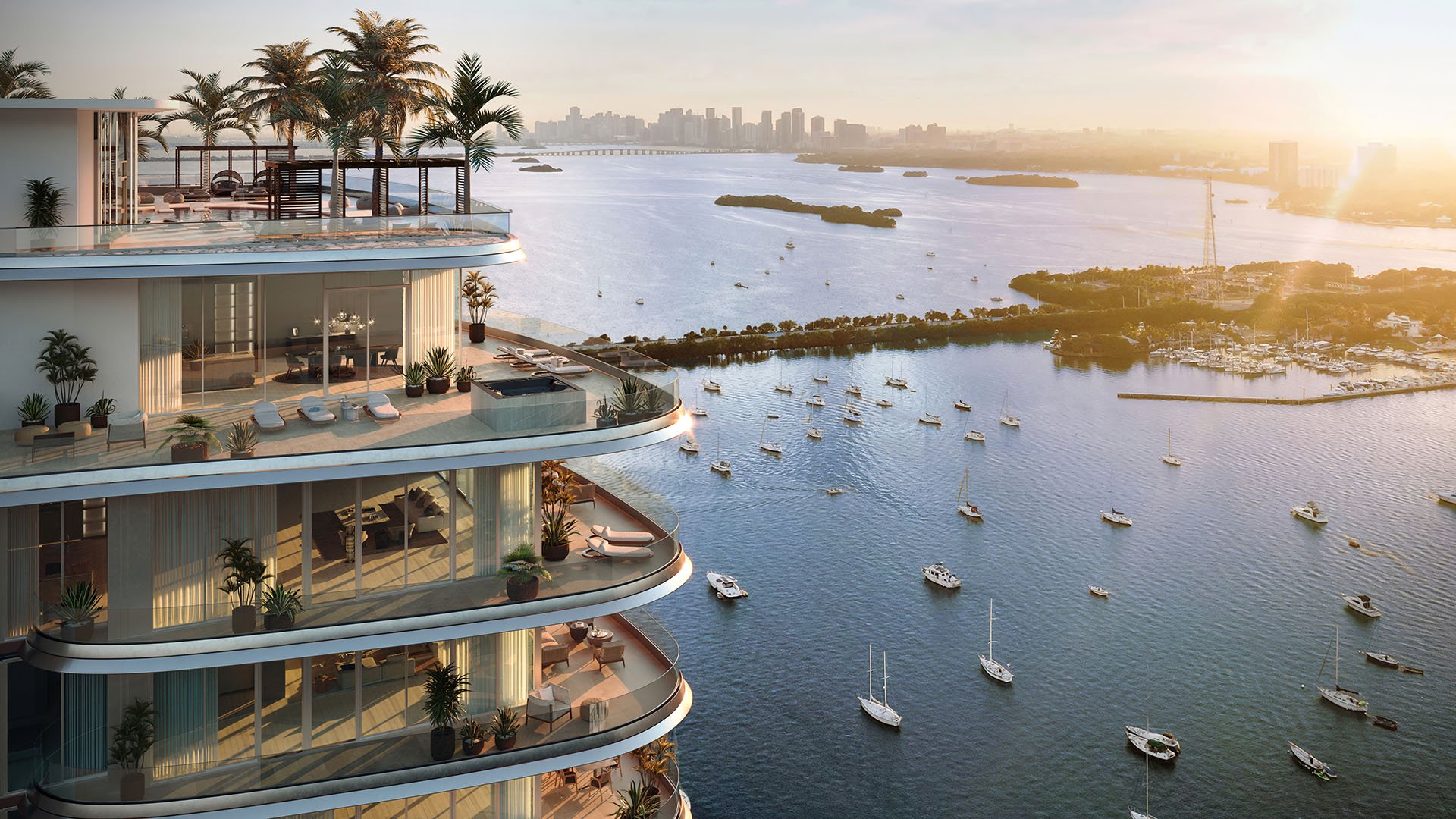
For buyers evaluating an ultra-premium North Bay Village condominium, discretion is not a single amenity. It is the complete sequence connecting the property entrance, parking or drop-off area, lobby, elevator, residential threshold, and service routes.
A residence described as having private elevator access may still involve shared spaces elsewhere in that sequence. Visitor authorization, valet handoffs, package handling, vendor entry, household-staff access, and emergency procedures can materially shape the experience. Buyers should therefore test how architecture, technology, and staffing work together rather than treating one headline feature as a complete privacy solution.
The most discreet residence is supported by an equally considered arrival sequence.
The North Bay Village shortlist in this guide includes Pagani Residences, Tula Residences, and the planned condominium at 8000 East Drive. Because designs, operating plans, and proposed services can evolve, the comparison should begin with questions and current documentation rather than assumptions.
Private-elevator terminology can describe different arrangements. An elevator might open directly into a residence, serve a limited group of homes, use controlled floor permissions, or arrive at a vestibule separated from the principal living area. These configurations are not interchangeable from a privacy or security perspective.
Buyers should request current floor plans and elevator diagrams for every residence under consideration. The review should identify the route from parking to the elevator, whether residents share a cab, how floor access is authorized, where guests wait, and whether service personnel use the same circulation path.
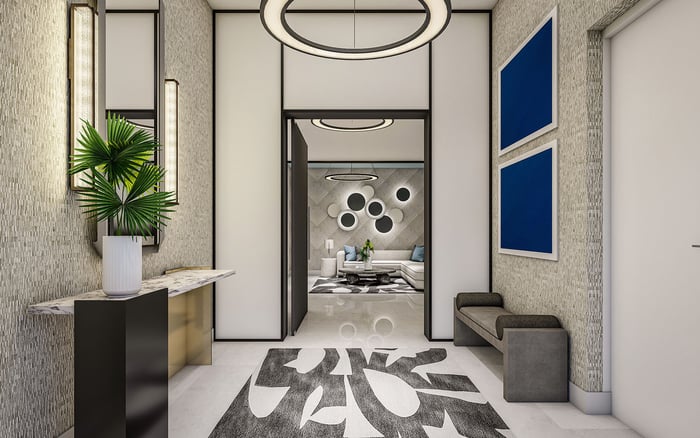
The threshold inside the home also deserves attention. A direct elevator opening should be evaluated for access controls, acoustic separation, visual screening, and the process used when a guest arrives unexpectedly. A private vestibule may offer a useful buffer, but its practical value depends on who can reach it and how access permissions are managed.
Pagani Residences belongs on the shortlist for buyers focused on residence-level elevator privacy. The correct diligence process is to trace every transition from arrival to the home and determine where shared circulation begins or ends.
Buyers should ask for the current elevator configuration, parking connection, guest-entry sequence, delivery route, service access, and emergency override procedure. They should also establish whether credentials are tied to a person, vehicle, device, floor, or time window.
The goal is not merely to confirm the presence of an elevator-related feature. It is to understand the operating protocol around that feature and whether it supports the household’s preferred balance of convenience, hospitality, and discretion.
A review of Tula Residences North Bay Village should focus on how the building’s circulation and service plan support a quiet residential experience. Building scale can influence the frequency of shared encounters, but it does not by itself establish privacy.
Request details about resident and guest elevators, lobby sightlines, parking access, package storage, loading activity, and any separation between residential and service circulation. Buyers should also clarify how access is handled for recurring household staff, private chefs, drivers, security personnel, and contractors.
The key question is whether the operating model can accommodate legitimate access without creating unnecessary exposure or requiring constant intervention by the owner.
For the planned condominium at 8000 East Drive, buyers should compare proposed access, parking, elevator, staffing, and service components as one connected system. Plans should be reviewed at the residence level and at the building level because a sophisticated feature can still depend on shared transition points.
Ask how residents move from a vehicle to the appropriate elevator, where visitors are received, and how staff monitor access outside regular business hours. The buyer’s team should also examine service entrances, loading arrangements, freight circulation, package procedures, and any proposed marina-related arrival process that may be relevant to the household.
Proposed technology should be assessed alongside human oversight. Buyers should establish who administers permissions, how credentials are revoked, what happens during an outage, and which personnel can approve an exception.
Access control should be evaluated by both technical capability and written policy. A polished interface does not explain who can create credentials, how long permissions remain active, whether residents can authorize entry remotely, or how repeat visitors are distinguished from one-time guests.
A useful review covers guest invitations, vendor scheduling, household employees, deliveries, private events, and emergency access. Buyers should ask whether permissions can be limited by date, time, destination, or entrance and whether the system records access activity.
Data handling also matters. If a property proposes app-based credentials, vehicle recognition, biometric tools, or other identification technology, buyers should request the applicable privacy and retention policies. No particular technology should be attributed to a residence without current project documentation.
Concierge, valet, security, and management personnel can strengthen privacy when their roles are clearly defined. Their presence alone, however, does not answer how luggage, packages, food deliveries, maintenance visits, or private-event vendors move through the building.
Buyers should request the proposed staffing structure and ask which team handles each stage of an arrival. The review should cover after-hours procedures, package notifications, key custody, guest verification, incident escalation, and coordination between valet, front desk, security, and residential management.
Households with recurring staff should test whether the credential system offers appropriate flexibility. A discreet operating model should permit authorized access while maintaining an auditable boundary between residents, guests, vendors, and building personnel.
A broader tour can make differences in circulation and hospitality easier to recognize. In addition to the principal shortlist, buyers can review Continuum Club & Residences North Bay Village and Shoma Bay North Bay Village using the same evaluation criteria.
During each visit, repeat an identical exercise: follow the resident arrival route, identify where a guest waits, ask how a delivery reaches the home, and locate the service path. Consistency makes it easier to compare properties without being distracted by presentation differences.
Photographs and marketing materials can help buyers understand design intent, but they should not replace current plans, written policies, or direct confirmation from the appropriate project representatives.
Before selecting a residence, buyers should request the latest available floor plans, elevator diagrams, parking plans, access-control descriptions, staffing proposals, service-circulation plans, and governing documents. Counsel and other qualified advisers can help evaluate the materials relevant to a specific purchase.
The review should answer several practical questions: where privacy begins, which spaces remain shared, who can grant access, how exceptions are handled, and what happens when technology or staffing is unavailable. It should also distinguish a currently documented feature from a proposed concept or general marketing description.
The strongest choice will depend on household routines. Some buyers may prioritize a direct residential threshold, while others may place greater weight on staff coordination, controlled guest entry, parking connectivity, or separation of service traffic. The right comparison is the one built around the owner’s actual pattern of use.
For a confidential discussion of North Bay Village residences and private touring priorities, connect with MILLION.
If branded residences are on your mind — as a home or as an allocation — we would be glad to share what we are seeing, privately.
Begin a quiet conversationConfirm where the elevator begins and ends, who shares it, how floor permissions work, and whether it opens into a residence or vestibule.
No. Parking, lobby exposure, guest handling, and service circulation also shape the arrival experience.
Ask who can issue credentials, whether permissions can expire, and how guests are verified at each entry point.
Review where deliveries are received, stored, screened, and transferred to the residence.
Separate or carefully managed service circulation can reduce unnecessary interaction between residents, vendors, and deliveries.
Request the proposed roles, coverage procedures, after-hours protocols, and escalation responsibilities for concierge, valet, security, and management.
No. Buyers should verify capabilities, policies, and limitations through current project documentation.
Ask whether recurring staff can receive controlled credentials with defined times, destinations, and revocation procedures.
Current floor plans, elevator diagrams, parking plans, access policies, staffing materials, and governing documents can clarify the operating model.
Use the same arrival, guest, delivery, staffing, and emergency-access questions during every project review.