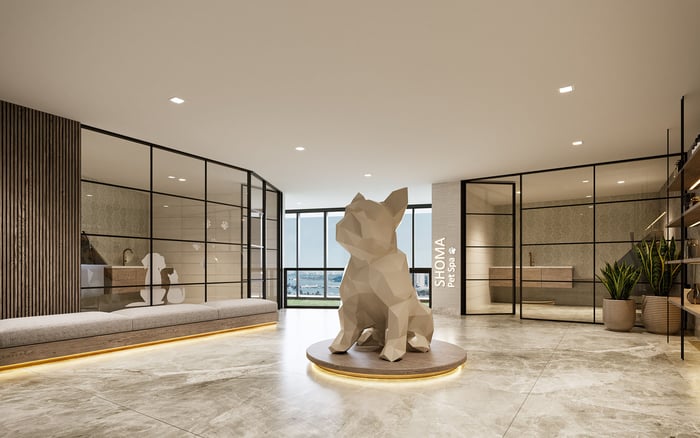
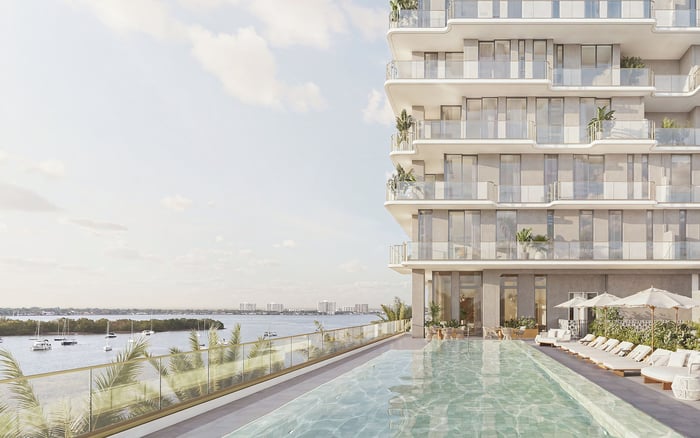
A disciplined 2026 buyer’s guide to evaluating North Bay Village residences through pet policy, service depth, governance, and daily ownership fit.

For a luxury buyer with a dog or other companion animal, “pet-friendly” should mean more than permission. The true test is whether a residence supports a calm, discreet daily routine while inspiring confidence in building operations. That requires close attention to governing documents, access protocols, staffing, cleaning standards, insurance requirements, and the practical journey from residence to street.
This distinction is especially important for 2026 buyers considering North Bay Village. Pets shape how a home performs every day, while service depth determines whether small needs are handled consistently or returned to the owner. The most persuasive proposition combines clear rules, responsive management, privacy, and an ownership structure that remains legible after closing.
Waterfront appeal and lifestyle imagery may frame the initial search, but neither replaces documentary review. Buyers should treat every pet-related promise as a point to confirm in writing, then examine how the building’s service model performs during regular hours, weekends, arrivals, deliveries, and unexpected situations.
This ranking orders four North Bay Village ownership candidates by their relevance to a service-and-pet diligence conversation. It is a buyer’s sequence for investigation, not a substitute for current condominium documents, written pet rules, budgets, or management confirmation.
1. Continuum Club & Residences North Bay Village - service-first diligence candidate
Its name places club and residential concepts together, making it a natural first stop for buyers focused on service depth. The essential task is to establish, in writing, which services fall within residential operations, how they are staffed, and which costs are recurring or usage-based.
2. Shoma Bay North Bay Village - daily-routine diligence candidate
Shoma Bay merits close consideration through the lens of everyday ownership. Pet households should test the complete route from private residence to exterior access, then verify restrictions, registration procedures, guest-animal rules, and enforcement standards before committing.
3. Pagani North Bay Village - branded-ownership diligence candidate
Pagani North Bay Village invites careful examination of how identity translates into residential operations. Buyers should separate design language from binding service obligations and confirm whether the management framework aligns with their expectations for privacy, assistance, and pet-related routines.
4. Tula Residences North Bay Village - governance-focused diligence candidate
Tula Residences belongs on the shortlist for a document-led comparison. The priority is clarity: current pet provisions, owner responsibilities, common-area controls, staffing scope, financial obligations, and the procedures available when operational questions arise.
A serious review begins with the declaration, bylaws, rules, purchase agreement, and any available management guidance. Buyers evaluating Shoma Bay North Bay Village should request the current language governing number, type, size, registration, vaccination records, liability, common-area movement, noise, guests, and remedies for violations.
The distinction between a household pet and an assistance animal also warrants qualified legal guidance. Buyers should not assume that marketing language, an informal conversation, or another resident’s experience defines their own rights. Written documents and applicable law control the analysis.
Physical circulation matters as much as permission. During a visit, walk the route at the time of day you expect to use it. Observe door sequencing, elevator access, waiting areas, flooring, weather exposure, and the distance involved in an appropriate exterior relief routine. Even the most elegant arrival can feel cumbersome if the everyday path lacks discretion.
Service depth is an operating question. At Continuum Club & Residences North Bay Village, buyers should ask who performs each advertised function, during which hours, under whose supervision, and through what escalation process. The same scrutiny belongs in every luxury-condo comparison.
Ask how management handles deliveries, visitor authorization, maintenance access, after-hours calls, move coordination, package volume, vendor entry, and incidents in common areas. Pet owners should add questions about staff interaction with animals, cleaning response, elevator etiquette, emergency contacts, and whether third-party walkers or caregivers face separate access rules.
A long amenity menu does not necessarily signal a deep service culture. More revealing indicators include clearly assigned responsibilities, documented procedures, consistent communication, and transparent charges. Buyers should also determine whether concierge-style assistance is included, billed separately, subject to availability, or provided by an outside operator.
Luxury service has a financial architecture. When assessing Pagani North Bay Village, review the projected or current budget alongside the service proposition. Identify staffing assumptions, reserves, insurance structure, management costs, shared expenses, and owner-paid services outside regular assessments.
Governance deserves equal weight. Ask how rules can change, who approves operating policies, how owners receive notices, and which process applies to disputes or repeated violations. Pet households should be particularly attentive to language granting broad discretion to a board or manager. Flexibility can support sound operations, but ambiguity can also make future ownership less predictable.
Brand character may distinguish a residence, yet durable value lies in executed documents and reliable operations. A sophisticated buyer considers the promise, contractual framework, budget, and lived routine as separate layers, then looks for alignment among them.
Before choosing, prepare a one-page ownership brief covering the animal’s profile, daily schedule, caregiver access, travel patterns, vehicle routine, preferred level of privacy, and expected service use. Apply the same brief during a visit to Tula Residences North Bay Village and every competing property. Consistent questions make meaningful differences easier to identify.
The best residence is not simply the one that permits a pet or presents the longest list of conveniences. It is the one whose documents, circulation, staffing, costs, and culture support the household without friction. Written confirmation from the appropriate parties should precede any final decision, particularly when an animal’s size, number, classification, or care arrangements could affect eligibility.
What does pet-friendly luxury ownership mean? It means written pet permission supported by practical circulation, clear procedures, responsible management, and predictable owner obligations.
Are pet policies permanent? Not necessarily. Buyers should review how rules may be amended and seek qualified advice on the controlling documents.
Which pet restrictions should buyers verify? Confirm limits involving number, type, size, registration, records, common areas, guests, noise, liability, and enforcement.
Why does elevator access matter to pet owners? Elevator routing affects privacy and daily convenience. Buyers should verify whether specific elevators, entrances, or protocols apply.
What is service depth in a luxury condo? It is the building’s capacity to provide clearly defined assistance consistently, with accountable staffing, hours, procedures, and escalation.
Should buyers rely on an amenity list? No. Amenities should be evaluated alongside staffing, operating costs, access rules, maintenance responsibilities, and actual service terms.
How should recurring costs be reviewed? Separate regular assessments from usage fees, owner-paid services, deposits, registration charges, and other potential obligations.
Can a pet walker or caregiver enter the building? Access depends on current building rules. Confirm authorization, identification, key control, elevator use, and scheduling requirements in writing.
What should happen during a property tour? Walk the complete daily pet route, inspect access points, and ask operational questions rather than viewing only residences and amenities.
When should legal and condominium documents be reviewed? Review them before the relevant contractual deadlines, with qualified legal and financial professionals advising on the buyer’s circumstances.
For a confidential assessment and a building-by-building shortlist, connect with MILLION.
If branded residences are on your mind — as a home or as an allocation — we would be glad to share what we are seeing, privately.
Begin a quiet conversation