Miami buyers seeking control over parking and EV charging should distinguish self-parking from valet access, and assigned spaces from deeded rights. Three leading candidates offer credible alternatives to valet-only living, but condominium documents remain decisive.
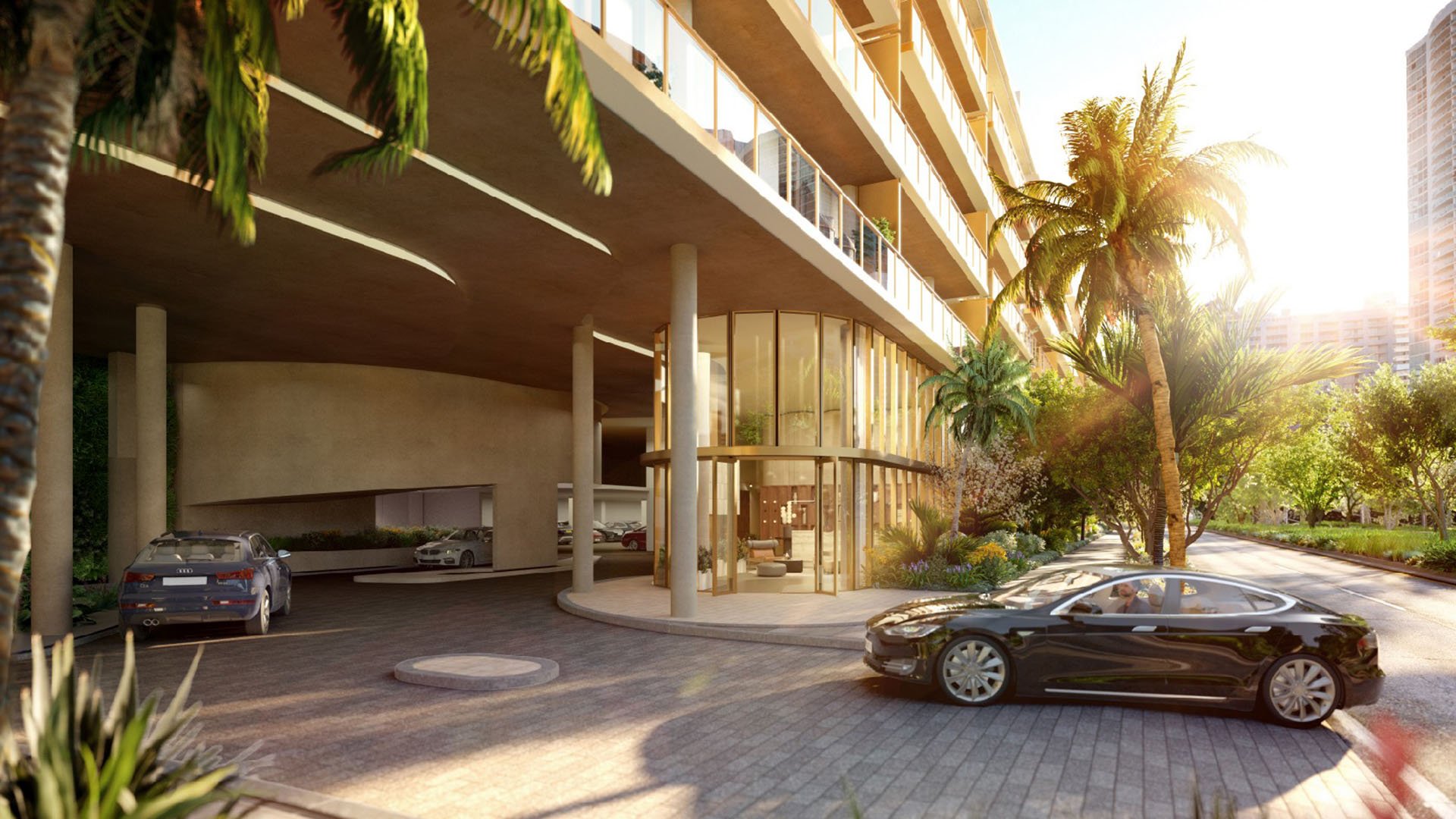
For Miami condominium buyers, the garage is no longer a secondary amenity. Owners who drive daily, keep collectible cars or charge electric vehicles may value direct, predictable access as highly as private elevators or expansive terraces. Even the most polished arrival experience loses some of its appeal when every departure depends on a valet queue.
The critical distinction is both legal and operational. A space may be deeded, appurtenant to a residence, assigned by the association, licensed to an owner or accessible only through valet. These structures do not confer equal control. Even sophisticated new-construction marketing may state that parking is included without clarifying whether the association can relocate the space or revise access rules.
Three projects merit close consideration: Aston Martin Residences Downtown Miami, 2200 Brickell and Viceroy Brickell. Each presents a different path toward reduced valet dependence, yet available project information does not conclusively establish universally deeded parking at any of them.
The condominium documents, not the amenity language, define an owner's parking rights.
1. Aston Martin Residences: explicit covered-garage self-parking
Aston Martin Residences stands out for an amenity program that includes covered-garage self-parking alongside 24-hour valet service. This dual arrangement means resident parking is not presented as strictly valet-only, potentially giving owners meaningful independence in everyday arrivals and departures.
The building also advertises valet charging stations for electric cars. That qualification matters: charging appears to remain valet-managed, so self-parking does not necessarily provide private control of an EV charger. Buyers should verify station availability, queuing protocols, billing and whether charging can be requested without surrendering broader control of the vehicle.
2. 2200 Brickell: assigned parking with direct residential access
At 2200 Brickell, pre-construction details include one assigned parking space, valet service, EV charging and above-ground parking with direct access to residences on the same level. This combination is particularly compelling for owners seeking a low-friction route between car and home. An assigned space with direct access should reduce routine dependence on valet service.
Assignment, however, is not synonymous with title. The declaration, parking exhibits and purchase-contract rider should establish whether the space is deeded, appurtenant or revocably assigned. Buyers should also confirm whether the association can relocate the space and whether the adjacent electrical infrastructure could support a future private Level 2 installation.
3. Viceroy Residences Brickell: an assigned-parking option with EV stations
Viceroy Residences Brickell lists “valet or assigned” parking and electric-vehicle charging stations among its services. That language suggests a potentially useful alternative to a purely valet-operated garage, especially for residents who value spontaneous access to their vehicles.
It does not establish that every residence receives an assigned space or that any space is legally deeded. Contract-stage confirmation is therefore essential. Buyers should identify which residences qualify, how assignments are documented and whether charging stations are dedicated, shared, reservable or operated by valet personnel.
An exclusively designated parking space may provide a more practical basis for a private charger than a valet-only arrangement, subject to the condominium documents, building requirements and available electrical capacity. Buyers should determine who is responsible for equipment, installation, electricity, operation, maintenance, repair and eventual removal.
In a valet-only building without an exclusively designated parking location, installing and controlling a private charger may be impractical. A protected space with suitable electrical capacity offers greater autonomy than access to a shared station, while valet-managed charging provides convenience with less control.
“EV charging” should never be treated as a complete specification. The term may describe installed equipment, a shared bank of stations, valet charging service or electrical readiness without a charger at the owner's space. Buyers should request details on equipment type, access procedures, billing methods, power allocation and any reservation or idle-time rules.
Valet service remains desirable when it is an option rather than a requirement. It can simplify guest arrivals, bad-weather handoffs and occasional charging requests. A managed charging system may operate smoothly, but it places timing and vehicle handling in the hands of staff.
Self-parking creates a different lifestyle proposition. It allows owners to leave immediately, retrieve belongings privately and retain custody of performance or collector vehicles. In Brickell and Downtown Miami, where residents may make several short trips in a day, that autonomy can be a material quality-of-life advantage.
The ideal arrangement is often hybrid: a protected or reliably assigned resident space, direct garage access and valet service available by choice. Among the three candidates, Aston Martin Residences has the clearest express self-parking language, while 2200 Brickell offers the most specific combination of an assigned space and direct access. Viceroy's “valet or assigned” formulation is promising but warrants especially careful unit-level confirmation.
Begin with the declaration, garage exhibits, purchase agreement and parking rider. These documents should reveal whether the right runs with the residence, whether it can be transferred and whether the association can reassign or relocate the space. Confirm the number of spaces tied to the specific residence rather than relying on a general amenity schedule.
For EV use, ask whether charging is dedicated, shared, reservable, separately metered or controlled by valet. Determine whether the garage has sufficient capacity for future private Level 2 equipment, who approves installation and which insurance or technical conditions apply. If a space is merely assigned, obtain written clarification about whether it is treated as an exclusively designated area for charging purposes.
Amenity language and charging infrastructure do not themselves guarantee a deeded charger or unit-specific access. Buyers should rely on the governing documents and contract terms to understand enforceable parking rights, charging access and operating procedures.
A polished garage should ultimately deliver three things: legal clarity, dependable energy access and freedom of movement. For private guidance on evaluating those details before a Miami condominium purchase, connect with MILLION.
If branded residences are on your mind — as a home or as an allocation — we would be glad to share what we are seeing, privately.
Begin a quiet conversationNo. Available project information does not conclusively establish universally deeded parking, so buyers should review the condominium documents and contract riders.
Aston Martin Residences advertises covered-garage self-parking alongside 24-hour valet service.
Its disclosed charging stations appear to be valet-managed, so buyers should confirm access, timing and billing procedures.
Disclosed details include one assigned space, valet service, EV charging and above-ground parking with direct access to residences on the same level.
No. A space may be assigned rather than deeded or appurtenant to the residence.
It lists “valet or assigned” parking and electric-vehicle charging stations, but does not establish that every residence receives an assigned space.
Buyers should review the declaration, garage exhibits, purchase agreement and any parking rider for the residence.
Buyers should verify responsibility for the equipment, installation, electricity, operation, maintenance, repair and removal in the governing documents.
Without an exclusively designated space, an owner may lack the practical ability to install and control a private charger.
Confirm whether charging is dedicated, shared, reservable, separately metered or valet-managed, and whether the garage can support future Level 2 equipment.