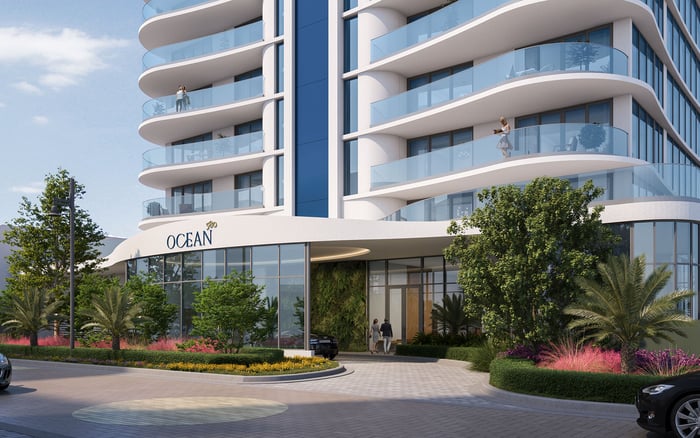
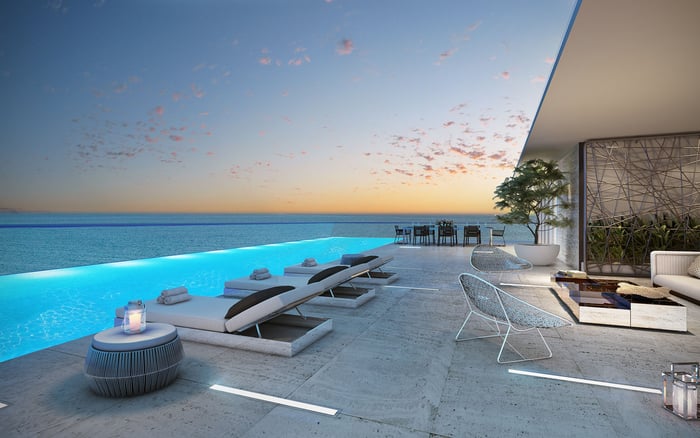
Oceana offers the strongest delivered option in Key Biscayne, while Silver Sands presents a boutique future alternative. For seasonal owners, the decisive questions concern written management authority, post-storm access, emergency-power scope, HVAC recovery, and independent moisture control.
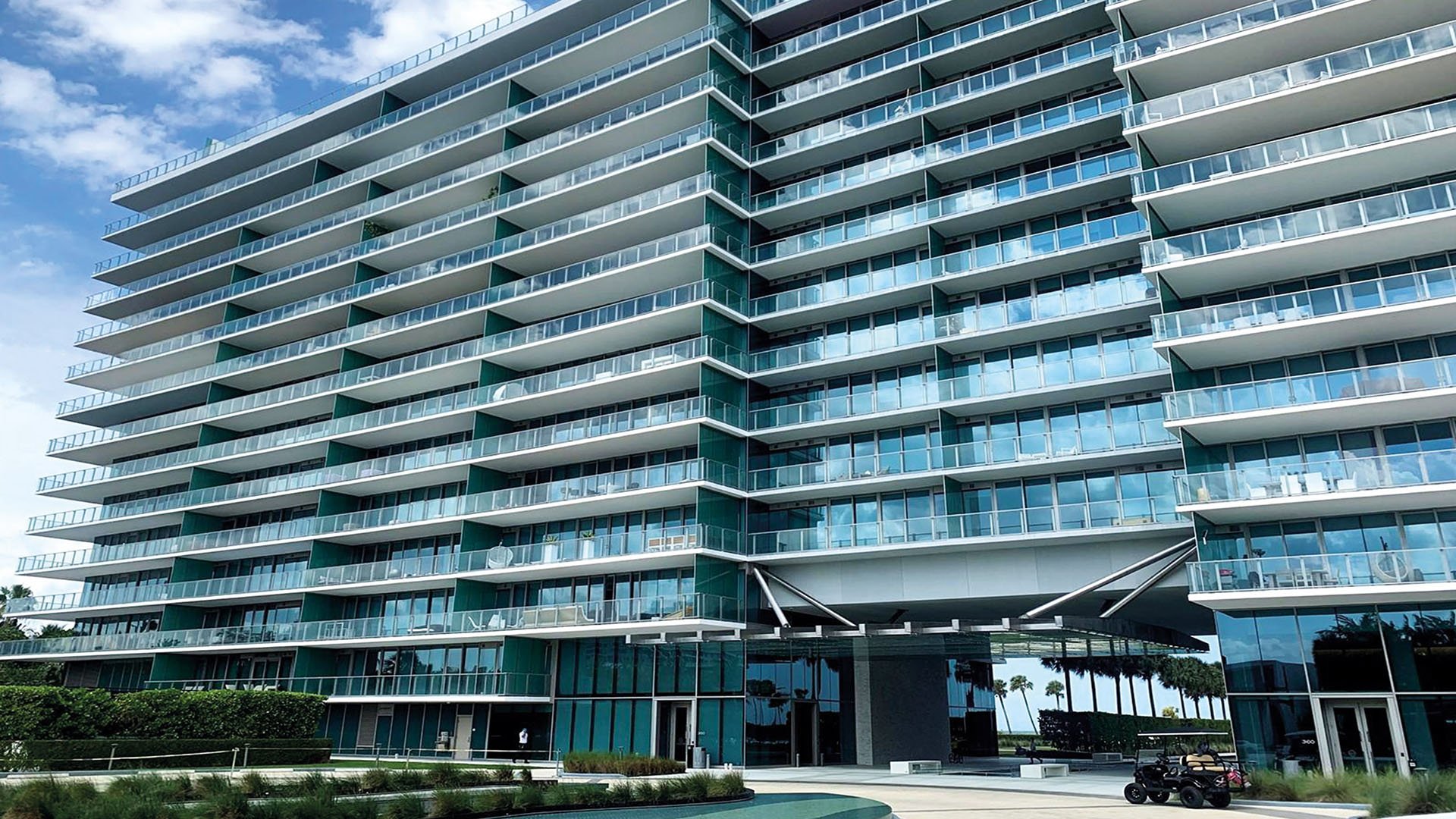
For a seasonal residence in Key Biscayne, luxury is measured as much by what happens in an owner’s absence as by the view upon arrival. Summer heat, persistent moisture, and the practical aftermath of a major storm can expose the difference between an attractive amenity program and a genuinely capable operating platform.
The island’s relevant new-construction field is unusually concentrated. Oceana Key Biscayne is completed and operating, while Silver Sands Residences is a boutique pre-construction proposition planned near 301 Ocean Drive. The comparison is therefore less about a long roster than two distinct forms of certainty: demonstrated operations today versus the prospect of newer systems upon future delivery.
For an absentee owner, the most valuable amenity may be a documented response plan.
Neither project offers enough detail to declare an unconditional winner for hurricane re-entry assistance or whole-residence humidity protection. Those capabilities must be confirmed in writing, with close attention to who may enter a home, which systems remain powered, and how quickly management can respond.
1. Oceana Key Biscayne: the delivered choice
Oceana occupies an oceanfront site at 350 and 360 Ocean Drive, comprising 142 condominium residences and 12 adjacent luxury villas. Homes range from approximately 1,800 to more than 7,500 square feet, making the property relevant to buyers seeking either a substantial primary residence or a large-format seasonal home.
Its principal advantage is operational visibility. The development is complete, occupied, and functioning, allowing a buyer to examine actual management practices rather than rely solely on projected procedures. Pricing has ranged from roughly $3.75 million to more than $12 million, although current availability and asking prices may change.
For buyers seeking move-in-ready ownership without construction-timing risk, Oceana is the clearest choice. That conclusion should not be mistaken for confirmation that every home receives generator-backed air conditioning or dedicated whole-home dehumidification during an outage. Both points still require unit- and building-specific verification.
2. Silver Sands Residences: the future boutique option
Silver Sands is planned for the former Silver Sands site near 301 Ocean Drive. The proposed 56-residence development is by Terra Group and Fortune International Group, with prices starting around $4 million and completion estimated for 2028. Both pricing and timing remain subject to change before delivery.
Approximately four parking spaces per residence have been indicated, a notable expression of the development’s low-density positioning. Yet the operational questions central to this comparison remain open. Detailed, verifiable specifications for post-storm unit access, generator coverage, and dedicated in-unit humidity control have not been established.
Silver Sands may appeal to a buyer willing to accept timing and execution uncertainty in exchange for a forthcoming boutique product. Its resilience value, however, should be assessed through final technical schedules, management documents, and purchase materials rather than broad assurances.
The case for Oceana Key Biscayne rests on delivery, not assumption. An existing building allows counsel and technical advisers to investigate service contracts, staffing procedures, emergency protocols, and the practical reach of management. Owners can also ask how prior summer maintenance issues were handled and whether the association maintains records of humidity alerts, leaks, or HVAC shutdowns.
Key Biscayne also contains substantial legacy inventory. Key Colony IV Botanica, for example, dates to 1981 and contains approximately 291 units. Oceana therefore stands apart as the island’s principal newer, large-scale condominium alternative, even before its operations are measured against a buyer’s precise requirements.
For broader context, buyers may apply the same operational review when considering Oceana Bal Harbour or The Ritz-Carlton Residences® Miami Beach. The point is not to presume equivalent systems, but to compare written responsibilities and infrastructure on consistent terms.
Re-entry should never be reduced to a concierge promise. Access after a storm depends on government clearance, safe roads, building inspections, staffing, and the association’s own procedures. A hurricane sticker system used in Monroe County should not be assumed to apply to Key Biscayne, which is in Miami-Dade County.
The buyer’s central question is what management may do once lawful access resumes. Written documents should specify whether authorized personnel may enter an unoccupied residence, inspect glazing and plumbing, check for water intrusion, reset HVAC equipment, photograph conditions, and engage remediation vendors. Owners should also clarify how keys or digital credentials are held and how consent is documented.
Island-wide resilience matters as well. Coastal planning for Key Biscayne addresses critical infrastructure, structural damage reduction, and evacuation-route protection. A condominium’s private plan must therefore be understood within the broader realities of access and public recovery.
A generator is not a complete answer. Emergency electricity may support life-safety systems while leaving individual HVAC equipment, cooling infrastructure, or selected residential circuits without power. Buyers should request a written schedule of generator-supported loads, including elevators, domestic-water pumps, garage drainage, cooling towers or chillers, access controls, and any electricity reaching residences.
Power, cooling, and dehumidification are distinct capabilities. Hurricane-recovery operations often deploy separate generators, chillers, and dehumidifiers for precisely that reason. If a sales presentation uses the phrase full generator, counsel should determine its technical meaning, how long fuel can be sustained, and whether the promise appears in binding documents.
The same discipline applies when reviewing another island-oriented residence such as Vita at Grove Isle. Project comparisons become more useful when emergency loads, access authority, and moisture response are examined separately rather than folded into a single resilience label.
Humidity protection begins with the mechanical schedule. Buyers should ask whether the residence relies on standard air conditioning for moisture removal or incorporates a dedicated dehumidification method. They should also verify thermostat monitoring, remote alerts, leak sensors, condensate-line safeguards, and the recommended summer humidity setting for an unoccupied home.
Management capability is equally important. Remote data has limited value if no one is authorized to investigate an alert. A strong absentee-owner protocol connects monitoring to a defined response path: access permission, inspection, HVAC service, water extraction, remediation coordination, and documented reporting to the owner.
Large residences deserve particular scrutiny because different exposures and interior zones may behave differently. Buyers should determine whether monitoring covers the entire home and whether a shutdown in any mechanical zone can be identified remotely.
For Oceana, request current operating procedures, emergency-power schedules, management access forms, insurance information, and records defining post-storm inspection services. Confirm whether these services are included, charged separately, or dependent on an outside home-management provider.
For Silver Sands, request the latest technical specifications, proposed management scope, and contract language governing material changes before completion. Focus on what is promised, who is obligated to perform it, and which details may change.
The practical verdict is measured. Oceana is the strongest immediate choice because its building and management can be examined in operation. Silver Sands is the more forward-looking boutique possibility, but its delivery date and resilience details remain prospective. In either case, sophisticated ownership requires written answers on access, power, cooling, and moisture control before design considerations take precedence.
For discreet guidance on Key Biscayne opportunities and operational due diligence, connect with MILLION.
If branded residences are on your mind — as a home or as an allocation — we would be glad to share what we are seeing, privately.
Begin a quiet conversationOceana is the strongest immediate choice because it is completed and operating, allowing buyers to examine actual management practices and building systems.
No. Silver Sands is a planned 56-residence boutique development with an estimated 2028 completion that remains subject to change.
Public information does not establish generator-backed air conditioning for every residence. Buyers should obtain a written schedule of supported systems and circuits.
No such project-wide guarantee is established by the available public details. Dedicated dehumidification and emergency power should be verified separately.
They should confirm whether management may enter, inspect for leaks, reset HVAC equipment, coordinate remediation and provide documented condition reports.
Buyers should review lawful access requirements, building inspection procedures, management authorization, staffing plans and the timing of post-storm unit inspections.
It should not be assumed to apply. Key Biscayne is in Miami-Dade County, and re-entry programs are jurisdiction-specific.
Emergency power, cooling and dehumidification are separate capabilities. A generator may support life-safety equipment without powering residential HVAC or moisture-control systems.
Request HVAC schedules, the dehumidification method, remote thermostat monitoring, leak sensors, condensate safeguards and recommended summer settings.
Oceana comprises 142 condominium residences plus 12 villas, with residences ranging from approximately 1,800 to more than 7,500 square feet.