A discreet buyer’s guide to evaluating Brickell luxury residences through the lens of privacy, arrival flow, lobby calm and residential rhythm.
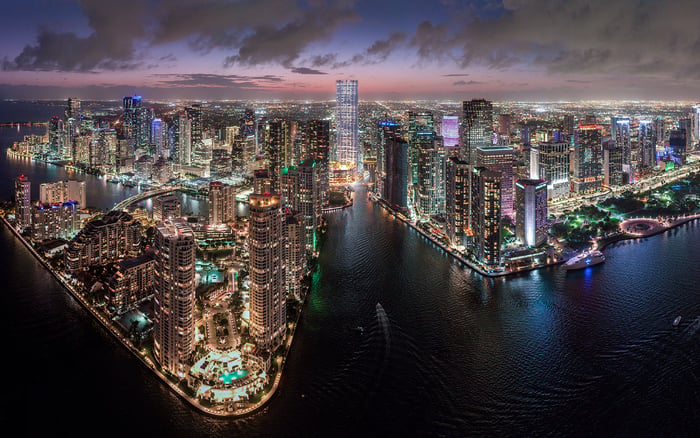
Brickell rewards energy. It is dense, international, walkable and deeply connected to Miami’s financial, dining and cultural circuits. For many luxury buyers, that charge is the appeal. For others, the ideal Brickell residence must deliver access to the district without bringing the feel of a hotel lobby, a restaurant queue or a revolving door of transient visitors into daily life.
That distinction matters for buyers who want Brickell convenience but dislike hotel traffic. The right building is not simply the tallest, newest or most visible. It is the one where arrival, service, guest handling and amenity circulation feel composed. Privacy is not only a matter of square footage. It is choreography.
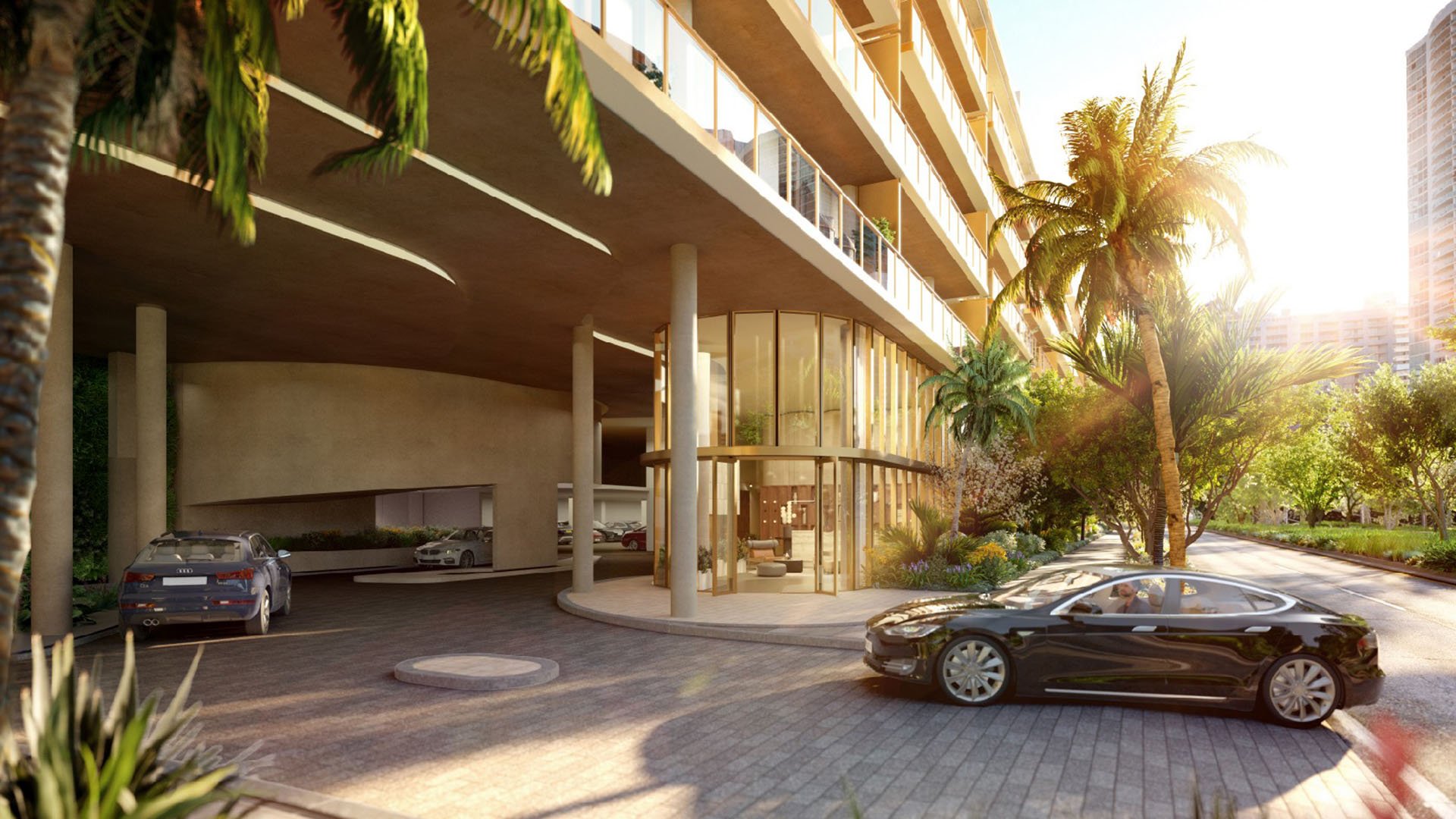
A buyer considering 2200 Brickell should treat the visit as more than a tour of finishes. Watch how cars approach, how staff receive residents, where guests wait and whether the lobby reads as a residential threshold rather than a public room. In Brickell, those small observations often reveal more about livability than a dramatic view ever could.
Buyers often use the phrase casually, but it carries several distinct concerns. The first is physical movement: vehicles, valet lanes, delivery arrivals, rideshares and guests. The second is social movement: people using restaurants, lounges, meeting areas or branded spaces that may feel visible even when well managed. The third is operational movement: the way a building schedules services, events, vendors and amenity access throughout the week.
A residence can feel polished yet still too active for a buyer who values discretion. Conversely, a high-service tower can feel serene when the resident experience is clearly separated from broader circulation. The question is not whether service exists. The question is whether service is designed to protect the resident’s daily rhythm.
For Brickell buyers, this makes the front door unusually important. A calm porte cochere, intuitive visitor processing, clear elevator separation and staff trained to preserve privacy can materially change how a building lives. These details also matter for owners who host clients, family or private dinners, because guest arrival should feel elegant without feeling exposed.
The strongest Brickell shortlist for a hotel-traffic-averse buyer should include projects that can be studied through three filters: arrival sequence, amenity culture and resident separation. That does not mean rejecting branded residences or amenity-rich buildings. It means asking sharper questions before falling in love with a rendering, a view corridor or a name.
At Una Residences Brickell, a privacy-minded buyer should focus on the experience from curb to residence. Is the transition gracious? Does the lobby invite lingering or encourage efficient movement? Is the building’s service style formal, relaxed or highly social? None of these answers is universal. They depend on how a particular owner wants to live.
For buyers drawn to an architecturally forward address, The Residences at 1428 Brickell belongs in the conversation because it allows a careful review of how vertical living, private arrival and amenity access come together. The most successful purchase is not merely about a beautiful private residence. It is about whether the shared spaces feel like an extension of that private standard.
A branded address such as St. Regis® Residences Brickell requires a particularly nuanced evaluation. Some buyers want the assurance and service language associated with a recognized name, while others worry about a more public style of energy. The right question is not whether branding is good or bad. It is whether the brand expression is resident-centric, controlled and quiet enough for the owner’s taste.
Hospitality-inflected projects such as Cipriani Residences Brickell may appeal to buyers who value service, taste and entertaining, but the due diligence should be specific. Ask how residents enter, how guests are received, how amenities are reserved and how the building distinguishes private residential life from any more social layers of the experience.
A standard sales tour can be too curated to answer the most important questions. A serious buyer should tour at different moments if possible: morning commute, late afternoon, early evening and weekend. The goal is not to find flaws. It is to understand cadence. A residence that feels serene at noon may operate very differently when residents return from travel, dinners begin or deliveries peak.
Listen as much as you look. Does staff communication feel discreet? Are names spoken quietly? Are guests guided smoothly? Are residents required to cross active common areas to reach elevators? Does the valet lane appear composed or congested? In the luxury segment, privacy is often preserved by design, but it is confirmed by operations.
This is also where terms such as Brickell, High-floors and Waterview should not distract from practical livability. A high private residence with expansive outlooks may still depend on the building’s ground-floor intelligence. Likewise, New-construction can offer contemporary planning, but the buyer should still verify how daily circulation will feel after the building is occupied.
The preference is not only about temperament. It often reflects lifestyle. Executives who take sensitive calls from home may want a building where common spaces feel discreet and understated. Families may prefer a calmer arrival pattern and fewer unfamiliar faces in everyday circulation. International owners may value a staff culture that handles absences, returns and guests with quiet precision.
For long-hold buyers, the issue can also be durability of experience. A lively building can be enjoyable in the first season and tiring by the third year if every return home feels like entering a destination venue. Long-term-rentals, guest policies and amenity rules should be understood early, because they can shape the atmosphere as much as architecture.
The ideal Brickell residence for this buyer is not necessarily austere. It may have generous amenities, polished service and a strong social dimension. The difference is control. The owner should be able to choose when to participate in the building’s energy and when to retreat from it completely.
For buyers who dislike hotel traffic, the best Brickell residence is the one that feels residential before it feels impressive. That means the arrival is efficient, the staff presence is refined, the amenity program is desirable without being performative and the building’s public-facing personality never overwhelms the private home.
The final decision should be made with the same discipline one would apply to art, yachts or private aviation. The question is not only what the asset is, but how it behaves. Does it support discretion? Does it reduce friction? Does it make daily life calmer? In Brickell, where the outside world is always close, a residence that can edit that energy is a genuine luxury.
What is hotel traffic in a luxury residence? It usually refers to frequent nonresident movement, visible guest circulation, rideshare activity, event energy or a lobby atmosphere that feels more public than private.
Can a branded residence still feel private? Yes. The key is whether arrival, elevators, amenities and staff protocols are organized around residents rather than a broad public audience.
Should I avoid all hospitality-branded buildings? Not necessarily. Some buyers appreciate the service language, but should evaluate whether the daily rhythm matches their privacy expectations.
What should I watch during a Brickell showing? Study valet flow, lobby volume, guest handling, elevator access and how staff communicate with residents and visitors.
Is a quieter building always better for resale? Not always. Resale depends on many factors, but privacy and low-friction living can be meaningful advantages for certain luxury buyers.
Are High-floors enough to avoid unwanted activity? No. A high residence may feel private upstairs, but the daily experience still begins at the entry, lobby and elevator bank.
Does New-construction solve hotel-traffic concerns? It can help when planning is thoughtful, but buyers should still review operating rules, amenity access and guest procedures.
How important is valet design in Brickell? Very important. A refined arrival can make the difference between feeling at home immediately and feeling caught in the district’s pace.
Can Waterview residences still feel urban and busy? Yes. Views are a private pleasure, but building circulation and entry design determine how calm the residence feels day to day.
What is the best first question to ask? Ask how the building separates resident life from guest, vendor and amenity circulation during peak hours.
For a tailored shortlist and next-step guidance, connect with MILLION.
If branded residences are on your mind — as a home or as an allocation — we would be glad to share what we are seeing, privately.
Begin a quiet conversation