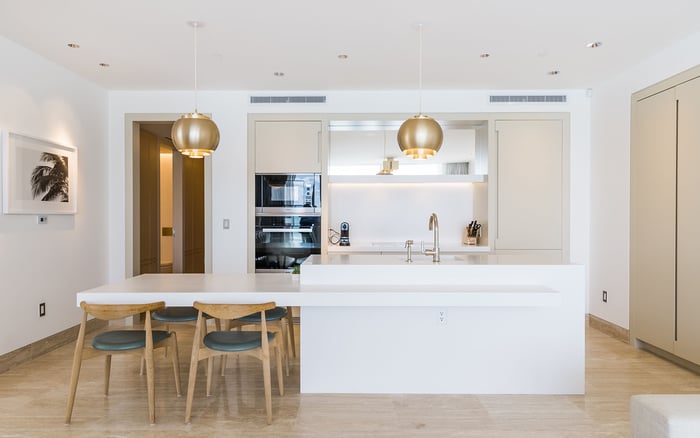
A buyer-focused guide to evaluating wellness amenities in Surfside branded residences, with emphasis on access, privacy, operating discipline, and genuine everyday usefulness.

The best wellness amenity is rarely the most theatrical. For a buyer considering Branded Residences in Surfside, real value lies in the spaces and services that become part of an ordinary week: a workout without a commute, a quiet place to reset, an easy swim, or a treatment scheduled without reorganizing the day.
That distinction matters. An impressive amenity menu may enhance the presentation, but daily value rests on practical questions. Is access intuitive? Are the spaces private enough to use comfortably? Do operating hours suit the household? Can residents reserve preferred times? Are recurring costs proportionate to likely use?
The right residence should support a routine rather than ask the owner to perform one. This Buyer's Guides perspective therefore treats wellness as an operating system for life at home, not simply a collection of rooms.
There is no defensible universal ranking when individual priorities vary, and amenity access, rules, and service arrangements must be confirmed for each residence. A disciplined shortlist can still begin with three recognized names in the local conversation.
Buyers evaluating Arte Surfside should look beyond the visual impression and consider how each wellness-related space would fit their actual schedule. Frequency matters more than novelty. A feature used four times a week can carry greater personal value than a more elaborate offering used twice a year.
At Fendi Château Residences Surfside, the inquiry is similarly personal: Which services reduce friction? Which spaces protect privacy? Which benefits remain convenient during peak periods? The answers should be tested against the buyer's normal household rhythm, including guests and seasonal occupancy.
For The Surf Club Four Seasons Surfside, buyers should separate brand recognition from the contractual and operational details attached to the specific home under consideration. Confirm what is residential, what may be shared, what requires booking or payment, and what can change under the governing documents.
All three belong in a thoughtful comparison, but the best choice is the one whose verified operating model aligns with the owner's daily life.
Begin with frequency. List the wellness activities the household already practices, then estimate realistic weekly use. Do not give extra credit to amenities that require a complete lifestyle change.
Next, assess friction. Distance from the residence, elevator transfers, reservation steps, guest restrictions, and operating hours all influence whether a feature becomes habitual. Small inconveniences compound quickly.
Third, examine privacy. Luxury wellness can mean quiet circulation, discreet staffing, controlled capacity, and enough separation to feel restorative. Tour at a time that reflects when you would actually use the space.
Fourth, evaluate continuity. Ask how closures, maintenance, staffing changes, and private events are handled. A beautiful space has limited daily value if access is unpredictable.
Finally, weigh carrying cost against use. Review assessments, à la carte charges, booking fees, gratuity expectations, and guest costs where applicable. The objective is not necessarily a lower expense, but a clear relationship between cost and benefit.
Lifestyle quality also depends on the residence itself. Light control, acoustic separation, fitness-equipment storage, comfortable bathing spaces, and an efficient arrival sequence can influence daily wellbeing, even when they are not labeled as amenities. Buyers should inspect these qualities directly rather than assume a luxury designation guarantees them.
For any home described as Oceanfront, review orientation, exposure, glazing, terrace usability, and maintenance obligations at the unit level. Apply the same discipline to common areas: consider the path from the home to the pool, fitness, treatment, or relaxation spaces-not merely the destination.
A strong wellness proposition should feel coherent from the private residence through the shared environment. If the experience becomes inconvenient at the transition points, the brochure promise may not translate into routine value.
Request the current governing documents, budgets, fee schedules, house rules, reservation policies, and any materials defining brand-related services. Confirm whether access belongs to the owner, the occupant, registered guests, or some combination. If the purchase is intended as a Second-home, ask how extended absences affect booking, service coordination, and arrival preparation.
During due diligence, obtain written clarification for any amenity central to the decision. Buyers should also distinguish included services from those available for an additional charge. Where staffing is important, ask about coverage rather than relying on general descriptions.
The ultimate question is simple: Would the residence make a healthy, private, well-run day easier on a consistent basis? If the answer survives document review and an in-person test, wellness may have real daily value.
What gives a wellness amenity real daily value? Frequent use, convenient access, privacy, dependable operation, and costs aligned with the owner's routine.
Should buyers choose the residence with the longest amenity list? Not necessarily. A shorter, well-operated offering may be more useful than numerous features with limited access.
How should brand value be evaluated? Separate reputation from the services, rights, standards, and costs documented for the specific residence.
What should buyers ask about fitness spaces? Confirm hours, capacity, reservation requirements, guest rules, maintenance protocols, and any separate charges.
Are treatment rooms automatically valuable? Only if scheduling, staffing, pricing, and privacy make treatments practical for the household.
Why tour amenities during likely use hours? It reveals circulation, noise, demand, staffing, and the overall atmosphere when the buyer would actually attend.
How do recurring fees affect the comparison? Consider them against realistic use, included services, and the reliability of the experience.
What matters for seasonal owners? Arrival support, booking access, guest policies, closure schedules, and continuity during periods away all deserve review.
Can in-residence design contribute to wellness? Yes. Acoustic comfort, light control, storage, bathing spaces, and efficient circulation can shape everyday wellbeing.
What is the most important due-diligence step? Verify any decision-driving amenity in current documents and obtain written clarification where terms are unclear.
If you'd like a private walkthrough and a curated shortlist, connect with MILLION.
If branded residences are on your mind — as a home or as an allocation — we would be glad to share what we are seeing, privately.
Begin a quiet conversation