A discreet buyer’s guide to evaluating elevator privacy, guest routing, service circulation, parking access, and written building controls in branded residences.
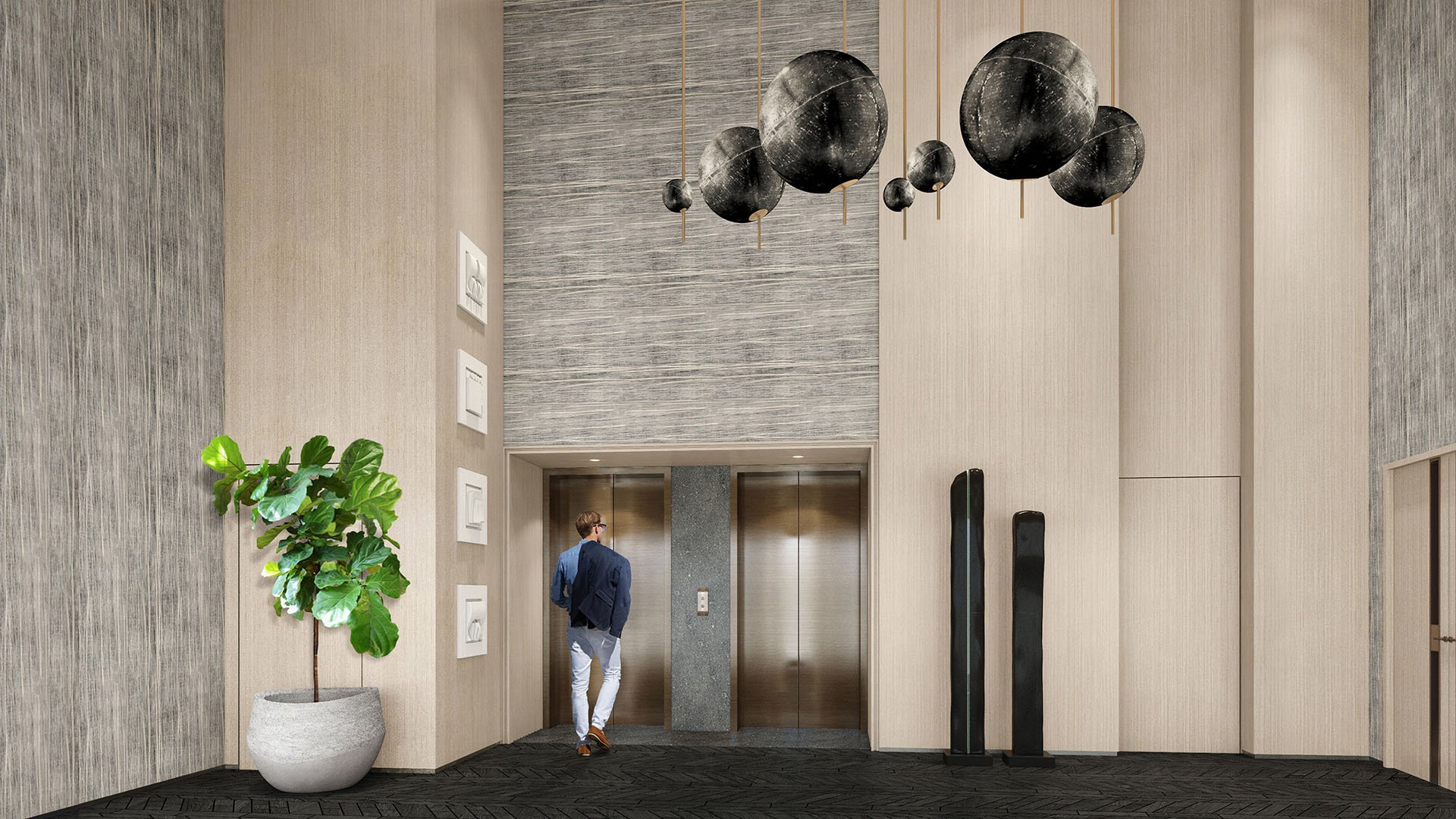
In South Florida’s branded residences market, a private elevator is often treated as shorthand for discretion. Sophisticated buyers should look beyond that single feature. The more consequential question is whether the entire arrival sequence-from vehicle entry to the residence threshold-limits unnecessary exposure without making everyday movement cumbersome.
The best solution is not necessarily the most theatrical. It is the one that integrates parking, lobby access, elevator controls, guest permissions, service circulation, and staff protocols into a coherent experience. A direct elevator arrival can feel exceptionally private, but its value depends on who can call the elevator, where it stops, how deliveries are handled, and what occurs when several parties arrive at once.
For principals balancing family use, staff, advisers, and invited guests, privacy is a choreography. Architecture establishes the route; operations determine whether it remains discreet in practice.
Buyers should first clarify the language used in plans and sales materials. “Private elevator,” “private foyer,” and “direct entry” can describe materially different arrangements. A private foyer may still be served by a shared elevator cab. A dedicated elevator bank may serve several residences. Direct entry may require credentials yet still involve intermediate shared spaces.
The most effective review follows the journey step by step. Begin at the garage or porte cochere, then trace the path through access control, waiting areas, elevator transfer points, and the residential vestibule. Determine whether the foyer is part of the residence or a common element, who maintains it, and whether another party can access it during emergencies or service calls.
Security should remain elegant rather than conspicuous. Credentialed elevator operation, controlled floor access, staffed arrival points, and clear visitor authorization can support privacy, but buyers should confirm the precise configuration in governing documents, plans, and operating policies.
In Sunny Isles Beach, buyers exploring branded residential living may begin with Bentley Residences Sunny Isles and request a detailed presentation of the complete arrival sequence. The essential exercise is to test every transition, including the routes used by residents, guests, household employees, vendors, and deliveries.
Surfside offers a different context for evaluating branded residential service. At The Surf Club Four Seasons Surfside, a prospective purchaser can examine the relationship between residential access and the broader branded environment. The relevant issue is not brand recognition alone, but how clearly private circulation is separated, managed, and documented.
Brickell demands an equally practical lens. When considering Cipriani Residences Brickell, buyers should assess how an urban arrival functions during peak periods and how visitors are cleared without creating friction for residents. An in-person visit during a busy window can reveal more than an idealized private tour.
For buyers focused on Miami Beach, The Ritz-Carlton Residences® Miami Beach belongs in a broader comparison of branded service models. Each residence should be judged by its current documents, physical configuration, staffing practices, and the exact unit under consideration. Brand standards can shape expectations, but building-specific execution remains decisive.
Private residential entry and discreet guest access are related, but they are not identical. A system designed exclusively around the owner can become awkward when family members, overnight guests, private staff, medical professionals, or event vendors require temporary access.
An effective guest protocol should allow the resident to authorize entry while retaining control over timing, destination, and duration. Buyers should ask whether invitations can be issued remotely, whether credentials expire, and whether staff can verify a guest without announcing the visit across a crowded lobby. They should also understand what happens when a guest arrives early, uses a different entrance, or accompanies a service provider.
The strongest arrangements feel intuitive to an invited visitor while remaining difficult to navigate without permission. That balance is central to the lifestyle promise of a branded residence: hospitality should be gracious, but never casual about access.
Household operations often expose weaknesses that a formal tour will not. Groceries, luggage, flowers, maintenance teams, pet care, catering, and housekeeping all generate movement. If every service visit shares the principal arrival route, the residence may feel less private than its elevator language suggests.
Ask to see the loading and service path, not merely the resident lobby. Confirm how a delivery moves from curb to unit, where it waits, who escorts it, and whether service elevators open directly into residential foyers. Where separate circulation exists, determine how residents control the final handoff.
This is also where floor plans become critical. A beautifully finished private vestibule may offer limited discretion if it lacks a controlled secondary route or a practical place to receive deliveries. The preferred configuration will depend on the household. A seasonal owner may prioritize remote authorization, while a full-time family may place greater value on predictable staff and service access.
Treat the elevator as one component of a broader security and hospitality system. Request the relevant floor plan, elevator plan, garage circulation diagram, access-control description, guest policy, delivery protocol, and emergency-access provisions. In a completed building, test the route personally. For a planned residence, ask that representations material to the purchase be identified in controlling documents.
Observe details that are easily overlooked: sightlines from lobby seating, proximity between residential and public doors, camera placement, acoustical privacy, cellular reception, elevator wait times, and the visibility of unit identifiers. Consider how the system performs during events, storms, staffing changes, maintenance, or a temporary elevator outage.
Finally, align the residence with the household’s actual operating pattern. Privacy for a couple with occasional guests differs from privacy for a multigenerational family with drivers, assistants, and frequent entertaining. The best branded residence is the one whose circulation supports that pattern quietly, consistently, and without daily negotiation.
Does a private elevator always mean a dedicated elevator cab? No. The term may refer to direct entry or a private foyer, so buyers should confirm the precise configuration.
What should buyers inspect first? Trace the complete route from vehicle arrival to the residence, including every credential and transfer point.
Why does the private foyer’s legal status matter? Its status can affect control, maintenance, alterations, and who may enter for service or emergencies.
How should guest access be evaluated? Review authorization, identity verification, credential duration, waiting arrangements, and staff procedures.
Are service elevators automatically more discreet? Not necessarily. Their value depends on routing, access control, operating rules, and where they open.
Should buyers test arrivals at busy times? Yes. A peak-period visit can reveal queuing, crossover between users, and the practical role of staff.
What documents are most useful? Floor plans, circulation plans, access policies, delivery procedures, and governing documents provide essential context.
Can branding guarantee a particular privacy standard? No. Buyers should evaluate the specific building, residence, documents, and current operating practices.
How do household employees affect the analysis? Their schedules and routes should be considered alongside resident, guest, vendor, and delivery access.
What is the clearest sign of a well-designed arrival? It feels simple for authorized users while preserving controlled, well-separated circulation for everyone else.
To compare the best-fit options with clarity, connect with MILLION.
If branded residences are on your mind — as a home or as an allocation — we would be glad to share what we are seeing, privately.
Begin a quiet conversation