A discreet buyer’s guide to assessing Coral Gables residences through the lens of private dining, service, layout, and the practical demands of entertaining at home.
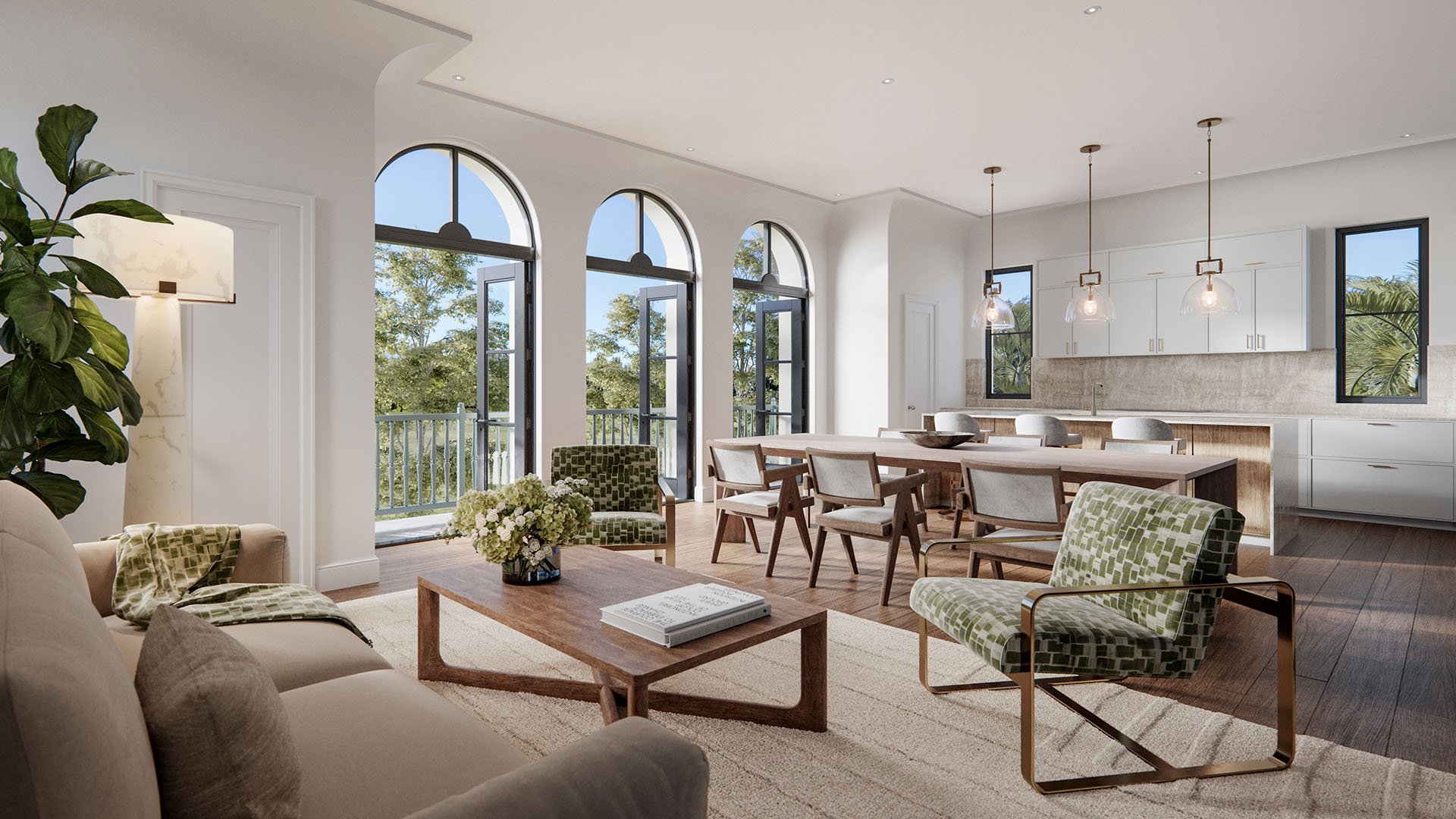
For a buyer who entertains seriously, “best” should describe performance rather than spectacle. A residence may photograph beautifully yet feel constrained once cocktails give way to dinner, staff begin circulating, and guests need a graceful transition to a terrace or salon.
In Coral Gables, the right search begins with two distinct ideas. Private dining may mean a formal room within the residence or a reservable dining salon in the building. Entertaining capacity is broader, encompassing kitchen capability, guest flow, privacy, acoustics, service access, storage, parking procedures, and the rules governing shared spaces.
Branded residences can add value when hospitality standards translate into reliable service. The name alone, however, does not establish that a property will support a buyer’s preferred style of hosting. Every promise should be tested against plans, operating documents, fee schedules, and actual reservation policies.
Begin by defining the occasion. An intimate dinner requires different proportions than a reception with passed service. Buyers should request dimensioned floor plans and map the entire sequence from arrival to departure: elevator, entry gallery, living room, dining area, kitchen, powder room, terrace, and staff route.
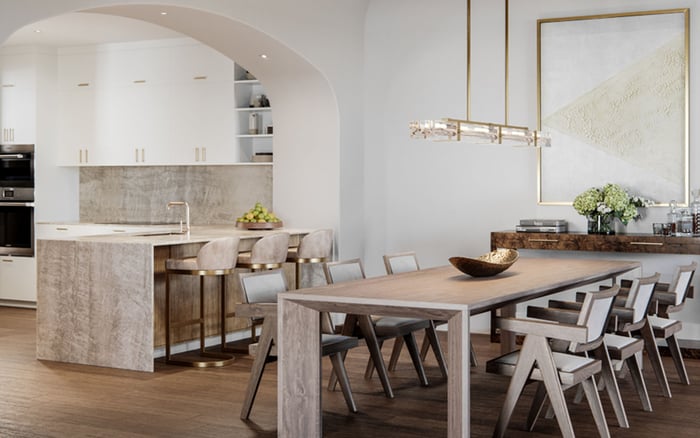
The kitchen deserves particular scrutiny. Confirm preparation surfaces, appliance specifications, ventilation, pantry storage, refuse handling, and whether caterers can work without crossing the principal entertaining rooms. A show kitchen may suit informal evenings, while larger events may benefit from a secondary preparation zone or discreet service passage.
Shared amenities require equal precision. If private dining rooms, lounges, or bars are part of the offering, review capacity, booking windows, deposits, staffing requirements, cleanup charges, music restrictions, and limits on outside chefs. Even the most polished room is useful only when its operating framework aligns with the owner’s calendar.
A focused tour can include Coral Gables opportunities from the available residential set, with every dining or service feature subject to confirmation. Cora Merrick Park belongs in the conversation for buyers comparing how individual plans accommodate a proper table, fluid guest circulation, and kitchen privacy.
Apply the same plan-first review at Ponce Park Coral Gables. Rather than relying on broad amenity language, request the plan for the exact residence under consideration. Door swings, column placement, ceiling conditions, kitchen access, and the relationship between indoor and outdoor areas can determine whether a dinner feels effortless.
At The Village at Coral Gables, buyers should likewise evaluate the specific home type and verify its rules for guests, deliveries, catering, parking, and outdoor use. These practical details are central to lifestyle fit, especially for owners who plan to host frequently rather than only on special occasions.
These properties should not be treated as interchangeable, nor should their inclusion imply identical branding, amenities, or services. They offer a disciplined starting point for an in-person comparison centered on entertaining capacity.
Buyers committed to Coral Gables can sharpen their expectations by comparing nearby Coconut Grove residences. Four Seasons Residences Coconut Grove can serve as a reference point for asking how branding and resident service may shape the ownership proposition, with all specific offerings subject to verification.
The purpose is not to substitute one neighborhood for another, but to establish a service benchmark. Ask the same questions at every appointment: Who coordinates a private event? Can staff assist with setup? Are outside caterers permitted? How far in advance can a room be reserved? Which costs fall outside regular assessments? Consistent questions make the differences clear.
During a showing, stage a mental rehearsal. Count seats without obstructing circulation. Identify where glassware, linens, serving pieces, and wine will be stored. Check whether guests can reach a powder room without passing through private quarters. Stand at the proposed table and assess lighting, views, sound, and proximity to food preparation.
Outdoor entertaining demands its own review. Confirm usable depth rather than total area, along with access, wind exposure, lighting allowances, cooking restrictions, and furniture rules. A generous-looking terrace may not accommodate a dining table once circulation and door clearances are considered.
Finally, distinguish daily convenience from event capability. Valet procedures, elevator access, package policies, service entrances, and guest registration may matter more to a successful evening than a decorative amenity. For frequent hosts, operational elegance is a form of luxury.
Before committing, have the relevant professionals review condominium documents, purchase materials, floor plans, specifications, budgets, and any brand or management agreements made available for the property. Confirm what is included with the residence, what belongs to the common areas, and what may change.
Obtain written clarification for every feature central to the purchase decision, including dining-room reservations, event capacity, catering access, staffing, alcohol service, noise rules, terrace use, guest parking, and charges. The strongest choice is the residence whose physical design and operating rules support the buyer’s actual habits with the fewest compromises.
What does private dining mean in a luxury residence? It may refer to a dedicated dining space within the home or a reservable shared room. Buyers should confirm which meaning applies.
Are branded residences automatically better for entertaining? No. A brand may shape service expectations, but layout, policies, staffing, and fees determine practical performance.
How much dining capacity should a buyer seek? Begin with the largest event hosted regularly, then allow comfortable circulation for guests and service.
Why are exact floor plans so important? They reveal dimensions, columns, door swings, kitchen relationships, and circulation routes that marketing images may not show.
Should a buyer prioritize an open or closed kitchen? It depends on the buyer’s hosting style. Open kitchens encourage interaction, while separation can support discreet catered service.
What should be verified about a shared dining room? Confirm capacity, booking priority, deposits, staffing, catering rules, cleanup costs, hours, and cancellation terms.
How should terraces be assessed for dining? Review usable depth, access, exposure, lighting, furniture restrictions, and any limits on cooking or music.
Do guest arrivals affect entertaining capacity? Yes. Parking, valet, registration, elevator procedures, and access controls can shape the entire experience.
Which costs may sit outside regular ownership charges? Event staffing, room reservations, catering, security, setup, cleanup, valet, and deposits may be separate.
What is the final test before purchasing? Rehearse a real event against the exact plan, then verify every essential service and permission in writing.
If you'd like a private walkthrough and a curated shortlist, connect with MILLION.
If branded residences are on your mind — as a home or as an allocation — we would be glad to share what we are seeing, privately.
Begin a quiet conversation