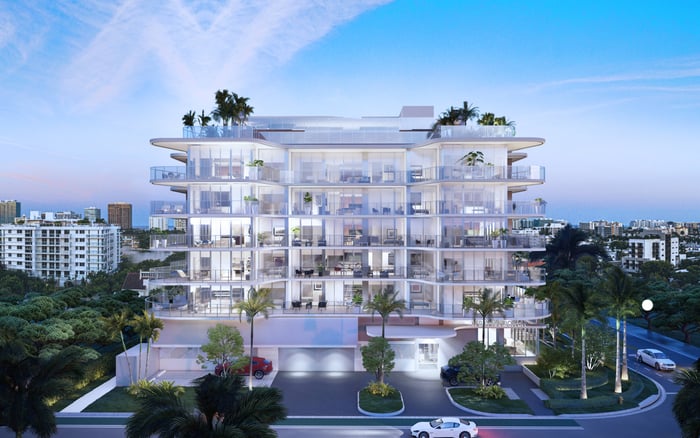
A discreet framework for comparing Bay Harbor Islands residences through reserve strength, recurring costs, governance, and total ownership exposure.

Cash can simplify an acquisition, but it does not make the underlying condominium economics irrelevant. For a sophisticated buyer, the central question is not simply which residence presents the most polished identity. It is which property pairs the desired lifestyle with an ownership structure that remains intelligible after closing.
That distinction matters in a boutique market where architecture, wellness, waterfront character, privacy, and service can carry meaningful emotional value. Branding may sharpen the proposition, but reserve exposure lies elsewhere. It belongs in the financial and governance review: what the association has accumulated, what it expects to spend, what owners may be asked to contribute, and how confidently those obligations can be assessed.
The principle is straightforward: branded residences should be considered as homes first and an investment proposition second. The best choice is therefore personal, document-dependent, and sensitive to the buyer’s tolerance for uncertain future contributions.
A useful shortlist should not begin with a universal winner. It should begin with the buyer’s preferred experience, then test whether the building’s documentation supports that experience at an acceptable total cost.
Some purchasers may begin with the wellness-led identity suggested by The Well Bay Harbor Islands. Others may be drawn to the residential positioning of Alana Bay Harbor Islands. Those names can frame an initial tour, but neither a brand narrative nor a compelling presentation answers the reserve question on its own.
The disciplined buyer separates three decisions. First, is the residence desirable on its own merits? Second, do the building’s services and recurring obligations align with the intended use? Third, does the association’s financial position suit the buyer’s appetite for future assessments or capital calls? A property becomes a serious contender only when all three answers are satisfactory.
Reserve exposure is best understood as the possibility that future building obligations may not be fully covered by funds already set aside. The concern extends beyond the current reserve balance. A cash buyer should seek context around expected projects, anticipated timing, funding assumptions, existing owner obligations, and the relationship between routine operating expenses and longer-term capital needs.
This is not a request for one reassuring figure. It is a request for a coherent financial story. Buyers and their advisers can examine budgets, reserve materials, meeting records, assessment information, insurance documentation, governing documents, and materials addressing planned work. The objective is to determine whether the available documents tell a consistent story-and where further explanation is warranted.
A larger cash position should permit more rigorous review, not less. Without a lender, the purchaser must establish an independent diligence standard rather than rely on financing conditions to create one.
Bay Harbor Islands projects should not be treated as interchangeable simply because they occupy the same luxury search. A buyer considering Onda Bay Harbor might value a different design or ownership proposition from one evaluating Bay Harbor Towers. The proper comparison depends on current project documents, the specific residence, contract terms, and intended holding pattern.
Create a side-by-side ownership brief for each candidate. Keep the categories consistent: purchase price, estimated closing obligations, recurring association charges, known assessments, reserve information, insurance considerations, rental restrictions, use policies, service expectations, and the buyer’s own allowance for uncertainty. Do not fill blank fields with assumptions. An unanswered question is itself a diligence item.
Give brand value its own column. Consider what the identity contributes to daily life, whether the associated services matter to the household, and whether the buyer is comfortable paying for that proposition over time. This keeps aesthetic preference visible without allowing it to obscure association-level risk.
The strongest cash offer is not necessarily the one with the fewest protections. It is the one whose protections are precise, time-conscious, and matched to the buyer’s actual concerns. Counsel and qualified advisers can determine which materials and contract provisions are appropriate for the transaction.
Before removing diligence conditions, request the current package relevant to the residence and association. Review it for consistency across budgets, financial materials, meeting records, assessment notices, insurance information, and planned-work discussions. Ask direct questions when figures, dates, responsibilities, or funding paths are unclear.
Give equal attention to governance. Meeting materials can help a buyer understand which subjects are receiving attention, which decisions remain open, and whether future work is still under discussion. The goal is not to demand a building without expenses; luxury properties require stewardship. The goal is to determine whether foreseeable obligations are being communicated and funded in a manner the buyer can accept.
Cash buyers often have room to distinguish intrinsic preference from financial uncertainty. A residence may remain compelling even when the documents reveal an unresolved item, provided the issue can be understood and reflected in price, timing, escrow structure, seller responsibility, or the decision to walk away.
Use a simple decision framework. Establish the residence’s value based on the buyer’s priorities. Add known ownership costs. Then isolate unresolved exposure rather than burying it within a broad negotiating instinct. If an amount cannot be established, define the question, identify who can answer it, and set the point at which uncertainty becomes unacceptable.
This approach preserves discretion. It avoids theatrical negotiation while making clear that a clean close does not mean an unquestioning one. In an ultra-premium purchase, elegance lies as much in the quality of the review as in the quality of the interiors.
Does paying cash eliminate reserve exposure? No. Cash changes the financing structure, while association obligations and potential future contributions remain relevant to ownership.
Is the residence with the strongest brand automatically the best choice? No. Brand appeal should be weighed alongside the specific home, services, documents, costs, and buyer preferences.
What should a buyer request first? Ask counsel and advisers for the current association, financial, insurance, assessment, governance, and transaction materials appropriate to the property.
Should reserve balance be reviewed by itself? No. It should be considered alongside anticipated work, funding assumptions, budgets, assessments, and the broader documentary context.
Are recurring association charges the same as reserve exposure? No. Recurring charges are one ownership cost, while reserve exposure concerns how longer-term obligations may be funded.
Can an attractive cash offer retain diligence protections? Yes. Terms can be concise and commercially credible while preserving review appropriate to the buyer and transaction.
How should two Bay Harbor projects be compared? Apply the same categories to each, but rely on current property-specific documents rather than assume equivalent economics.
What if the documents leave an important question unanswered? Treat the gap as unresolved diligence and seek clarification before accepting the associated risk.
Can reserve concerns be reflected in negotiation? Potentially. Price, timing, responsibility, protections, or withdrawal may be considered with qualified advisers.
Who should interpret the condominium documents? Buyers should use appropriately qualified legal, financial, insurance, inspection, and real-estate professionals for transaction-specific advice.
For a tailored shortlist and next-step guidance, connect with MILLION.
If branded residences are on your mind — as a home or as an allocation — we would be glad to share what we are seeing, privately.
Begin a quiet conversation