For buyers who prize quiet, the strongest residence is the one supported by tested assemblies, thoughtful separation, and clearly documented obligations. These five acoustic priorities provide a disciplined framework for evaluating a South Florida shortlist.
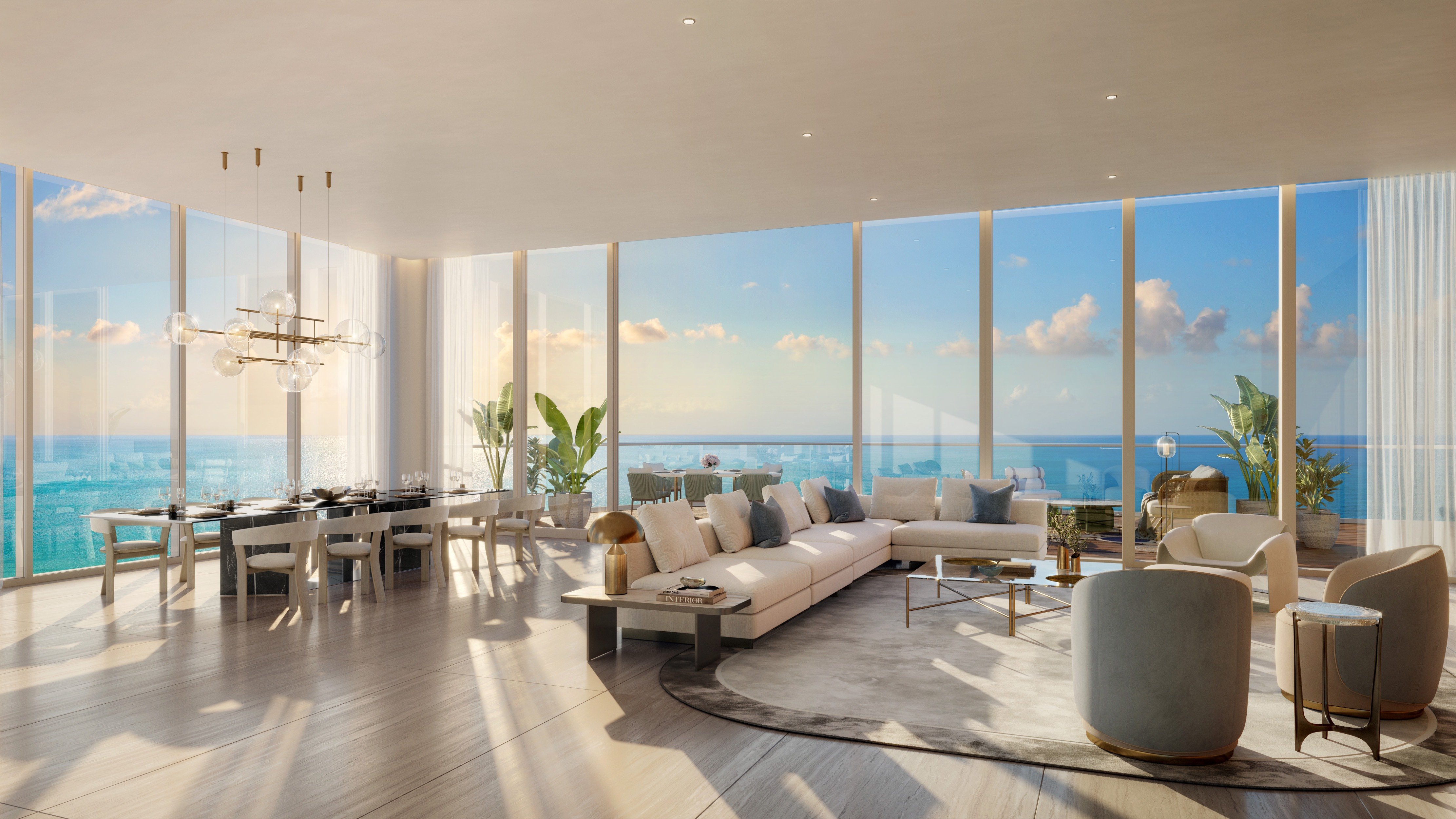
A residence can feel serene during a private showing without revealing how it performs when neighboring homes are occupied and building systems are running. For buyers who value uninterrupted sleep, confidential conversation, and an unhurried atmosphere, acoustic comfort deserves the same scrutiny as the view, architecture, and service.
The essential distinction is between an attractive promise and a documented condition. Distance on a floor plan alone does not establish isolation: sound can travel through the structure, around barriers, and along façade surfaces. Nor should an acoustic design target be mistaken for a contractual obligation.
The five priorities below rank the evidence to seek, not residences by presumed acoustic superiority. Any purchase shortlist also requires current confirmation of availability and development status. A completed residence and a preconstruction offering call for different questions, not interchangeable assumptions.
1. Unit-to-unit separation: tested airborne isolation
Begin with the boundary between homes. Sound Transmission Class, or STC, measures airborne sound isolation, including speech, music, and television noise. STC 60+ is a high-end target for demising walls-not a universal luxury-condominium requirement or an achieved rating for a particular address.
Request the actual wall assembly and relevant field-test results. Higher isolation generally requires coordinated mass, decoupling, damping, resilient components, and sealed penetrations. Wall thickness alone is not a sufficient basis for ranking one residence above another.
2. Floor-and-ceiling separation: impact-noise evidence
Impact Insulation Class, or IIC, addresses footsteps, chair movement, and dropped objects. It is distinct from the airborne sound measured by STC. A buyer concerned about overhead disturbance should ask for impact-isolation evidence rather than accept an airborne rating as a substitute.
Examine the actual floor-and-ceiling assembly and installation details. Request evidence relevant to the residence under consideration, and distinguish laboratory testing from field results. Neither a beautiful finish nor a quiet showing answers the technical question.
3. Mechanical separation: evaluate sound paths, not distance alone
Room acoustics, inter-residence isolation, and mechanical vibration are related but distinct. Because sound can travel through a structure and around barriers, distance from equipment on a floor plan does not, by itself, prove acoustic separation.
Ask an acoustic consultant to assess the proposed residence in relation to equipment locations and isolation details. Request any stated mechanical-noise criteria and the means of verifying them. Treat this as a separate diligence exercise; do not assume wall or flooring ratings resolve every building-system concern.
4. Corridor and interior partitions: protect the whole home
The boundary with a common corridor deserves its own examination. STC 60+ is a high-end target for corridor-to-unit walls, distinct from separation between neighboring residences. Ask for the assembly information applicable to that boundary, including how penetrations are addressed.
Within a residence, typical partition targets fall in the STC 35-45 range, with STC 50 as a high-end target. These figures are reference points, not verified building performance. Buyers planning a private office or separate sleeping areas should investigate internal partitions as carefully as exterior boundaries.
5. Documented standards: distinguish targets from obligations
An acoustic number is most useful when the buyer understands exactly what it describes. Code-minimum compliance should not automatically be presented as luxury performance, and a suggested high-end target does not establish an enforceable buyer protection.
Ask counsel and an acoustic specialist to distinguish design intent, tested performance, and contractual commitments. Seek clarity on the assembly covered, the testing approach, acceptance criteria, and any agreed response to a shortfall. These are matters to investigate or negotiate, not protections to presume.
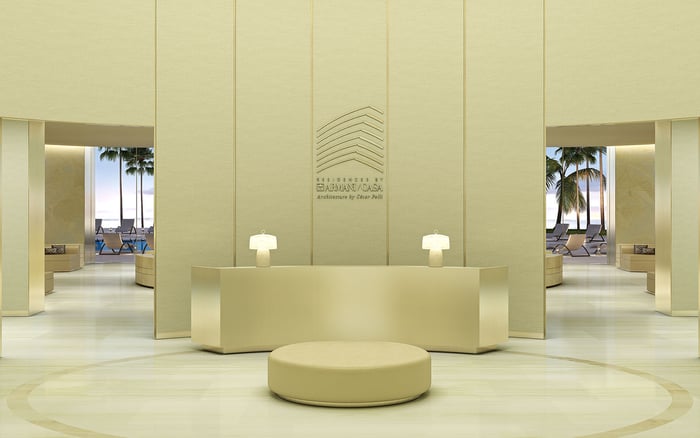
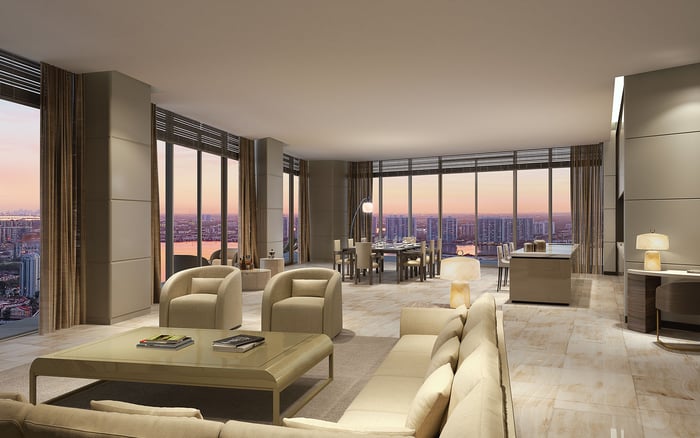
Design and architecture can shape an elegant home, but acoustic evaluation requires its own evidence. If The Residences at 1428 Brickell enters your Brickell search, request documentation for the particular residence and its surrounding spaces. Keep the project presentation separate from the acoustic assessment; neither should stand in for the other.
For a Miami Beach comparison involving The Perigon Miami Beach, apply the same standards rather than adjust the threshold to the setting. Ask which statements concern intended design, which concern tested assemblies, and which concern installed conditions. These questions do not imply any particular performance result at the property.
A Surfside search that includes The Surf Club Four Seasons Surfside should likewise remain unit-specific. Review the boundaries around the rooms that matter most to you, then request evidence addressing those boundaries. A bedroom, home office, and entertaining space need not share the same priorities.
If Turnberry Ocean Club Sunny Isles is part of your Sunny Isles Beach comparison, make an equivalent request for documentation. These addresses provide contexts for comparison, not acoustic endorsements or statements of current inventory. A consistent approach makes it easier to distinguish documented performance from an appealing description.
Room shape, wall thickness, carpets, and soft furnishings can affect room acoustics. Interior design therefore matters to perceived comfort, but a furnished room is not proof of separation from neighbors or building equipment.
During a viewing, note both the finish condition and the operating conditions. Ask whether relevant systems can be observed in normal use, and consider a specialist assessment where quiet is a decisive purchase criterion. The purpose is not to dismiss personal experience, but to weigh it alongside assembly information and field testing.
For an unfinished residence, discuss acoustic priorities before making finish decisions. For a finished home, ask which details are documented rather than infer performance from what is visible. In either case, keep room acoustics, airborne isolation, impact isolation, and mechanical vibration as separate lines of inquiry.
Before selecting a home, write down what quiet means for your household: privacy for conversation, protection from overhead impacts, or freedom from intrusive mechanical sound. Then ask your advisers to connect each priority to relevant evidence and any proposed contractual language.
The strongest purchase decision is not the one supported by the most reassuring adjective. It is the one in which the buyer understands the construction, the testing, and the obligations being accepted. Confirm availability independently, and let documented acoustic suitability shape the shortlist alongside location and design.
For a discreet South Florida residence search shaped around your priorities, connect with MILLION.
If branded residences are on your mind — as a home or as an allocation — we would be glad to share what we are seeing, privately.
Begin a quiet conversationSound Transmission Class measures airborne sound isolation, including speech, music, and television noise.
Impact Insulation Class addresses impact noise such as footsteps, chair movement, and dropped objects. It answers a different question from STC.
No. It is a high-end target for unit-to-unit and corridor-to-unit walls, not a universal requirement or a verified rating for the properties mentioned.
No. Buyers should examine actual assemblies, installation details, and relevant testing rather than treat minimum compliance as evidence of exceptional isolation.
No. Sound can travel through the structure and around barriers, so distance alone does not establish acoustic separation.
Not by themselves. Higher isolation generally requires coordinated mass, decoupling, damping, resilient components, and sealed penetrations.
Request actual assembly information and relevant field-test results. Ask advisers to distinguish design targets from tested performance and contractual commitments.
Typical internal partition targets fall in the STC 35–45 range, with STC 50 identified as a high-end target. These are reference points, not verified ratings for a specific home.
They can affect room acoustics and perceived comfort. They do not, by themselves, establish isolation from neighboring residences or mechanical vibration.
No. They illustrate where to apply a consistent diligence framework; property-specific performance, availability, and development status require separate confirmation.