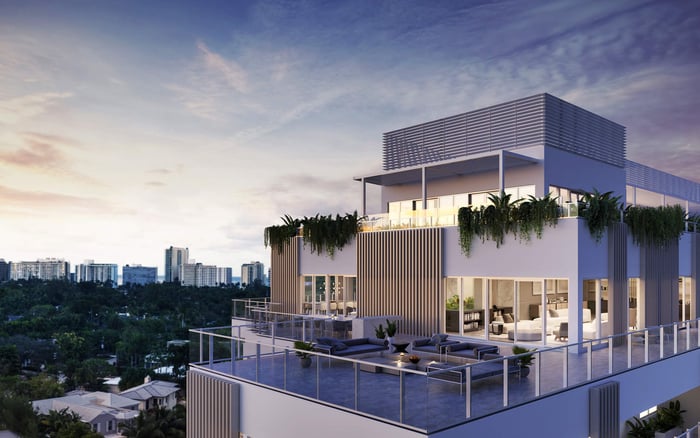
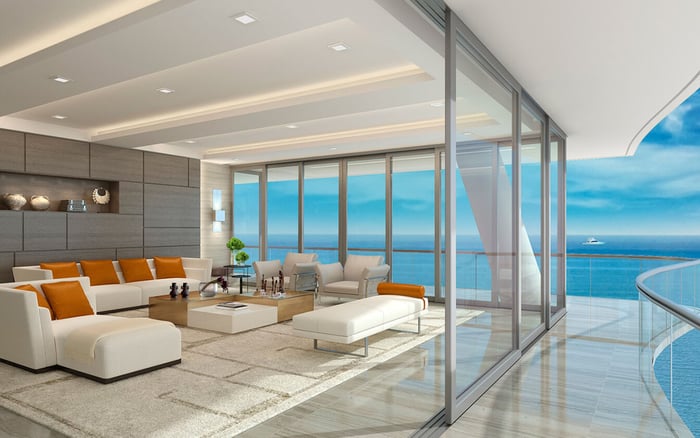
A preliminary Miami-Dade shortlist helps frame an acoustically focused property search, but the available information does not substantiate five active projects or an acoustic ranking. Residence-specific plans, mechanical separation, testing, and contractual protections should guide the comparison.

For a luxury buyer in Miami-Dade County, quiet is an intimate measure of quality: a bedroom undisturbed by neighboring activity, a study free of mechanical hum, and a living room insulated from the building’s working life. These qualities deserve the same scrutiny as views, materials, and service.
The distinction is between architectural promise and a documented acoustic outcome. Neither building scale nor wellness-oriented marketing establishes sound separation, mechanical isolation, or a purchaser’s right to correction.
The available information does not substantiate the title’s five-project ranking or confirm current availability and acoustic performance. The four projects discussed below are preliminary comparison candidates, not verified acoustic leaders. A fifth should not be added without supporting information.
Quiet deserves to be specified at three levels: the residence, the building systems, and the purchase agreement.
Surf Row Residences: examine the full building layout
Begin with the relationship between the selected residence, neighboring homes, circulation, and building services. Request the exact floor, roof, and mechanical plans before attaching a quiet-living premium to a particular residence.
Building height alone cannot establish how many homes share a floor, where equipment sits, or how effectively sound is isolated. Confirm current availability and construction status independently rather than treating inclusion here as evidence of an active offering.
2200 Brickell: connect design language to specifications
Ask for the acoustic criteria applicable to the selected residence and documentation connecting those criteria to construction and testing. Any wellness-oriented language should be evaluated separately from measured sound separation and purchaser remedies.
The useful question is not whether a presentation emphasizes comfort, but whether the relevant drawings, specifications, and purchase terms define an acoustic outcome that can be evaluated.
Ocean House Surfside: use equivalent comparison documents
For a broader Surfside search, request the same level of residence-specific documentation. Its inclusion in a viewing itinerary should prompt investigation-not an assumption that the address or project identity establishes quietness.
A useful comparison rests on equivalent drawings and specifications, not equivalent marketing language. Map the selected bedroom and living areas against adjacent spaces before comparing residences.
The Residences at 1428 Brickell: prioritize an equipment-level review
Request equipment locations, mechanical layouts, and proposed vibration-isolation details for the residence under consideration. This is a diligence recommendation, not a statement about the project’s mechanical design or measured performance.
Apply the same questions across the shortlist so that a difference in disclosure is not mistaken for a difference in quality.
A floor plan becomes more useful when it extends beyond the purchase boundary. Request the entire residential level, the levels immediately above and below, and the locations of shafts, building services, and amenities. Identify the spaces bordering the rooms where quiet matters most.
For a buyer considering 2200 Brickell, the next step is to connect any design assurances to these residence-specific drawings. Ask the design team to explain the proposed separation between sleeping areas and neighboring activity, then have an acoustical engineer review the relevant assemblies and connections.
STC addresses airborne sound separation. IIC addresses impact sound transmitted through floor-ceiling assemblies. Both belong in the conversation, but they answer different questions. Neither should substitute for the other.
Ask an acoustical engineer to identify appropriate criteria and distinguish laboratory assembly ratings from completed-building field tests. Do not treat a rating mentioned in a presentation as a verified result for the selected residence.
Concrete alone is no guarantee. Request the complete floor-ceiling assembly, including specified underlayment and isolation details, rather than accepting a statement that the building has concrete floors.
Ask whether the test documentation corresponds to the proposed construction. Have the engineer evaluate potential sound paths through structural connections, façades, penetrations, shafts, and mechanical connections rather than reviewing isolated assembly ratings alone.
An upper-floor residence should not be presumed quieter simply because it is farther from street activity. Include roof plans and mechanical layouts in the review rather than overlooking equipment above the residence.
Ask the engineer to identify equipment locations, structural connections, proposed vibration isolation, and the acoustic criteria governing operation. Where barriers or enclosures are proposed, request an explanation of their intended performance and design limitations.
Where a development includes hotel, restaurant, retail, loading, valet, or event operations, expand the assessment beyond unit-to-unit ratings. Ask how those operations relate to the selected residence and how their noise would be evaluated.
Confirm availability and construction progress directly before setting a purchase strategy. A sales milestone or anticipated delivery date should not replace a technical review of the residence under consideration.
Assess temporary construction disruption separately from permanent building performance. Verify applicable work-hour restrictions and any authorized exceptions with the relevant local authority rather than assuming one rule applies throughout Miami-Dade County.
Bring the buyer’s attorney and acoustical engineer into the discussion before relying on acoustic assurances. Ask them to address measurable criteria, the assemblies and rooms covered, laboratory versus field testing, test conditions, and responsibility for evaluating results.
The legal discussion should also establish what happens if an agreed criterion is missed: correction obligations, retesting, available remedies, and whether relevant obligations survive closing. These are matters for negotiation and professional review, not established features of the shortlisted residences.
The strongest purchase decision pairs a desirable floor plan with credible technical documentation and carefully reviewed contractual terms. Quiet is too consequential to leave as an adjective in a presentation.
For a discreet, residence-specific approach to your South Florida search, connect with MILLION.
If branded residences are on your mind — as a home or as an allocation — we would be glad to share what we are seeing, privately.
Begin a quiet conversationNo. The available information supports a preliminary discussion of four projects, not a verified five-project ranking or confirmation of current availability.
It is a preliminary comparison candidate, not a verified quiet-living recommendation. Request residence-specific floor, roof, and mechanical plans before drawing conclusions.
Ask for residence-specific acoustic criteria, construction details, and testing documentation. Evaluate any wellness-oriented language separately from measured performance and contractual protections.
Request equivalent drawings, specifications, and equipment information for each selected residence. Neither project’s inclusion establishes acoustic superiority.
STC addresses airborne sound separation, while IIC addresses impact sound transmitted through floor-ceiling assemblies. They measure different aspects of acoustic performance.
No. Ask an acoustical engineer to distinguish the evidence each provides and determine whether it applies to the selected residence.
No. Request the complete floor-ceiling assembly and an assessment of potential sound paths rather than relying on the presence of concrete alone.
Do not assume so. Review roof plans, equipment locations, and mechanical-isolation details alongside exposure to street activity.
Discuss measurable criteria, testing procedures, correction obligations, retesting, remedies, and survival after closing. An acoustical engineer should help evaluate the technical provisions.
Check applicable work-hour restrictions and authorized exceptions with the relevant local authority. Assess temporary construction disruption separately from permanent acoustic performance.