A buyer-focused guide to distinguishing advertised parking amenities from unit-specific rights, with practical diligence on valet key custody, chauffeur staging, operating costs, and long-term transferability at two Brickell addresses.
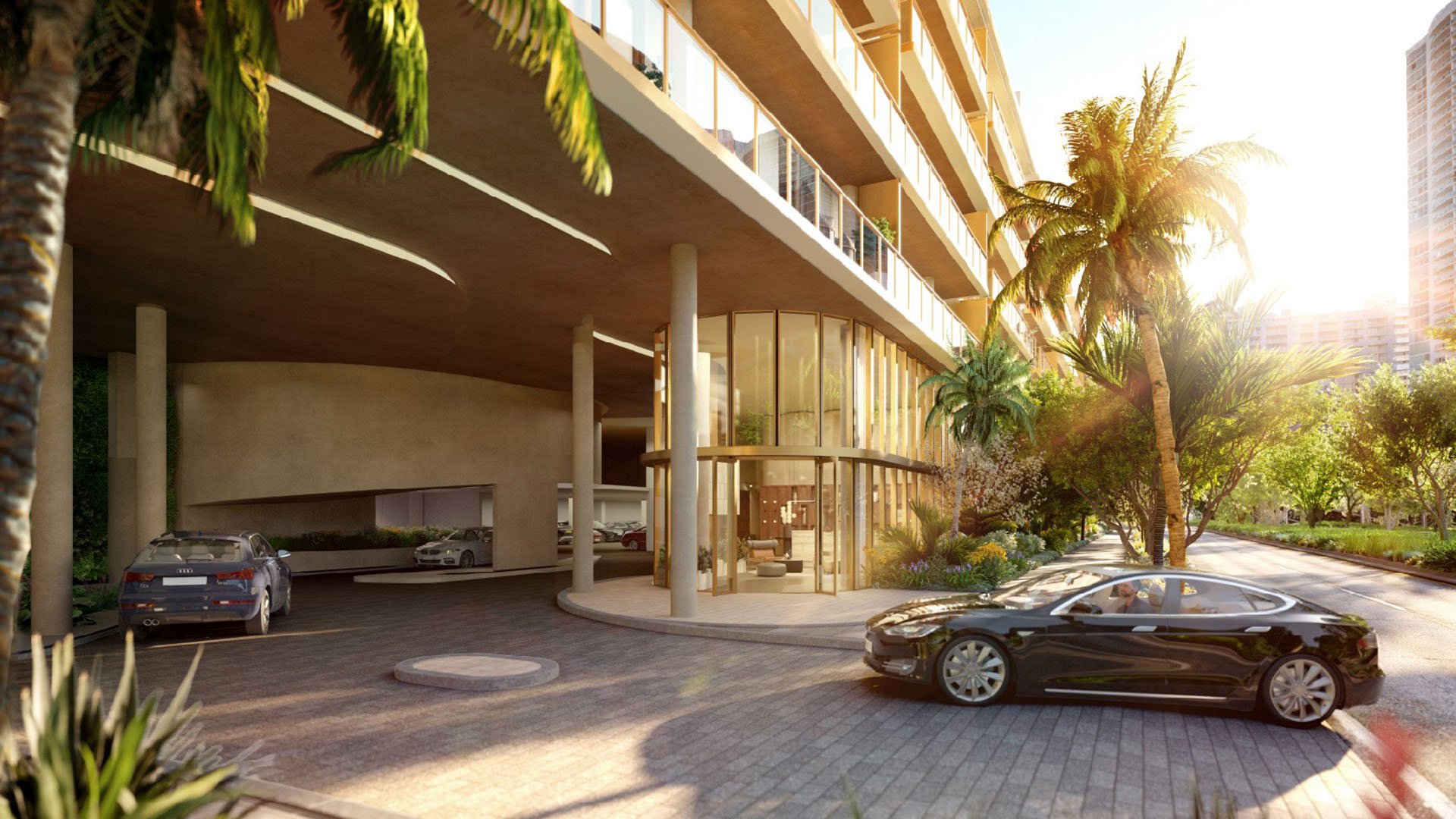
For a luxury residence, the journey from vehicle to front door deserves the same scrutiny as the floor plan. A covered arrival can be elegant, but ownership turns on less visible details: who controls the parking space, who retains the key, and where a chauffeur waits when departure plans change.
At 2200 Brickell in South Brickell, the advertised emphasis is above-ground parking on all levels with direct access to residences. At 888 Brickell by Dolce & Gabbana, the arrival proposition centers on valet, private parking, and branded service. Neither description, on its own, settles the legal rights or operating rules attached to a particular purchase.
The distinction is simple: an amenity describes an experience; the purchase documents should establish the entitlement. Buyers should examine both before relying on either.
2200 Brickell, at 2200 Brickell Avenue, advertises a covered porte-cochère, on-site valet parking, a double-height, 24-hour attended lobby, and electric-vehicle charging. Its direct-access parking concept warrants attention from buyers who value a shorter transition between car and residence.
Same-floor assigned parking is also advertised, but assignment should not be confused with deeded ownership. Unit GV11 is advertised with two spaces and same-level parking-a unit-specific representation, not a building-wide allocation. Neither direct access nor an attended lobby establishes unrestricted self-parking or a particular key-retention policy.
At 888 Brickell Avenue, the advertised offering includes a porte-cochère arrival, a Rolls-Royce house car, and valet and private parking for residents and guests. Those features describe the service proposition, not an individual owner's space count, retrieval priority, or entitlement to exclusive use.
Begin with the unit-specific parking exhibit. Ask counsel to reconcile it with the proposed purchase agreement and, once executed, the contract, declaration, deed, recorded exhibits, and any separate parking assignment. If documents are not yet final, identify what remains subject to change and how the contract addresses it.
The questions should be precise. Is the right ownership, exclusive use, an assignment, or access to a managed parking service? Does it identify a particular space? Can the location change? How many vehicles may the household keep on site, and does the allowance distinguish parked vehicles from registered vehicles?
Ask whether vehicle dimensions, access routes, or operating restrictions affect the intended fleet. A buyer planning to accommodate several vehicles should seek written confirmation rather than extrapolate from another residence's advertised parking.
Treat contract review as the point at which the lifestyle promise becomes a documented purchasing decision.
Valet convenience and personal control are separate considerations. The available parking descriptions do not establish either project's complete key-custody policy. Before closing, request the written protocol from the party responsible for the operation.
Establish whether keys remain with valet continuously, only during service, or under another arrangement. Ask how keys are secured, who can access them, how access is recorded, and how authorization changes when household staff or drivers leave employment.
The policy should also address lost keys, unauthorized vehicle release, theft, damage, incident reporting, and responsibility for replacement or related costs. Have counsel and an insurance adviser review the relevant liability language rather than assume a service promise answers those questions.
For an owner using both a personal chauffeur and building valet, define who may hand over the vehicle and who may collect it. A documented authorization process is more useful than an informal understanding at the arrival desk.
A porte-cochère is an arrival feature, not confirmation of a dedicated waiting position. Request a staging map and written rules covering chauffeur credentials, security screening, waiting areas, loading, weather protection, and vehicle handoff.
Walk through the household's actual routine: an early departure, a return with luggage, a guest arriving simultaneously, or a driver waiting while a meeting runs late. Ask where the vehicle may stand, whether the driver may remain with it, and what happens when the arrival area is occupied.
Clarify advance retrieval procedures and how to change a request. Ask whether a vehicle can be prepared for a specified departure time, distinguishing a request from a guaranteed service commitment.
For visits to 888 Brickell's sales gallery, valet is at 830 Brickell Plaza, with complimentary service through front-desk ticket validation. That arrangement concerns gallery visits. It should not be treated as evidence of the final residential parking operation, resident pricing, or chauffeur waiting arrangements.
At 888 Brickell, the house car is part of the advertised arrival offering. Buyers should nevertheless confirm reservation procedures, availability, permitted use, and any separate charges. Its presence does not establish an on-demand transportation entitlement.
At both properties, request a written schedule addressing resident and guest parking, overnight storage, valet, charging, detailing, and any peak-period retrieval charges. Confirm which services, if any, are included in recurring ownership expenses and which are separately billed.
Electric-vehicle charging is advertised at both 2200 Brickell and 888 Brickell. Ask about access, allocation, billing, and whether charging requires staff to move the vehicle. Buyers also considering Cipriani Residences Brickell should apply the same document-first questions without assuming neighboring buildings share policies.
Before closing, have counsel identify whether parking rights follow the residence on resale, pass to a tenant during leasing, and continue through inheritance or foreclosure. Ask whether a separate transfer, consent, fee, or reassignment procedure applies. These are diligence questions, not established conditions at either project.
Keep the final parking exhibit, assignment, relevant closing documents, current operating rules, and written authorizations together. Review them when adding a vehicle, changing drivers, leasing the residence, or preparing a sale. Distinguish the underlying right from service policies that may have their own amendment procedures.
The strongest purchase decision is not simply between direct-access parking and a valet-led arrival. It is between arrangements whose rights, responsibilities, and daily logistics have been made clear before ownership begins.
For a discreet conversation about matching a Brickell residence to your ownership priorities, connect with MILLION.
If branded residences are on your mind — as a home or as an allocation — we would be glad to share what we are seeing, privately.
Begin a quiet conversation2200 Brickell emphasizes above-ground parking with direct access to residences. 888 Brickell emphasizes valet, private parking, and branded arrival services.
No. An advertised assignment does not establish deeded ownership; the unit-specific legal documents must clarify the right.
The two-space description applies to Unit GV11, not a building-wide allocation. Buyers should confirm their own residence's allocation.
Request the unit-specific parking exhibit and have counsel reconcile it with the executed contract, declaration, deed, recorded exhibits, and any parking assignment.
The advertised amenities do not establish complete key-custody rules for either project. Request written policies covering retention, access, vehicle release, incidents, and liability.
No dedicated chauffeur waiting entitlement is established by the advertised arrival features. Request a staging map and written waiting, loading, and handoff rules.
The described arrangement is for sales-gallery visits, with complimentary valet through ticket validation. It does not establish the final residential parking operation.
Yes, charging appears in the advertised offerings for both projects. Buyers should separately confirm allocation, access, billing, and vehicle-movement procedures.
The house car is advertised, but unrestricted use is not established. Confirm availability, reservations, permitted use, and any separate charges.
Have counsel establish whether the parking right transfers with the residence or extends to a tenant. Also clarify any consent, reassignment, fee, inheritance, or foreclosure provisions.