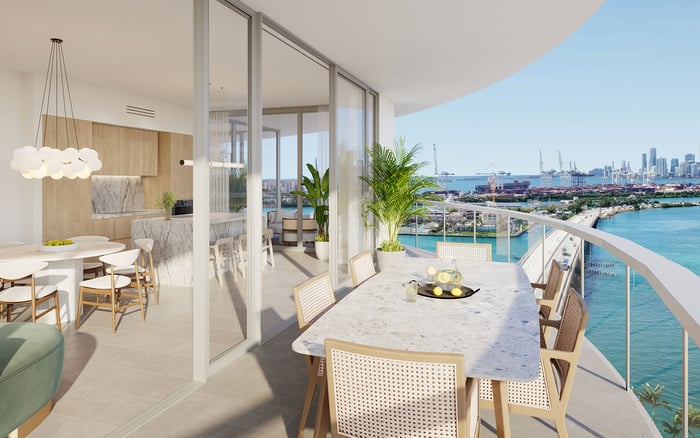
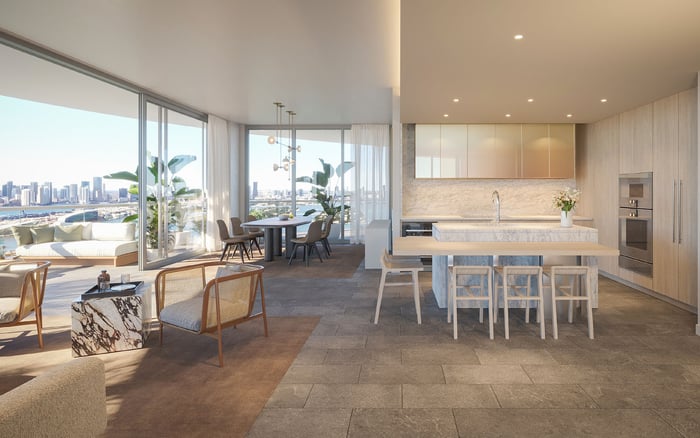
Five Park’s gallery offers a polished introduction, but selecting a residence requires line-specific analysis of elevation, outlook, terrace conditions, privacy, noise, costs, and governing documents.
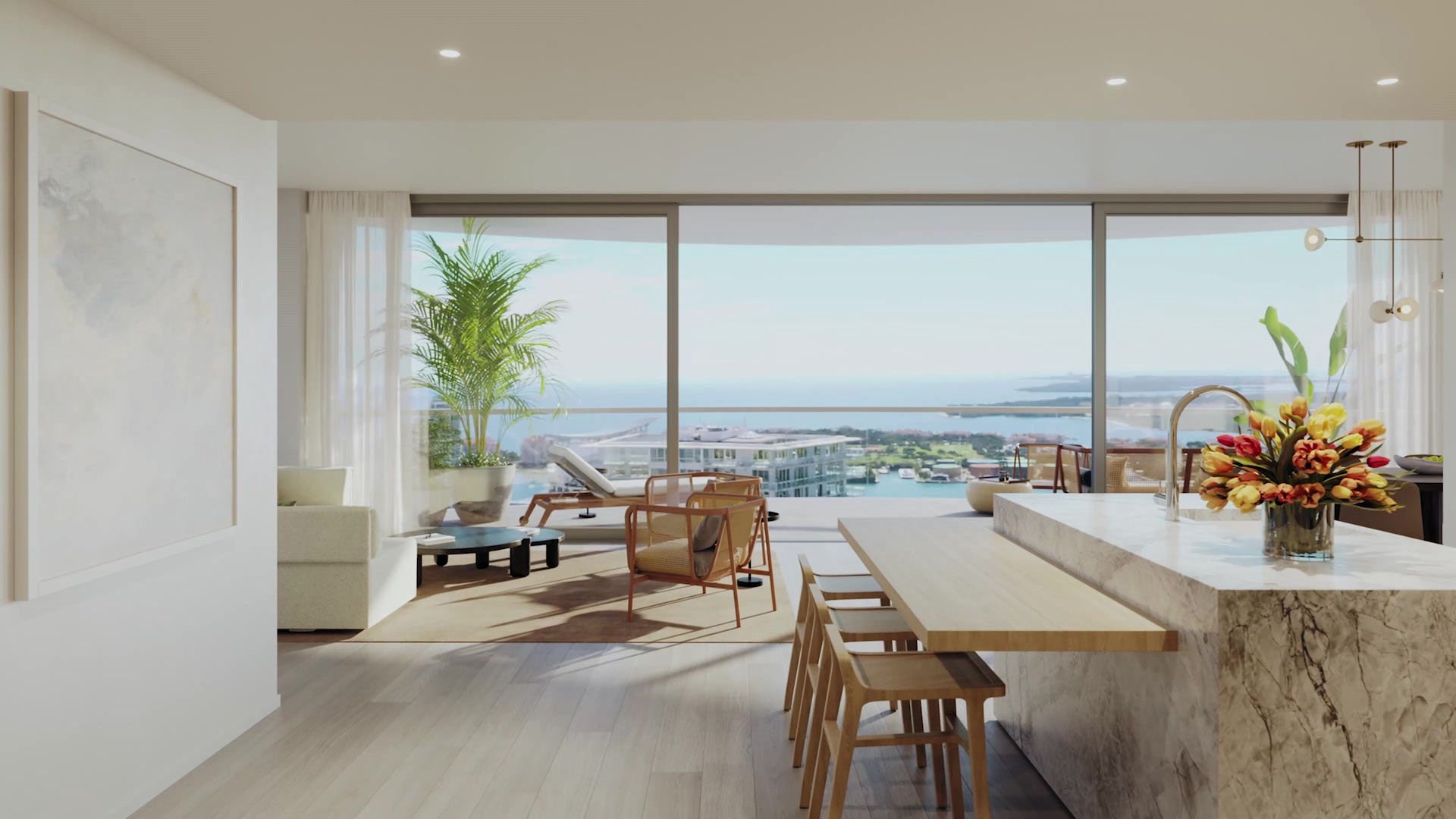
The Five Park Miami Beach sales gallery can introduce the project’s design language and overall positioning, but a purchase decision concerns a specific residence. The presentation should therefore be the beginning of the evaluation rather than a substitute for line-level due diligence.
After reviewing the gallery, shift the discussion to the physical and financial characteristics of the home under consideration. Sunlight, wind, outlook, sound, privacy, circulation, and ownership terms can differ from one line or floor to another.
Ask the sales team to identify the category assigned to each candidate residence and verify that designation in current official materials. The category can help frame comparisons involving elevation, outlook, privacy, layout, and available inventory.
Avoid assuming that a higher floor or larger plan is automatically the better choice. Exposure, glare, terrace usability, room proportions, and circulation may matter more to the owner’s daily routine.
For each candidate, request the exact line, floor, primary exposure, window orientation, and current floor plan. Ask to see the residence on a complete floor plate so that its relationship to elevators, service spaces, shared areas, roads, and neighboring homes is clear.
Make the view discussion equally precise. Determine what can be seen from each principal room, whether the outlook is direct or oblique, and whether any existing or potential obstruction requires further review. Visual materials should correspond to the actual line and floor whenever possible.
Buyers comparing The Perigon Miami Beach should apply the same residence-level discipline. A project name alone does not establish the experience of a particular home.
Assess a terrace as part of the architecture rather than as a single area figure. Confirm its dimensions, access points, orientation, railing treatment, and sightlines from both standing and seated positions.
Consider how direct sun, wind, nearby roads, shared spaces, neighboring balconies, and surrounding structures may affect comfort and privacy. Conditions can vary materially by elevation and exposure, so generalized project imagery should not replace a line-specific review.
Amenities can shape the broader ownership experience, but buyers should distinguish them from the qualities of the residence itself. Ask which spaces are shared, reservable, staffed, subject to guest rules, or associated with separate charges.
Map the candidate home against amenity and service circulation. Proximity may be convenient, but elevators, doors, gathering areas, and operational routes may also influence sound and privacy. Apply the same scrutiny when considering The Ritz-Carlton Residences® Miami Beach or Shore Club Private Collections Miami Beach.
Before comparing value, request current availability, pricing, deposit requirements, common charges, disclosed assessments, and the treatment of parking or storage. Obtain the applicable figures in writing and connect each one to the exact residence.
Confirm residence boundaries, area definitions, ownership terms, and applicable rules in the current official documents. Price-per-square-foot comparisons are useful only when the underlying area conventions and included spaces are understood.
Narrow the decision to a small group of lines and compare them using the same criteria: category, floor, exposure, interior configuration, terrace dimensions, principal outlooks, possible obstructions, adjacency, privacy, charges, and deposit structure.
The strongest choice is not necessarily the highest residence or the largest plan. It is the line whose physical conditions and ownership terms most closely fit the buyer’s routines, priorities, and tolerance for trade-offs.
What should a buyer request first at the Five Park sales gallery? Ask for the exact line, floor, residence category, exposure, window orientation, terrace dimensions, and current floor plan.
Why is the complete floor plate important? It shows how the residence relates to elevators, service spaces, shared areas, roads, and neighboring homes.
How should buyers compare residence categories? Compare their elevation, outlook, privacy, layout, and inventory, then verify each designation in current official materials.
Is a higher floor always the better choice? No. Exposure, glare, wind, terrace comfort, room proportions, and circulation may outweigh elevation.
How should a buyer assess the view? Review the outlook from each principal room and determine whether it is direct, oblique, or potentially affected by obstructions.
Why does terrace orientation matter? Orientation can influence sunlight, wind, privacy, and the times when the outdoor space feels most comfortable.
What privacy issues should be reviewed? Examine sightlines from nearby residences, balconies, roads, shared spaces, and surrounding structures.
What amenity questions should buyers ask? Confirm access rules, reservation procedures, staffing, guest policies, separate charges, and proximity to amenity circulation.
Which financial terms should be obtained in writing? Request current pricing, deposit requirements, common charges, disclosed assessments, and terms affecting parking or storage for the exact residence.
What should be verified in the official documents? Confirm residence boundaries, area definitions, ownership terms, applicable rules, and the figures tied to the selected home.
If you'd like a private walkthrough and a curated shortlist, connect with MILLION.
If branded residences are on your mind — as a home or as an allocation — we would be glad to share what we are seeing, privately.
Begin a quiet conversation