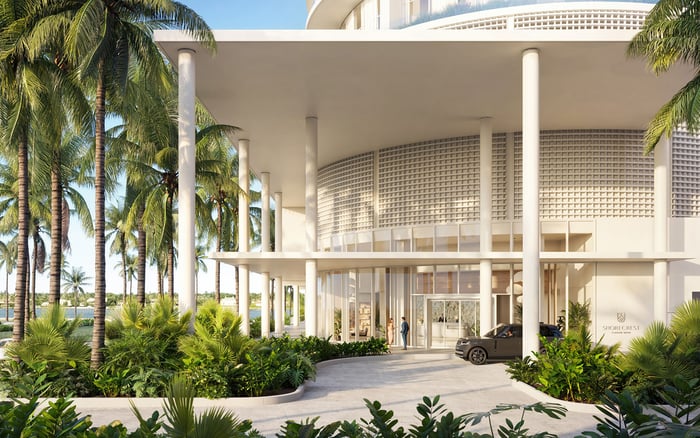
A polished residence is only part of the South Flagler Drive purchase equation. Buyers should establish who controls each proposed alteration, how contractors enter and work, what can delay construction, and precisely which furnishings transfer at closing.

On South Flagler Drive, a refined interior can make a condominium feel entirely resolved. Yet the practical rights attached to that interior may be narrower than the floor plan suggests. Florida condominium ownership is governed by Chapter 718, together with each association's declaration, bylaws, and adopted rules. These building-specific documents-not a general impression of local practice-define the buyer's working reality.
That distinction matters whether considering a resale residence or evaluating newer options such as South Flagler House West Palm Beach and Shorecrest Flagler Drive West Palm Beach. Before committing to a design concept, contractor mobilization date, or move-in calendar, a buyer should understand the full approval chain.
The most valuable renovation right is the one confirmed in writing before closing.
Begin with the target property's declaration, bylaws, renovation rules, remodel application, fee schedule, and contractor-access policy. Written association approval is commonly required before any renovation begins. A typical submission may include plans, contractor information, and permit documentation, making management review a formal part of the schedule rather than an administrative afterthought.
Cosmetic work is usually less complex than work involving structural components or shared systems. Cabinets, countertops, appliances, fixtures, paint, finishes, and nonstructural partitions are generally easier to approve. Painting, wallpaper, and certain cabinet or countertop work may not require a city permit, but the association may still require notice or consent. Verbal permission should never be treated as final approval; management may suspend unauthorized or noncompliant work.
After a covered property loss, reconstruction of portions of a unit requires prior written board consent. That consent may be conditioned on repair methods, contractor qualifications, and the construction contract. Association consent does not replace any required governmental permits or approvals.
The declaration determines whether windows, exterior doors, railings, risers, and other boundary components belong to the unit or form part of the common elements. This is the decisive question behind many ambitious design and architecture plans. A feature that appears visually integrated into the residence may still fall outside an owner's unilateral control.
Material alterations or substantial additions to common elements must follow the declaration's approval procedure. If the declaration is silent, approval from 75% of the total voting interests is required. Proposals involving structural walls, slabs, façade penetrations, plumbing stacks, risers, windows, or exterior doors therefore warrant review by Florida condominium counsel before a buyer relies on feasibility or pricing.
The same discipline applies when comparing the governance framework at Forté on Flagler West Palm Beach with that of another waterfront condominium. Similar views or layouts do not imply identical alteration rights.
A contractor's estimate rarely captures every building-controlled cost or constraint. Associations commonly require proof of a valid Florida contractor license and a certificate of insurance naming the association as an additional insured. In downtown West Palm Beach condominiums, only a licensed contractor may pull a building permit.
Building rules may also regulate weekday work hours, contractor sign-in, service-elevator reservations, approved material routes, noise, and debris removal. Management may inspect the residence before, during, and after construction to confirm that work remains within the approved scope. Buyers should ask about construction deposits, damage escrows, elevator charges, blackout periods, daily work windows, and limits on simultaneous projects.
These provisions affect more than convenience. Restricted elevator windows can alter delivery sequencing, while limited workdays can extend labor duration. Hard-surface flooring such as tile, wood, or laminate may trigger permitting and association sound-control requirements, particularly when another residence is below or adjacent. Resolve the underlayment specification before ordering materials.
A credible renovation calendar begins before closing. Work backward from the intended occupancy date, accounting for design completion, association review, revisions, contractor credentialing, permit issuance, elevator booking, material delivery, installation, inspection, and correction time. No construction start should depend on an informal indication from a salesperson, concierge, or individual board member.
A narrow permit exemption applies to replacement or repair valued below $1,000 when the work does not affect structural integrity, fire ratings, or egress. That limited exception should not be confused with an exemption from association rules.
Older Palm Beach-area towers require another layer of inquiry. Florida's milestone-inspection regime affects qualifying condominium buildings of at least three stories. Qualifying buildings at least 30 years old were subject to inspections, recurring inspections every decade, and repairs when significant structural deterioration was identified. Mandatory building work can compete with private renovations for elevators, loading areas, contractor access, and management attention.
Before setting a start date, request milestone-inspection materials, reserve studies, planned structural projects, and information about pending special assessments. Buyers reviewing Maison D'Or South Flagler or any other corridor property should treat the building's capital calendar as part of the residence's renovation calendar.
A furnished presentation does not prove that every visible object transfers. Buyers should not assume that a developer furniture package, seller-selected collection, or staged interior passes automatically with the residence. Every included item should appear in the purchase agreement or in a separate inventory incorporated into it.
Organize the inventory room by room, addressing artwork, electronics, window treatments, decorative accessories, storage items, and any promised replacements. It should also clarify whether an item shown in marketing materials is included, excluded, substituted, leased, or present only for display. For higher-value pieces, descriptions detailed enough to distinguish each intended item can reduce uncertainty at the final walk-through.
Ownership language and delivery logistics are separate issues. Even when furnishings are contractually included, delivery and installation remain subject to association access, service-elevator, and move-in rules. Developer-selected finishes likewise do not exempt later alterations from condominium approval or applicable permitting after closing.
The strongest offer is not merely financially prepared; it is operationally informed. Before the relevant contractual deadlines, obtain written answers on approval turnaround, permitted scope, contractor requirements, deposits, work windows, elevator access, flooring standards, inspection rights, current building projects, and the exact furniture inventory.
This practical approach belongs in MILLION's Buyer's Guides because luxury is measured partly by control: control over the interior, the schedule, the contracting team, and the objects conveyed. Along South Flagler Drive, those rights should be documented with the same care given to views, finishes, and service.
For discreet guidance on evaluating a South Flagler Drive residence, connect with MILLION.
If branded residences are on your mind — as a home or as an allocation — we would be glad to share what we are seeing, privately.
Begin a quiet conversationNot necessarily. Building rules commonly require a written application, plans, contractor credentials, and association approval before work begins.
No. Association consent and governmental permitting are separate requirements, and both may apply.
Cabinets, countertops, appliances, fixtures, paint, finishes, and nonstructural partitions are generally less complex than structural or shared-system changes.
Management may suspend unauthorized or noncompliant work, so buyers should rely on written approval rather than verbal permission.
Common requirements include a valid Florida contractor license and insurance naming the association as an additional insured.
The declaration determines whether items such as windows, exterior doors, railings, and risers are privately owned or common elements.
Yes. Tile, wood, or laminate may trigger permitting and association sound-control requirements, especially near other residences.
Mandatory structural work may compete for elevators, loading access, contractors, and management review time in qualifying buildings.
No. Included furnishings should be identified in the purchase agreement or an incorporated, room-by-room inventory.
Ask about review times, deposits, work hours, blackout periods, elevator reservations, inspections, flooring standards, and simultaneous-project limits.